

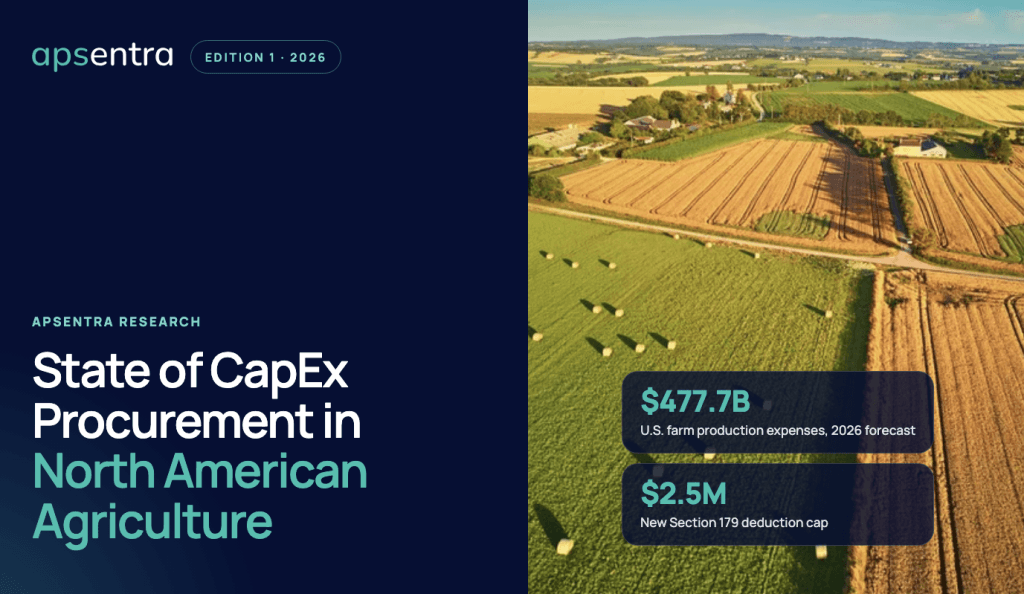
Farm capital spending isn’t shrinking. It’s going to different buyers, who are choosing more carefully.
In 2025, U.S. livestock operations spent $255.0B, more than crop operations for the first time since 2015.
The Section 179 deduction cap has roughly doubled to $2.5M, and 100% bonus depreciation is now permanent. The average price of a new large tractor has risen more than 30% in ten years. Together, these changes affect when agricultural equipment gets bought, how it gets bought and who buys it.
This report brings together data from USDA, Statistics Canada, AEM, NAEDA and industry market research. It shows where agri-CapEx is going in the U.S. and Canada, and what that means for the teams who buy equipment and the companies who sell it.


What you’ll learn:
- Which commodity segments have money to spend in 2026, and why treating “agriculture” as one market gives a wrong read
- How the new Section 179 and bonus depreciation rules change purchase timing, with a worked example: a $200,000 tractor costs about $130,000 after first-year tax savings
- How eight CapEx categories are actually bought, from row-crop machinery to irrigation and grain storage
- Who shapes each deal: OEMs, dealers, integrators, lenders and co-op purchasing programs
- Why buyers are moving from sticker price to total cost of ownership, and how lease structures shift tax and residual-value risk
- Seven trends to watch through 2026
Who it’s for:
CFOs and procurement leaders at farm groups, co-ops, elevators and food processors, plus the OEMs, dealers and lenders who sell to them.
Watch our Behind Procurement podcast