























Why generic procurement systems fail
They look flexible on paper — but break under real-world conditions.
Because they ignore what actually drives risk, cost, and performance in your industry:
APSentra adapts to procurement reality

Industry-specific spend structures

Built-in regulatory alignment

Contract logic that matches reality

Multi-layer supply chains
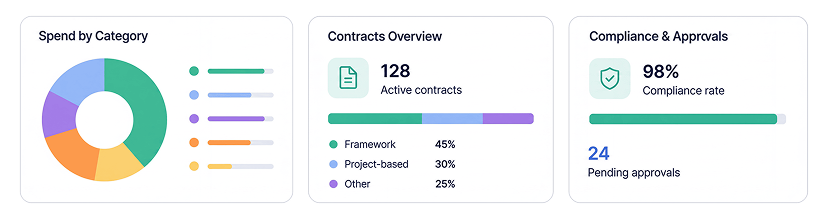

CapEx vs OpEx governance

Demand variability & planning

Risk-based supplier management
Explore how procurement works in your industry

Agriculture & Agri-Processing
Procurement that keeps up with seasons, commodities, and distributed sourcing.
- Seasonal procurement planning
- Commodity price tracking
- Multi-location supplier coordination
- Just-in-time input delivery
Manufacturing & Industrial Production
Keep production running — no delays, no surprises.
- BOM-driven purchasing workflows
- Supply continuity monitoring
- Inventory-linked budget control
- Multi-plant supplier visibility

Food Processing & Production
Control procurement across supply chains, strict compliance, and margin-sensitive operations.
- Production-aligned raw material planning
- Quality, safety, and certification compliance
- End-to-end batch and supplier traceability
- Shelf-life and storage-aware procurement
- Multi-facility coordination and visibility
- Input cost volatility management

Retail & FMCG
Control high-volume, distributed procurement without losing margins.
- SKU-level purchasing governance
- Tail spend consolidation
- Packaging & cost optimization
- Real-time spend visibility

Construction & Engineering
Full control over project-driven procurement and subcontractors.
- Project-level spend tracking
- Commitment-based forecasting
- On-site approval workflows
- Audit-ready documentation

Logistics & Transportation
Keep the network moving — no invoice leakage, no depot blind spots.
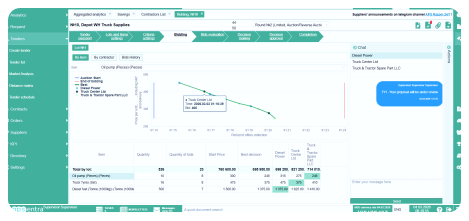
- Structured carrier and forwarder tendering
- Automated three-way invoice matching
- Depot-level purchasing control
- Fleet MRO spend visibility
Financial Services & Insurance
Procurement aligned with compliance, audit, and risk frameworks.
- Segregation of duties (SoD)
- Risk-based supplier validation
- Full audit trails
- Contract enforcement

Telecom & Utilities
Manage infrastructure procurement across complex supplier networks.
- CapEx-heavy procurement control
- Multi-tier supplier mapping
- ICT & cybersecurity governance
- Infrastructure budget visibility



Procurement that works the way your business works
No generic logic. Procurement aligned with your operations, your risks, and your growth plan.
FAQs
Why do industries require specialized procurement solutions?
Different industries operate under fundamentally different conditions — yet most procurement tools treat them the same.
Key differences include:
- Regulatory and compliance requirements
- Industry-specific spend structures
- Supply chain complexity and dependencies
- Contract and pricing models
- CapEx vs OpEx governance
Generic procurement systems fail to reflect these realities, forcing teams into manual workarounds.
APSentra solves this by aligning procurement workflows, controls, and data structures with how each industry actually operates — reducing risk and improving decision-making.
What makes industry-specific procurement different from generic procurement software?
Generic procurement tools focus on process automation.
Industry-specific procurement platforms focus on operational alignment.
Key differences:
- Spend categorization reflects real purchasing behavior
- Contract models match industry standards (BOM, commodity, project-based)
- Compliance is embedded into workflows
- Supplier risk models are industry-calibrated
- Procurement adapts to demand cycles and volatility
APSentra goes beyond workflows — it mirrors how your business buys, manages suppliers, and controls risk.
What is the best procurement software for manufacturing companies?
Manufacturing companies require procurement systems that support production-critical operations:
- Direct materials sourcing
- Bill of Materials (BOM) alignment
- Supply continuity monitoring
- Inventory-driven purchasing
- CapEx planning for equipment
APSentra connects procurement with production logic — ensuring material availability, supplier reliability, and cost control without disrupting operations.
What is the best procure-to-pay (P2P) software for mid-sized companies?
Mid-sized companies need structure — without enterprise complexity.
The best P2P platforms should include:
- Budget control before approvals
- ERP and accounting integration
- Automated invoice processing
- Supplier lifecycle management
- Real-time spend visibility
APSentra delivers enterprise-grade procurement governance in a flexible, scalable system — ideal for growing companies managing increasing complexity.
How do you evaluate different e-procurement platforms?
To choose the right procurement system, focus on:
- Governance and budget enforcement
- Integration with ERP and finance systems
- Industry-specific capabilities
- Supplier risk management
- Contract lifecycle automation
- Reporting and analytics
Many tools automate requests — but lack financial control and risk visibility.
APSentra is designed as a governance-first platform, ensuring procurement decisions are controlled, compliant, and financially aligned.
What are the best cloud-based procurement tools for industrial companies?
What are the best cloud-based procurement tools for industrial companies?
Industrial companies need cloud platforms that handle operational complexity:
- Multi-entity and multi-location governance
- Direct vs indirect spend separation
- CapEx approval structures
- Contract compliance automation
- Supply chain risk visibility
APSentra is built as a cloud-native procurement platform that supports industrial-scale operations while maintaining full control over spend and suppliers.
Does APSentra support regulated industries?
Yes.
APSentra is designed to operate in highly regulated environments with:
- Full audit trails and traceability
- Policy-based approval workflows
- Role-based access control
- Compliance monitoring
- Contract enforcement
- Risk-based supplier governance
This makes APSentra suitable for financial services, telecom, infrastructure, and other compliance-heavy sectors.
Does APSentra support multi-entity and large-scale operations?
Yes.
APSentra supports complex organizational structures with:
- Centralized governance across entities
- Configurable approval workflow
- Multi-entity budget control
- Regional compliance adaptation
- Scalable supplier management
It is built for companies operating across multiple regions, business units, and regulatory environments.
What industries benefit most from industry-specific procurement solutions?
Industry-specific procurement is critical for sectors with:
- High regulatory pressure
- Complex or multi-tier supply chains
- Capital-intensive procurement
- Seasonal or volatile demand
- Large supplier ecosystems
Examples include:
- Agriculture
- Manufacturing
- Retail & FMCG
- Construction
- Financial services
- Telecom & utilities
APSentra is designed to support these industries with tailored procurement logic and governance models.
Can industry-specific procurement solutions improve cost control?
Yes — significantly.
When procurement reflects real operational conditions, companies gain:
- More accurate spend categorization
- Stronger budget enforcement
- Better supplier negotiation leverage
- Higher contract compliance
- Reduced financial and operational risk
APSentra turns procurement into a financial control system — delivering measurable impact on cost, margins, and risk.