Project overview
| Industry | Manufacturing & Industrial Production (Food & Pet Food Production) |
| Scale | Multi-site manufacturer, domestic and export supply chain |
| Engagement type | Organizational diagnostic & staged transformation plan |
| Consulting service (primary) | Procurement Consulting & Advisory |
| Also supports | Digital Procurement Transformation |
| Frameworks applied | As-Is / To-Be process mapping, RACI responsibility matrix, Tiered approval / authority matrix, Staged transformation plan, KPI & incentive design |
About the client
A multi-site pet food manufacturer supplying both domestic and international markets, with procurement spanning raw materials, packaging, production-related supplies, and administrative and technical categories across multiple manufacturing locations.
Challenge
The procurement diagnostic uncovered a fundamental governance issue: the same employees who requested goods and services were also responsible for selecting and purchasing from suppliers.
Without a clear separation between the requester and the buyer, the company lacked an independent procurement control point — creating inefficiencies, inconsistent decision-making, and unnecessary supplier-selection risk.
This led to several issues:
- No dedicated procurement function responsible for managing competitive bids across the organization
- No centralized Tender Committee for strategic or high-value sourcing decisions
- No cross-functional review process for mid-value purchases
- No consistent supplier due-diligence or security screening process
- Multiple conflict-of-interest and procurement-control risk points caused by overlapping requesting and purchasing responsibilities
Key objectives
The transformation needed to:
- Separate purchase requests from supplier selection
- Establish a dedicated centralized tendering function
- Introduce value-based approval thresholds and clear decision rights
- Create stronger governance around strategic sourcing
- Give procurement the capacity to develop suppliers and identify new sourcing opportunities
- Build a foundation for digital procurement automation
Our procurement advisory approach
We evaluated two organizational models, assessed their fit with the company’s existing governance structure, and developed a 12-month phased procurement transformation roadmap around the preferred model.
Organizational design
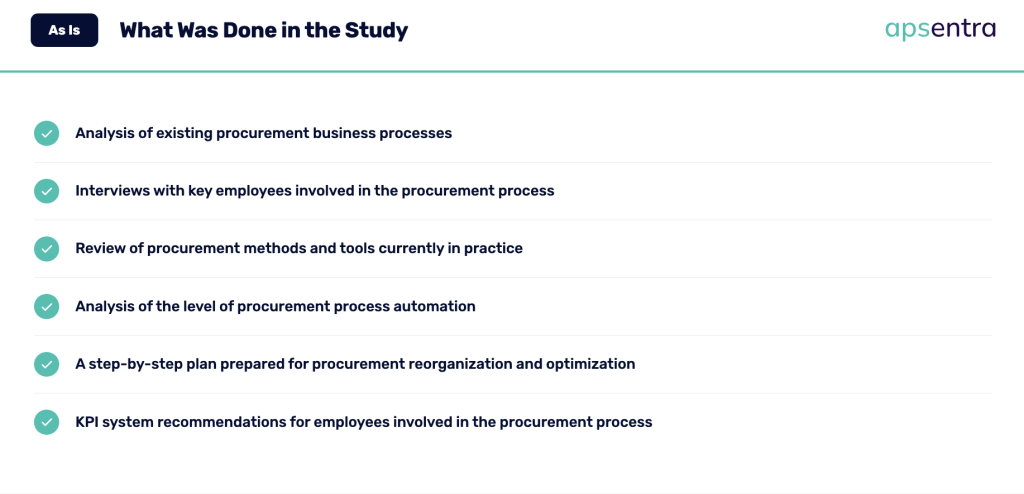
Compared two options for the centralized tender function:
- A standalone Tender & Strategic Sourcing function reporting directly to executive leadership
- A centralized function embedded within the broader Supply Chain organization
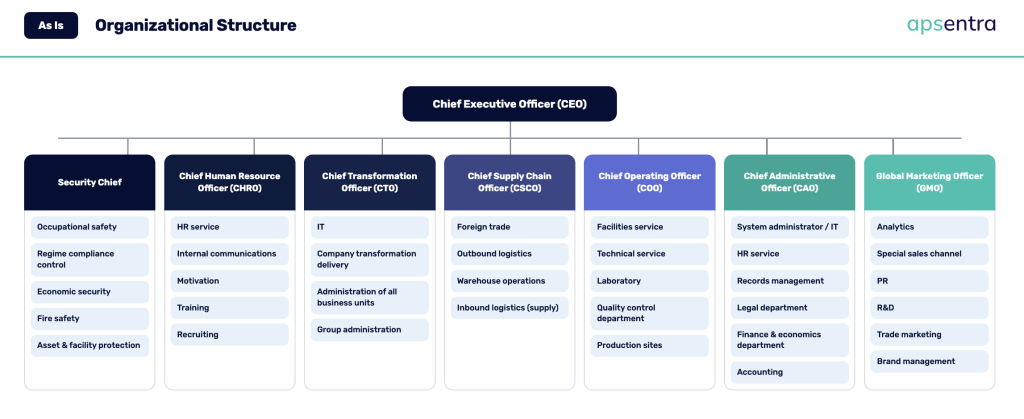
We recommended the structure that provided the strongest combination of procurement independence, governance, and operational alignment.
Phased procurement transformation roadmap
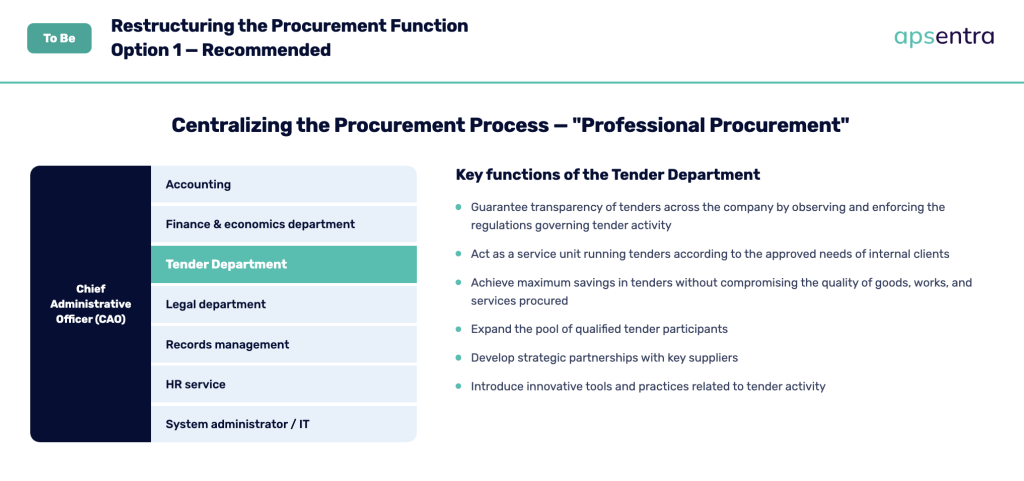
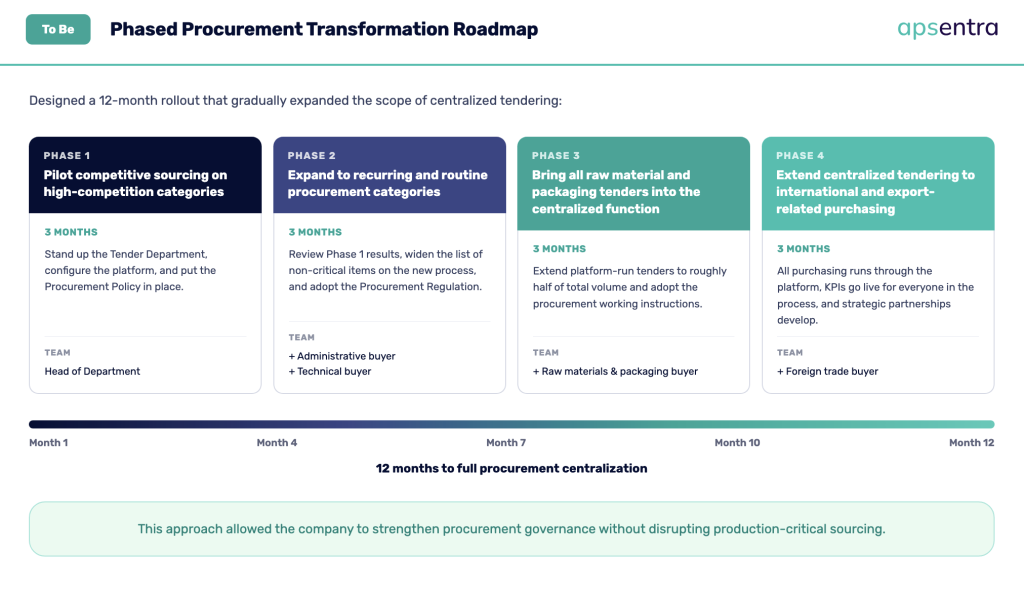
Designed a 12-month rollout that gradually expanded the scope of centralized tendering:
- Phase 1: Pilot competitive sourcing on high-competition categories
- Phase 2: Expand to recurring and routine procurement categories
- Phase 3: Bring all raw material and packaging tenders into the centralized function
- Phase 4: Extend centralized tendering to international and export-related purchasing
This approach allowed the company to strengthen procurement governance without disrupting production-critical sourcing.
Governance design
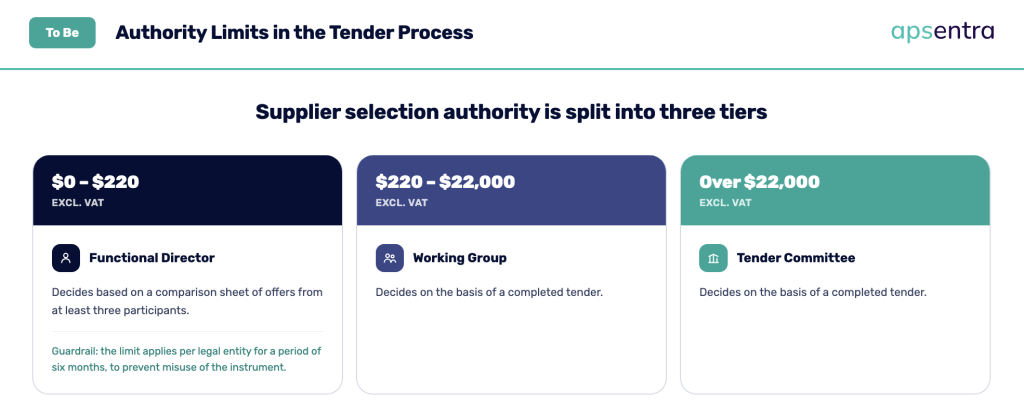
Created a three-tier approval model based on purchase value and strategic importance:
- Functional leadership approval for lower-value purchases
- Cross-functional Working Group review for mid-value purchases
- Tender Committee approval for high-value and strategic sourcing decisions
The model established clear decision rights and reduced single-person discretion over supplier selection.
Change enablement
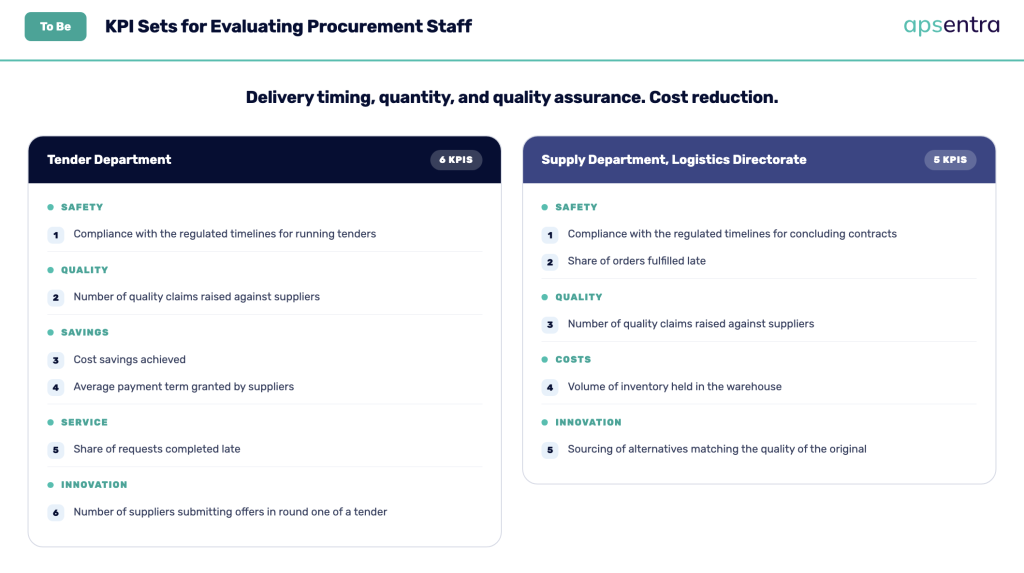
Designed a KPI and incentive framework for procurement and tendering teams, linking performance to measurable outcomes such as:
- Procurement cycle time
- Cost savings
- Supplier development
- Competitive sourcing activity
- Process compliance
Digital procurement roadmap
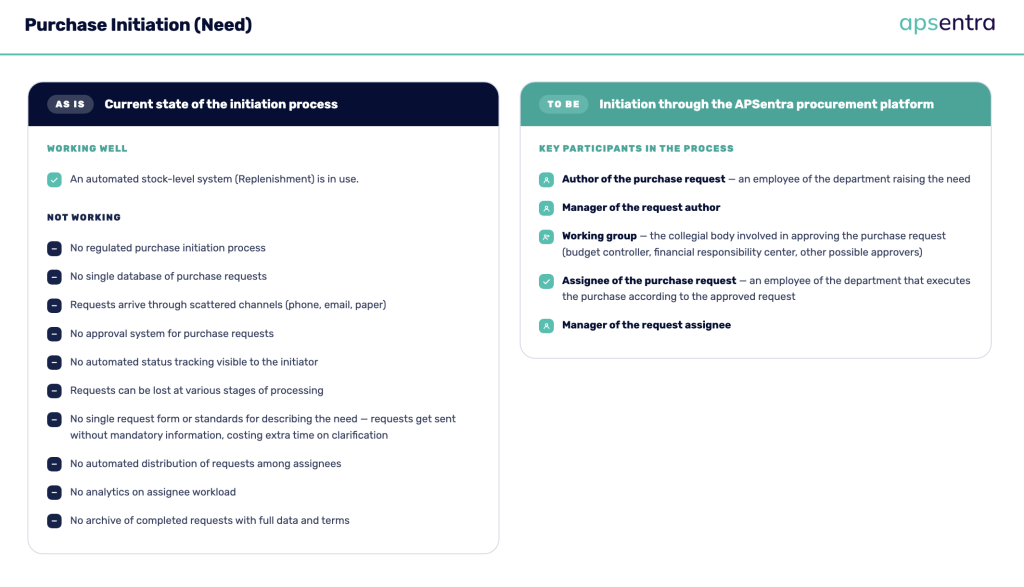
Defined the automation sequence across the procurement lifecycle — from requisition and tendering through contracting and delivery tracking — and aligned technology implementation with each stage of the organizational transformation.
Deliverables
- Procurement consulting service
- Organizational design options and recommended target operating model
- 12-month phased procurement transformation roadmap
- Three-tier procurement approval and authority matrix
- KPI and incentive framework for procurement teams
- Digital procurement automation roadmap
- Current-state and future-state procurement process maps
Results

Up to 60% less time spent processing requisitions

Up to 60% faster tender processing

~80% reduction in contract preparation time

A clear three-tier approval structure
A 12-month path to centralized tendering
Business Impact
Separating who requests a purchase from who selects the supplier established an independent procurement control point and addressed key conflict-of-interest risks identified during the diagnostic.
The phased procurement strategy consulting approach also avoided a disruptive, organization-wide transition. Instead, the company could build centralized procurement capabilities category by category, starting where competitive sourcing was easiest to implement and expanding toward production-critical and international purchasing.
At the same time, the new governance model and KPI framework gave leadership clearer visibility into who makes procurement decisions, how those decisions are evaluated, and what outcomes the procurement function is expected to deliver.
The result is a scalable procurement operating model combining centralized tendering, stronger governance, clearer accountability, and digital process automation.