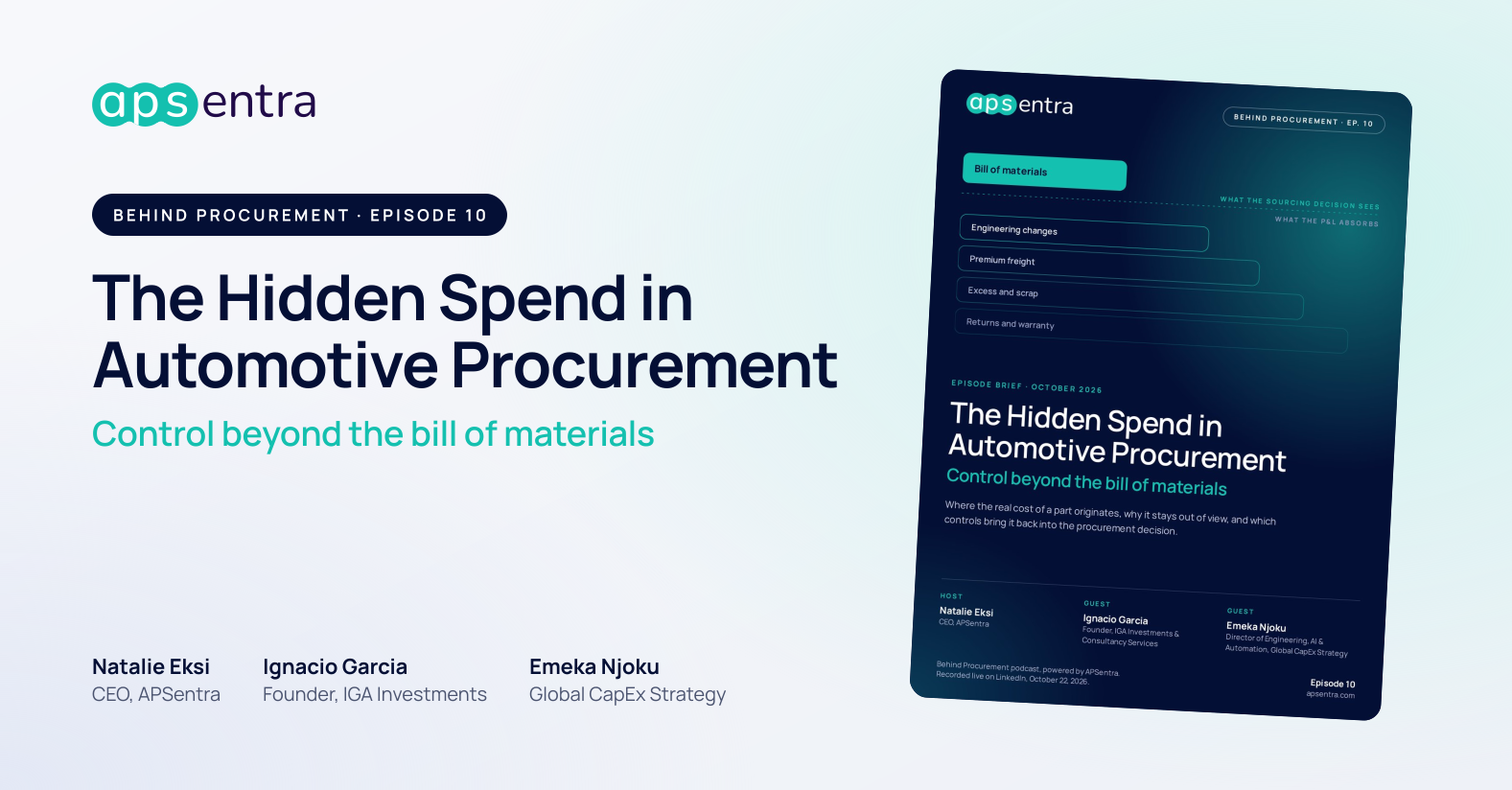
A lower piece price can still deliver a higher total cost. The difference sits in spend beyond the bill of materials.
Engineering changes, premium freight, excess stock, scrap, and warranty returns rarely enter the sourcing decision, yet they land on the P&L. In our LinkedIn poll, data split across systems led as the reason this spend stays hidden, while “no single owner” received no votes at all.
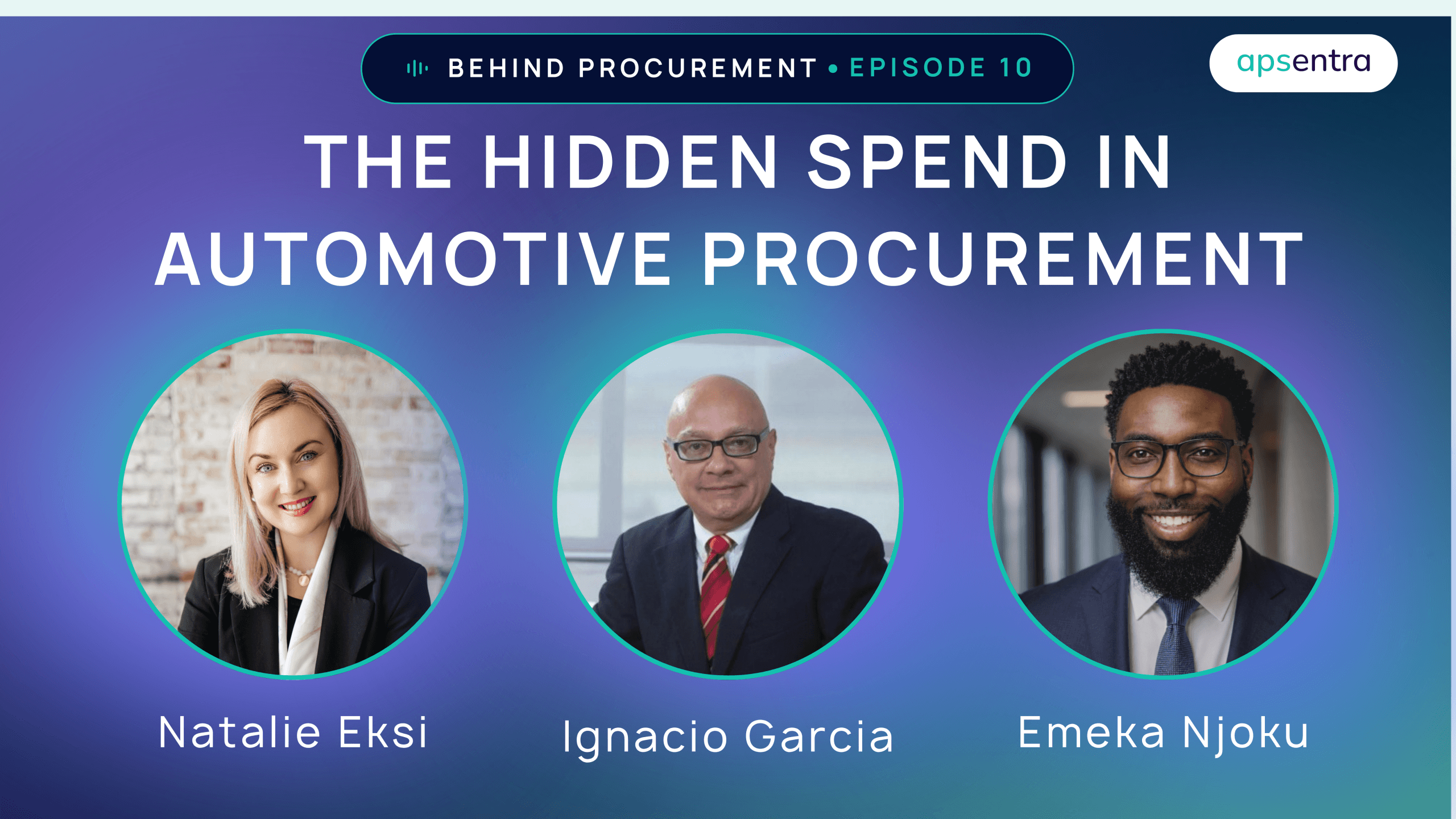
In Episode 10 of Behind Procurement, APSentra CEO Natalie Eksi talks with Ignacio Garcia, Founder of IGA Investments & Consultancy Services and former Senior Vice President for Latin America at Cummins, and Emeka Njoku, Director of Engineering, AI & Automation at Global CapEx Strategy. They examine where hidden spend originates in automotive procurement and which controls bring it back into the sourcing decision.


What you’ll learn:
- Why fragmented systems, siloed budgets, and piece-price KPIs keep spend beyond the BOM out of view
- How engineering changes, premium freight, scrap, and returns erode margin after the sourcing decision
- One part, six stages: where cost accumulates from RFQ to warranty claim
- Why contract enforcement is an operational discipline rather than a legal one
- Four practical controls: total landed cost, aligned forecasts, part movement tracking, and clear cost ownership
- How one industrial group standardized tendering across its subsidiaries
Who it’s for:
CPOs, CFOs, and supply chain leaders at automotive OEMs and Tier 1 and Tier 2 suppliers, plus the finance and operations teams accountable for program margin.