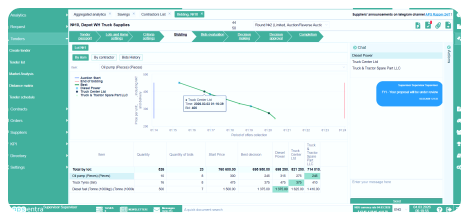

At a Glance
Procurify and APSentra both check budgets early and route approvals cleanly, which is why Procurify earns strong marks from mid-market finance teams. The real difference shows up at the edges of Procurify’s stated scope: inventory management, strategic sourcing, and complex multi-entity structures. Procurify is candid that strategic sourcing isn’t its focus, and practitioner reports describe limits with complex multi-entity structures and no inventory management. APSentra covers all of that as part of one platform, configured to your actual org structure.
Quick comparison
| Category | APSentra | Procurify |
|---|---|---|
| Best fit | Any size, including multi-entity and holding structures, that wants full source-to-pay in one platform | 100-2,000 employee companies with a single, fairly simple structure and mostly indirect spend (by its own positioning) |
| Core coverage | Full source-to-pay: sourcing/RFx, contracts, P2P, supplier management, inventory, analytics | Purchase-to-pay with budget-at-request checks — no inventory management, by direct user report |
| Multi-entity / complex structures | Native — proven with multi-entity holding structures | Partial — practitioner reports describe limits with multiple entities and locations |
| Inventory management | Included | Not included, per practitioner reports |
| Receiving & matching | Structured receiving beyond PO-number-only references | Relies on supplier PO numbers and CSV exports, per practitioner reports |
| Strategic sourcing | Built-in | Outside its stated focus — Procurify positions itself away from enterprise strategic sourcing |
| ERP / accounting sync | Any ERP, incl. SAP, SAP Business One, NetSuite, Microsoft Dynamics 365 BC, Odoo | Two-way sync with NetSuite, Sage Intacct, Dynamics 365, QuickBooks Online |
| Implementation time | Up to 8 weeks for the full cycle | Not published; user reports describe a straightforward rollout for its core P2P scope |