














Procurement mistakes don’t just affect budgets — they impact harvest cycles
Key challenges APSentra solves:

Seasonal purchases

Just-in-time delivery

Rapid price volatility

Limited visibility

Perishable inputs

Multi-location coordination


APSentra — a unified source-to-pay procurement platform, built for agricultural reality
APSentra aligns procurement with how agricultural operations actually run — across cycles, locations, and supply chains.



Seasonal procurement governance
Procurement follows crop cycles — not static budgets.
- Configurable workflows aligned with planting and harvesting seasons
- Budget allocation by crop cycle and production phase
- Category-specific planning for seeds, fertilizers, inputs
Financial control that protects margins
Keep production running — no delays, no surprises.
- BOM-driven purchasing workflows
- Supply continuity monitoring
- Inventory-linked budget control
- Multi-plant supplier visibility
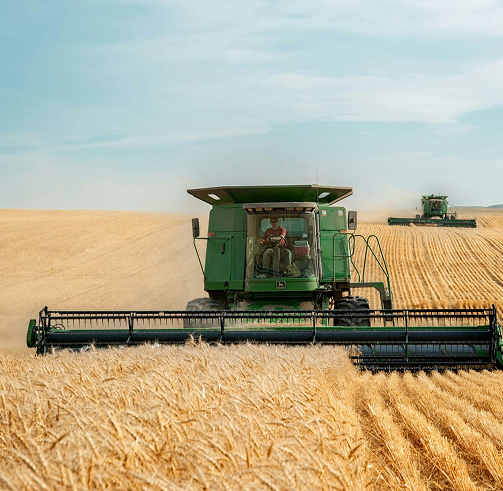
Commodity spend visibility
Control procurement across supply chains, strict compliance, and margin-sensitive operations.
- Production-aligned raw material planning
- Quality, safety, and certification compliance
- End-to-end batch and supplier traceability
- Shelf-life and storage-aware procurement
- Multi-facility coordination and visibility
- Input cost volatility management
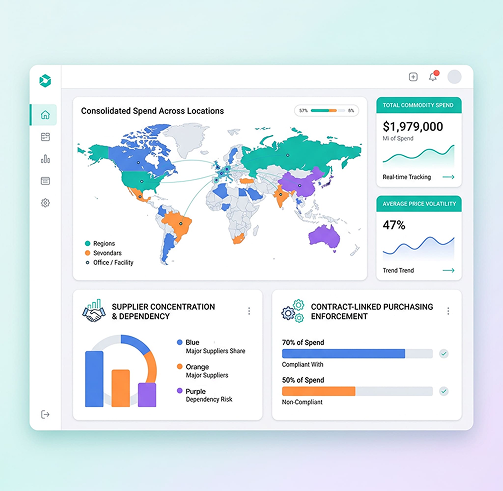
Supplier management at scale
Control high-volume, distributed procurement without losing margins.
- SKU-level purchasing governance
- Tail spend consolidation
- Packaging & cost optimization
- Real-time spend visibility
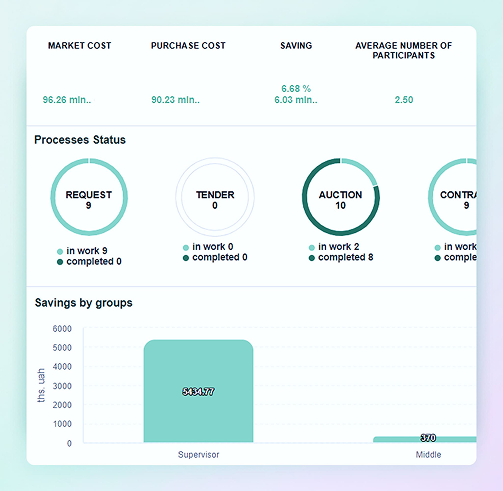
Just-in-time delivery control
Full control over project-driven procurement and subcontractors.
- Project-level spend tracking
- Commitment-based forecasting
- On-site approval workflows
- Audit-ready documentation







Other companies vs APSentra
- Static annual budgeting
- Standard supplier workflows
- General spend tracking
- No planting cycle awareness
- Limited multi-location oversight
- Seasonal allocation planning
- Rural sourcing management
- Commodity-specific analytics
- Just-in-time input alignment
- Farm & processing visibility
Smooth custom & ERP-agnostic integrations
Seamlessly integrates with your ERP, accounting, collaboration, analytics, and supplier ecosystems.
Keep budgets, contracts, purchase orders, tenders, and payments aligned across all enterprise systems.




Why agro companies choose APSentra




Latest articles
AI Procurement Workflows That Improve Decision Quality
Procurement Financial Efficiency in Construction: A CFO’s Guide to Margin Protection

APSentra on Thoughts & Coffee with Let’s Talk Supply Chain
FAQs
What is procurement in agriculture?
Procurement in agriculture is the specialized source-to-pay process of sourcing production-critical inputs, including seeds, fertilizers, crop protection, livestock feed, heavy machinery, fuel, and logistics at the optimal price and timeline without disrupting fixed biological timelines.
Unlike generic procurement workflows, agricultural purchasing is deeply synchronized with seasonal planting windows, crop growing phases, and volatile global commodity price fluctuations. APSentra enables this by directly aligning procurement workflows with real-time crop and livestock cycles, ensuring critical inputs arrive exactly when they impact yield, rather than after a field window closes.
What software is used for procurement in the agriculture industry?
Agribusinesses use a mix of enterprise tools, but specialized agriculture procurement platforms like APSentra are explicitly designed to handle field-level input complexity. While standard corporate purchasing systems handle indirect office spend well, they lack the specific architecture to manage volatile raw materials, forward contract pricing, and rural supplier networks.
APSentra acts as an intelligent layer that manages everything from seasonal demand forecasting to decentralized vendor verification, protecting thin farm margins from unexpected input cost inflation and maverick field spending.
What is the difference between generic procurement software and agriculture-focused systems?
The fundamental difference lies in biological alignment and budgeting flexibility. Generic procurement software relies on static annual budgets, assumes linear delivery schedules, and lacks specialized commodity analytics. Conversely, an agriculture-focused procurement system like APSentra is built around the “5 Ps of Ag-Procurement”:
- Product: Managing crop- and animal-specific input requirements.
- Price: Handling complex, contract-linked pricing to mitigate commodity volatility.
- Place: Supporting fragmented, decentralized rural and multi-location logistics.
- Process: Structuring time-sensitive, seasonal workflows instead of rigid fiscal quarters.
- Performance: Tracking historical vendor compliance and direct yield impact.
What is an ERP in agriculture, and do I still need procurement software?
An Agricultural Enterprise Resource Planning (ERP) system is a broad software suite used to unify high-level farm accounting, payroll, land management, and macro-level inventory data. However, standard Ag-ERPs frequently lack proactive procurement guardrails, causing field operators to make non-compliant, off-contract purchases that inflate operational expenditures (OpEx).
APSentra complements your agricultural ERP by acting as the strict financial governance gate, enforcing automated approval matrixes, running structured RFQ comparisons, and handling automated invoice processing before expenditures ever hit your core ledger.
How does procurement software manage commodity price volatility and protect agricultural margins?
Specialized software mitigates margin risk by embedding financial discipline directly into the purchasing flow. Agricultural margins are hyper-sensitive to supply chain bottlenecks, fuel spikes, and localized weather shifts.
APSentra dampens this volatility through advanced contract-linked purchasing rules, forward-pricing agreement tracking, and real-time supplier exposure dashboards. By giving commercial teams a unified view of all raw material commitments, it allows agribusinesses to proactively diversify their supply chains and lock in pricing before market spikes erode profitability.
What are the best cloud-based procurement tools for industrial companies?
Different industries operate under fundamentally different conditions — yet most procurement tools treat them the same.
Key differences include:
- Regulatory and compliance requirements
- Industry-specific spend structures
- Supply chain complexity and dependencies
- Contract and pricing models
- CapEx vs OpEx governance
Generic procurement systems fail to reflect these realities, forcing teams into manual workarounds.
APSentra solves this by aligning procurement workflows, controls, and data structures with how each industry actually operates — reducing risk and improving decision-making.
Why is seasonality the most critical risk factor in agricultural procurement?
Agriculture operates on rigid biological deadlines where a delay of even a few days can completely ruin seasonal yield and revenue potential. Fertilizers must hit the soil precisely during planting; crop protection must align with specific growth stages; and feed distribution must match exact livestock lifecycles. Traditional procurement cycles stall under manual invoice processing and lagging approval routings.
APSentra eliminates these operational bottlenecks by automating three-way matching (PO, Delivery Note, and Invoice) and utilizing mobile-friendly intake channels so field operators can source materials quickly while maintaining absolute policy compliance.