APSentra on Thoughts & Coffee with Let’s Talk Supply Chain
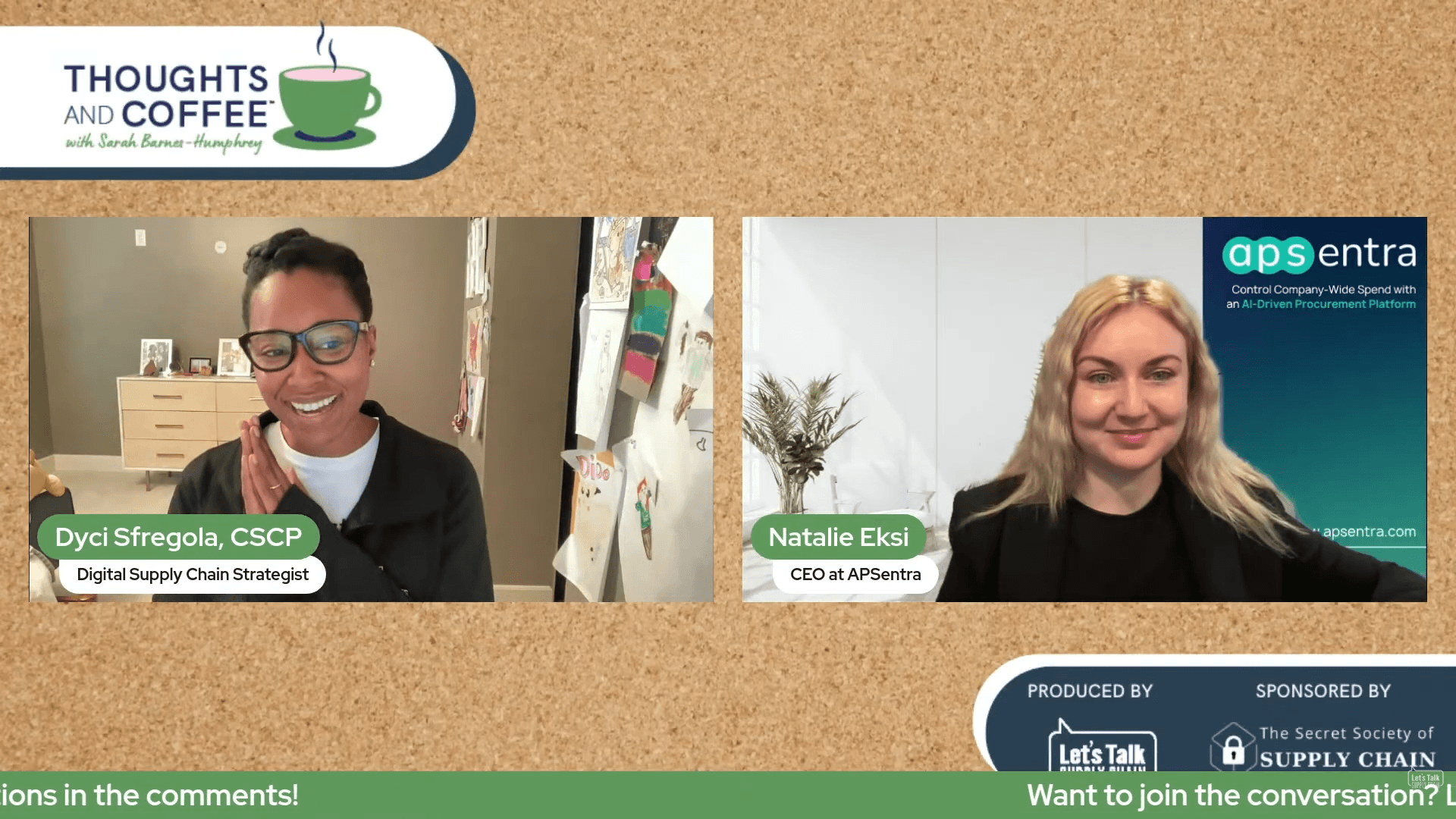
APSentra CEO Natalie Eksi joined Sarah Barnes-Humphrey on Thoughts & Coffee alongside Dyci Sfregola, Digital Supply Chain Strategist, for a live conversation about one of the most consequential shifts in how enterprises operate: the move from transactional procurement to procurement as a financial control function.
The episode was part of APSentra’s participation in National Supply Chain Day week in Atlanta, a full schedule of events organized by New Gen Architects and anchored by the National Supply Chain Day Gala 2026. The live format put the ideas directly in front of a community of practitioners, with audience questions shaping the direction of the discussion in real time.
“Supply chain is an industry powered by hardworking people. Moments like this, when we can pause, celebrate, and connect, are truly well deserved.”
— Natalie Eksi, CEO at APSentra
The editorial backbone for the conversation was APSentra’s article on procurement as a strategic finance function during economic volatility, a piece that examined how organizations that align procurement with financial decision-making are better positioned to protect margins when conditions tighten.
You can read that article here: Procurement as a Strategic Finance Function During Recession.
Why Procurement Belongs in the Finance Conversation
For most organizations, procurement controls between 50 and 80 percent of total external spend. It is the largest single lever for cost management in the business, and historically, one of the least governed.
The Thoughts & Coffee conversation addressed this directly. The question is not whether procurement should be connected to financial planning. It is why, in most organizations, it still is not. Procurement decisions are made daily. Their financial consequences, committed spend, budget deviations, and supplier exposure often surface weeks later in a report that no one can act on.
What changes when procurement is treated as a strategic finance function? Three things shift:
- Spend commitments are visible before they become liabilities, not after.
- Budget discipline moves from periodic reconciliation to continuous control.
- Procurement data feeds financial forecasting in real time, narrowing the gap between what was planned and what was spent.
These are not technology problems. They are governance and workflow problems. The technology exists to solve them. The organizational will to connect procurement to financial decision-making is what most companies are still developing.
The Questions Practitioners Are Actually Asking
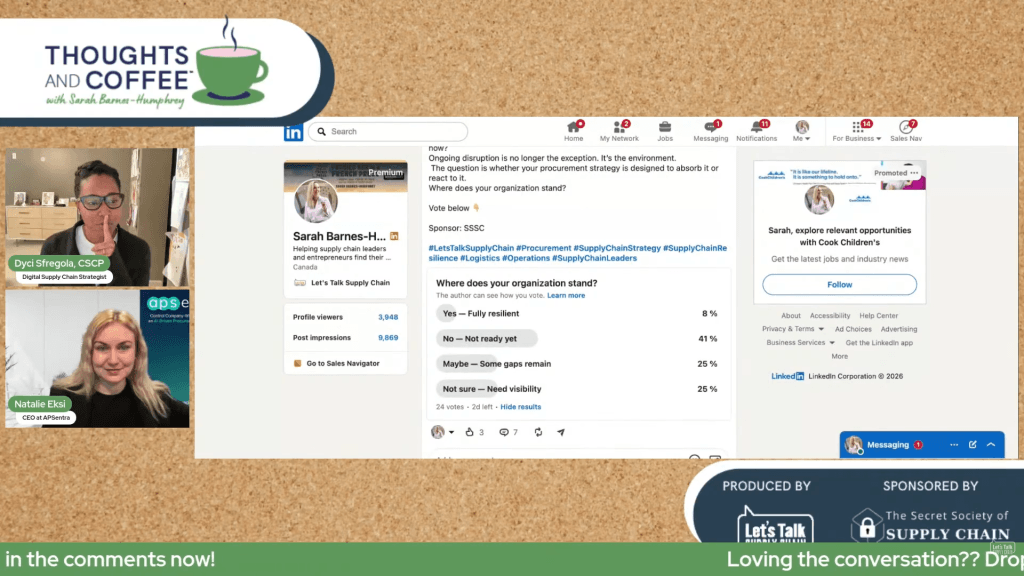
Live audience participation is one of the things that distinguishes Thoughts & Coffee from a recorded interview. The questions that came in during this episode reflect where the procurement community is right now.
Several themes repeated across the audience questions:

How do you build the case internally for elevating procurement?
What does a recession actually change about how procurement should operate?
Where does technology fit, and where does it not?
What APSentra Is Building
APSentra is a procurement and spend management platform built for organizations that treat procurement as an operational and financial control function, not a purchasing department.
The platform is designed as a digital twin of the organizational structure: every procurement workflow, approval route, and spend decision is mapped to the actual hierarchy of the business. This means that when a purchase request is raised, the system knows which budget it draws from, which authority level needs to approve it, and which supplier pool it should route to automatically.
The capabilities that matter for the finance-procurement alignment conversation are:
- Real-time spend commitment tracking against approved budgets, before invoices arrive.
- Structured approval workflows that enforce governance without slowing execution.
- Complete audit trail of every procurement action, decision, and document, accessible to finance and leadership at any time.
- Supplier management that eliminates informal relationships from selection decisions.
If you want to see how organizations are applying this in practice, the APSentra case studies cover real implementations in construction, infrastructure, and enterprise procurement, including the specific controls and results achieved.
Watch the Full Episode
The full Thoughts & Coffee episode is available on the Let’s Talk Supply Chain YouTube channel. The conversation runs approximately 30 minutes and covers the topics outlined above, with live audience interaction throughout.
Watch it here: APSentra on Thoughts & Coffee with Let’s Talk Supply Chain.