













A missed component or a non-compliant supplier can halt an entire production line
Key challenges APSentra solves:
BOM complexity & direct materials
Single-source risk

Commodity price volatility
Fragmented multi-plant procurement

Supplier quality & compliance failures
Long lead times & disconnected buying


APSentra — a unified source-to-pay procurement platform, built for manufacturing operations
APSentra aligns procurement with production — across BOMs, plants, and the suppliers your line depends on.



Production-aligned procurement
Every PO ties back to the production plan.
- Map procurement to BOM components and production work orders
- Track on-order quantities and expected delivery against demand
- Automated reorder alerts based on stock thresholds and lead times
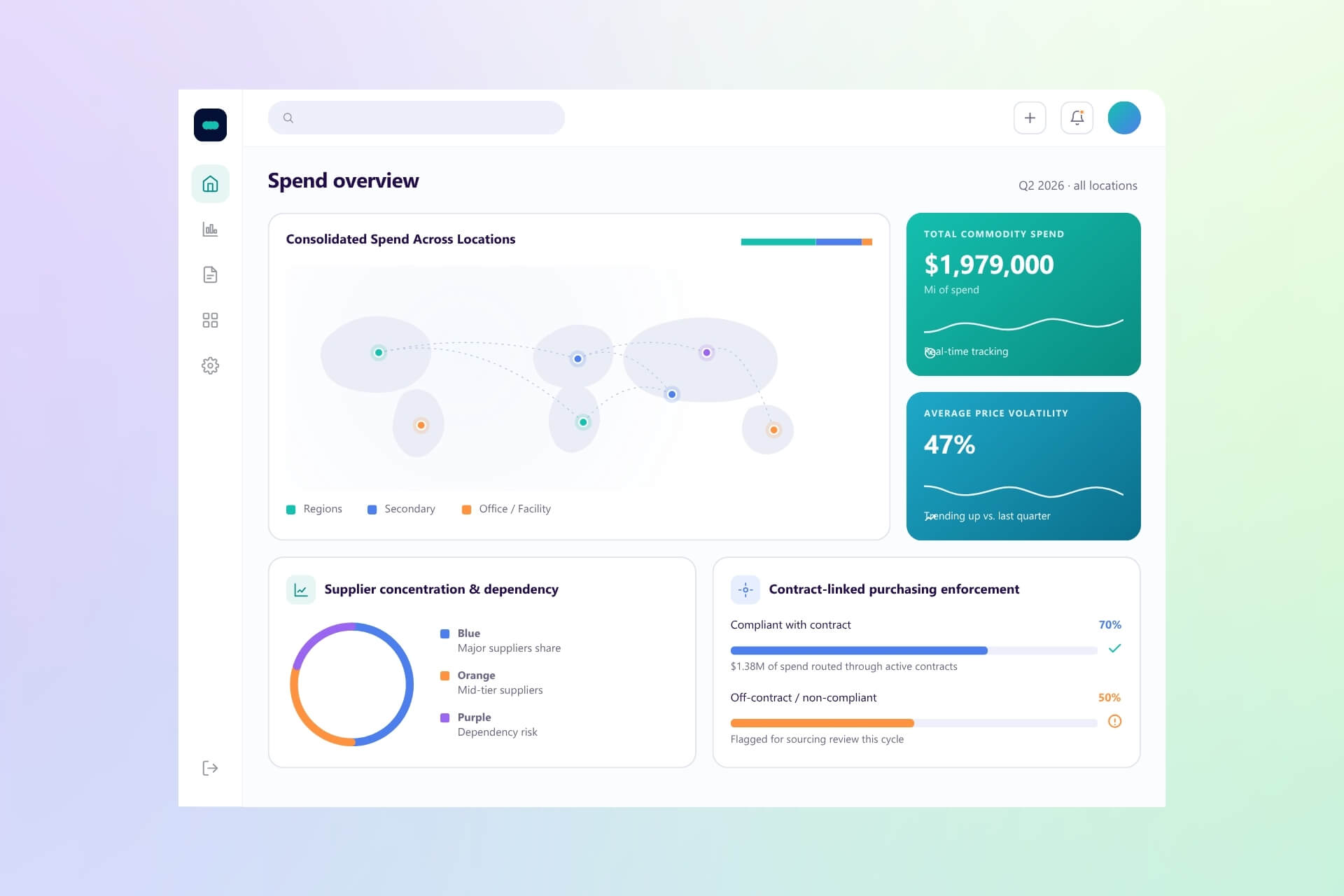
- Consolidated spend across all plants for the same component
Purchasing moves with the schedule, not against it.
Single-source risk elimination
No critical component is left with a single point of failure.
- Approved vendor lists with tiered sourcing alternatives per component
- Supplier risk scoring based on delivery, quality, and financial signals
- Automated dual-sourcing workflows for high-criticality materials
- Supplier performance scorecards updated after every transaction
Supply risk is visible across the entire supplier base.
Strategic sourcing across categories & plants
Plant-level spend consolidated into negotiating power.
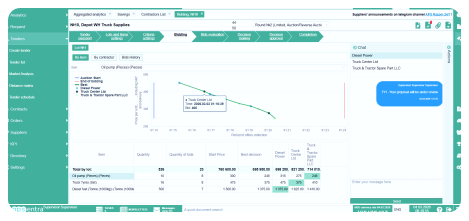
- Automated RFQ distribution to qualified supplier panels
- Side-by-side bid comparison with total-cost-of-ownership analysis
- Consolidate multi-plant spend volumes for negotiation leverage
- Approved vendor list enforcement at the point of requisition
Direct, indirect, and services sourcing from one platform.
Procure-to-pay automation
From production demand to paid invoice, automated.
- Demand-triggered purchase orders linked to production work orders
- Electronic PO dispatch and supplier acknowledgement tracking
- Automated three-way matching: PO, goods receipt, and invoice
- Configurable approval workflows by value, category, or plant
Manual invoice handling gives way to touchless matching.

Supplier quality & compliance
Quality issues caught before they become recalls.
- Structured supplier qualification
- Non-conformance tracking
- Quality scorecards per supplier
- Compliance documentation and audit trail
Quality and compliance are tracked at the source.





Other companies vs APSentra
- Static company-wide budgeting
- Standard indirect-only supplier workflows
- General, lagged expense tracking
- No connection to factory-floor schedules
- Fragmented, plant-by-plant buying
- Production-aligned demand & BOM line-item mapping
- Rigorous supplier quality, compliance & non-conformance tracking
- Automated three-way matching across high invoice volumes
- Live tracking of at-risk components to protect line uptime
- Centralized, consolidated multi-plant spend leverage
Smooth custom & ERP-agnostic integrations
Seamlessly integrates with your ERP, accounting, collaboration, analytics, and supplier ecosystems.
Keep budgets, contracts, purchase orders, tenders, and payments aligned across all enterprise systems.




Why manufacturers choose APSentra




Keep the line moving with production-aligned procurement
No stockouts. No single-source surprises.
Latest articles
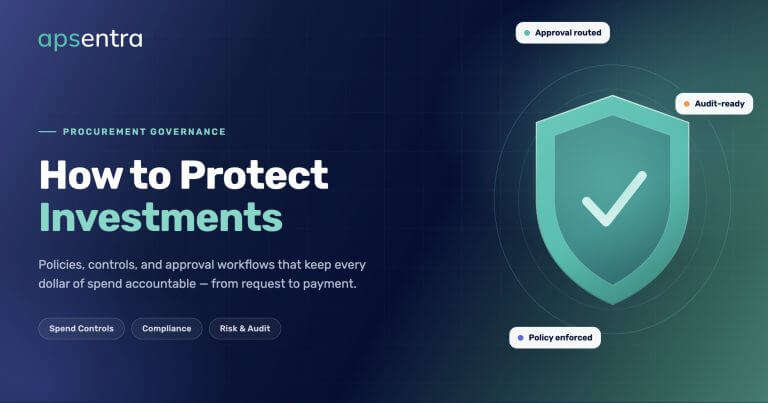
Procurement Governance in Capital Projects: How to Protect Investment Returns
The State of AI Adoption in Procurement in 2026
AI Procurement Workflows That Improve Decision Quality
FAQs
Which procurement software is built for manufacturing?
Manufacturing needs procurement that understands direct materials, bills of materials, and production schedules — not just indirect office spend. Software built for the sector links purchasing to BOM line items and work orders, consolidates multi-plant spend, and treats supplier continuity as a production risk rather than only a cost line.
APSentra is built for industrial operations: it maps procurement to BOMs and production demand, automates three-way matching (PO, goods receipt, invoice), tracks supplier quality and non-conformance, and surfaces at-risk components before they can halt a line.
What is the difference between P2P and S2P software?
The difference is scope. Procure-to-Pay (P2P) covers transactional execution — requisition, order dispatch, goods-receipt logging, and invoice approval. Source-to-Pay (S2P) covers the full lifecycle, adding strategic supplier vetting, RFQ tendering, contract negotiation, and compliance monitoring ahead of the P2P cycle.
APSentra delivers a unified source-to-pay platform that connects upfront sourcing with direct-material execution, so industrial teams don’t have to stitch together fragmented tools.
What are the four main types of procurement in manufacturing?
Purchasing typically splits into four streams: direct procurement (raw materials, components, and assemblies that enter the BOM and finished product); indirect procurement (day-to-day operational inputs, facilities, PPE, and office supplies); MRO procurement (spare parts, lubricants, and tools that keep machinery running); and services procurement (third-party logistics, freight, and specialized engineering labor).
APSentra governs all four under one platform, with category-specific approval routes and compliance guardrails.
What makes a specialized manufacturing platform better than generic e-procurement?
A specialized platform recognizes that a single missed component can stop a multi-million-dollar production run, so it treats risk as a first-order concern. Generic e-procurement views purchasing linearly and stays disconnected from operational reality.
APSentra closes that gap with live tracking of at-risk line components, multi-tiered sourcing alternatives to mitigate single-source risk, and historical supplier quality scorecards – turning procurement from a reactive buying group into a proactive uptime and margin defense.
How should multi-plant, multi-entity manufacturers evaluate procurement and AP automation?
For multi-entity, multi-plant environments, the tests are consolidated spend visibility across plants, controls that hold per entity, and an accounts-payable engine that absorbs high volumes of complex factory invoices with minimal manual touch.
APSentra provides multi-plant spend visibility alongside a high-automation AP engine that matches POs, goods receipts, and invoices, so finance teams aren’t manually clearing factory invoice floods.
What are the best cloud-based procurement tools for industrial companies?
Different industries operate under fundamentally different conditions — regulatory and compliance requirements, spend structures, supply-chain dependencies, contract and pricing models, and CapEx vs OpEx governance – yet most procurement tools treat them the same, forcing teams into manual workarounds.
APSentra aligns procurement workflows, controls, and data structures with how each industry actually operates – reducing risk and improving decision-making.