














Budget deviations found too late don’t stay deviations — they become overruns
Key challenges APSentra solves:
Budget overruns & poor spend visibility

Subcontractor chaos & compliance gaps

Fragmented procurement

Slow, manual invoice processing
On-site maverick spend
Contract management complexity


APSentra — a unified source-to-pay procurement platform, built for construction and engineering
APSentra ties procurement to the project — cost centres, subcontractors, and site teams — so control holds from head office to the field.


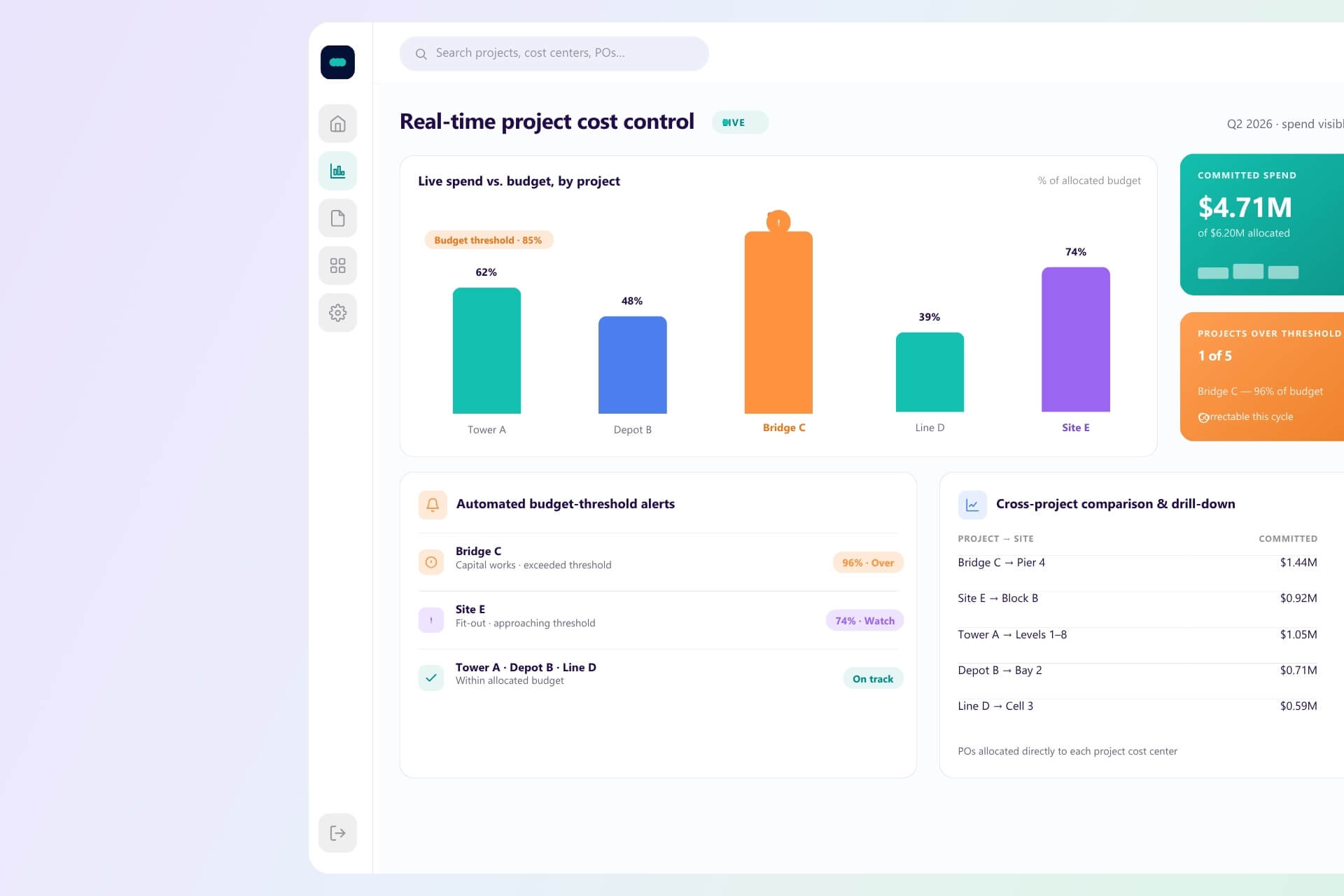
Real-time project cost control
Spend is visible project by project, in real time.
- Allocate purchase orders directly to project cost centers
- Automated alerts when spend approaches budget thresholds
- Cross-project comparison to identify cost variances early
- Drill down from company-level to individual site spend
Overruns are caught while they can still be corrected.
Subcontractor lifecycle & compliance
Every subcontractor vetted, tracked, and scored.
- Centralized subcontractor register with compliance status
- Automated renewal reminders for insurance and licenses
- Structured RFQ and tender comparison for selection
- Performance scoring and incident tracking per project
Compliance holds across 50+ subcontractors per project.

Procure-to-pay automation
Invoice bottlenecks cleared on every project.
- OCR-powered invoice capture from any format
- Automated three-way matching: PO, goods receipt note, and invoice
- Configurable approval routing by project, value, or category
- Early-payment discount capture for strategic suppliers
Payment cycles keep moving despite high invoice volume.

On-site maverick-spend control
Uncontrolled buying stopped before it starts.
- Mobile-friendly purchase intake for on-site teams
- Policy guardrails prevent non-compliant buying at source
- Multi-tier approval workflows by project code or value
- Full audit trail for every purchase decision
Site teams buy fast — inside policy.
Contract management
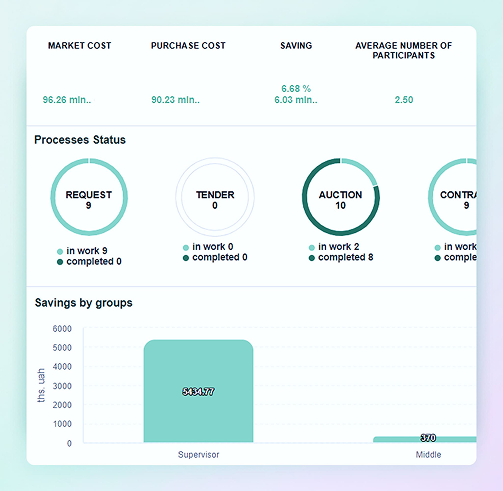
Contract obligations tracked across every project.
- Renewal and milestone-obligation tracking
- Variation-order control
- Obligation and deadline alerts
- Leakage and dispute prevention
Milestones and renewals never slip through the cracks.






Other companies vs APSentra
- Static company-wide budgeting
- Standard generic supplier workflows
- General, lagged spend tracking
- No on-site field procurement awareness
- Fragmented, multi-location oversight
- Real-time project-by-project cost control
- Subcontractor vetting & compliance management
- Automated three-way matching (PO, GRN & invoice)
- Mobile-friendly intake to stop maverick spending
- Centralized cross-project & site-level visibility
Smooth custom & ERP-agnostic integrations
Seamlessly integrates with your ERP, accounting, collaboration, analytics, and supplier ecosystems.
Keep budgets, contracts, purchase orders, tenders, and payments aligned across all enterprise systems.




Why construction & engineering firms choose APSentra




Latest articles
Procurement Governance in Capital Projects: How to Protect Investment Returns
The State of AI Adoption in Procurement in 2026
AI Procurement Workflows That Improve Decision Quality
FAQs
What is construction procurement software?
Construction procurement software manages the full source-to-pay lifecycle for building, infrastructure, and engineering projects. Unlike generic ERP or standard procurement tools, it natively links purchase orders and material requests to specific project codes and cost centers, digitizes subcontractor onboarding and compliance tracking (insurance, licenses, performance), automates three-way matching (PO, goods-receipt note, invoice), and gives on-site teams mobile intake to eliminate maverick spending.
APSentra brings these together so cost control holds from head-office budgets down to individual site purchases.
What should large construction projects look for in procurement software?
On Tier 1 and Tier 2 projects, success depends on micro-level cost control across dozens of jobsites. The priorities are real-time spend visibility for field project managers, policy guardrails enforced at the point of purchase, subcontractor compliance at scale, and cross-site spend comparison to catch overruns early.
APSentra is built for that reality — managing 50+ subcontractors per project, allocating every commitment to a cost center, and surfacing budget variances before they materialize.
What is Engineering, Procurement, and Construction (EPC)?
EPC is a project-delivery model common in large-scale infrastructure, energy, and heavy industrial work. Under it, the prime contractor owns the full lifecycle: engineering (the architectural, structural, and technical design), procurement (sourcing, purchasing, and transporting materials, machinery, and specialized fabrications), and construction (labor, build phases, subcontractor onboarding, and handover of a completed facility).
The procurement arm carries much of the financial risk, which is why EPC contractors need tight links between commitments, milestones, and field execution.
How should EPC projects approach procurement software?
EPC contracts are heavily exposed to supply-chain delays and sudden margin compression, so the procurement platform has to bridge large financial commitments and actual field execution. That means contract and milestone-obligation tracking, multi-tier approval workflows, and invoice processing fast enough to keep high-volume supplier payments moving.
APSentra supports the procurement side of complex EPC projects with contract-management tracking, real-time milestone alerts, configurable approvals, and OCR-powered invoice capture.
Is construction procurement different from generic procurement?
Yes. Generic procurement tools work for predictable corporate indirect spend, but they assume static annual budgets and head-office buying. Construction is project-driven: budgets are allocated per job, purchasing happens on site, and margins are narrow and exposed to volatile material pricing.
APSentra moves from static budgeting to dynamic, project-based cost allocation — protecting margin from on-site budget leakage and price volatility.
What are the best cloud-based procurement tools for industrial companies?
Different industries operate under fundamentally different conditions — regulatory and compliance requirements, spend structures, supply-chain dependencies, contract and pricing models, and CapEx vs OpEx governance — yet most procurement tools treat them the same, forcing teams into manual workarounds.
APSentra aligns procurement workflows, controls, and data structures with how each industry actually operates — reducing risk and improving decision-making.