














Procurement in Financial Institutions Is Risk-Critical
Key challenges APSentra solves:

Regulatory compliance

Segregation of duties

Third-party risk

Audit readiness

Multi-entity governance

Spend transparency


APSentra — a unified source-to-pay procurement platform, built for regulated financial operations
APSentra aligns procurement with how financial institutions are actually governed — across entities, controls, and regulatory frameworks.



Governance, risk & compliance by design
Governance becomes systematic, not manual.
- Policy-driven approval workflows
- Role-based access control
- Segregation-of-duties enforcement
- Automated compliance validation
- Exception escalation logic
Compliance is embedded at the transaction level.
Continuous audit readiness
Audit preparation becomes continuous, not reactive.
- Timestamped audit trails
- Centralized documentation storage
- Regulatory reporting dashboards
- Export-ready compliance reports
Audit evidence exists the moment a transaction occurs.

Third-party & vendor risk governance
Third-party risk becomes measurable.
- Supplier lifecycle management
- Risk-based supplier categorization
- Due-diligence documentation workflows
- Contract enforcement controls
Vendor exposure is tracked, not assumed.

Internal controls & spend transparency
Transparency supports institutional integrity.
- Pre-commitment budget validation
- Spend-under-management tracking
- CapEx vs OpEx oversight
- Threshold-based approvals
Spend is controlled before it becomes a liability.
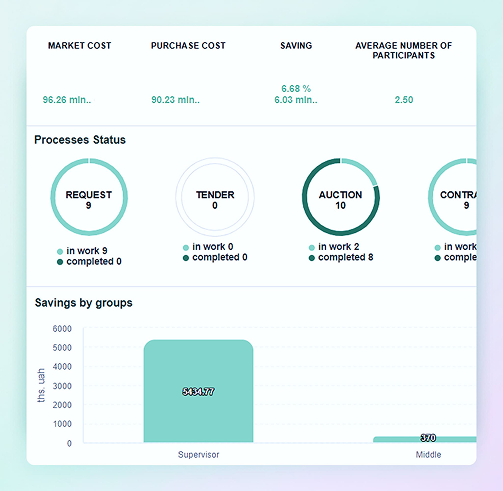
Multi-entity governance at scale
Scaling does not weaken regulatory discipline.
- Centralized governance with local configuration
- Consolidated cross-entity reporting
- Entity-level compliance oversight
- Cross-entity risk monitoring
One governance standard across every legal entity.










Other companies vs APSentra
- Basic approval workflows
- Limited audit traceability
- Minimal role separation
- Simple vendor database
- Reactive compliance checks
- Policy-driven GRC enforcement
- Full audit-ready documentation
- Segregation-of-duties controls
- Third-party risk governance
- Preventive policy validation
Smooth custom & ERP-agnostic integrations
Seamlessly integrates with your ERP, accounting, collaboration, analytics, and supplier ecosystems.
Keep budgets, contracts, purchase orders, tenders, and payments aligned across all enterprise systems.




Why financial institutions choose APSentra




Make procurement defensible across your institution
No audit surprises. No compliance gaps.
Latest articles
Procurement Governance in Capital Projects: How to Protect Investment Returns
The State of AI Adoption in Procurement in 2026
AI Procurement Workflows That Improve Decision Quality
FAQs
What is procurement in financial services?
In financial services, procurement is the source-to-pay process of sourcing, contracting, and paying for third-party goods and services, technology, professional services, facilities, and outsourced operations, under the same governance, risk, and compliance discipline that governs the rest of a regulated institution. Unlike generic purchasing, every step must satisfy internal controls, regulatory frameworks, and third-party risk obligations.
APSentra supports this by embedding policy-driven approvals, segregation of duties, and audit trails directly into procurement workflows, so each transaction is auditable, defensible, and aligned with enterprise GRC frameworks.
How does procurement software support SOX compliance?
SOX compliance rests on demonstrable internal controls over how spend is authorized and recorded. Procurement software supports this by maintaining structured approval logs, enforcing segregation of duties between request, approval, and payment, and documenting financial controls end-to-end.
APSentra captures timestamped approval history, links purchasing to budget authority, and produces export-ready records, so control evidence is continuous rather than reconstructed at audit time.
What is the difference between generic procurement software and governance-focused systems for financial institutions?
Generic procurement software is built for transactional efficiency: basic approval routing, a vendor list, and reactive compliance checks. Governance-focused procurement for financial institutions is built for defensibility — every workflow assumes regulatory scrutiny.
APSentra differs on five points: policy-driven GRC enforcement instead of basic workflows; full audit-ready documentation instead of limited traceability; configurable segregation-of-duties controls instead of minimal role separation; third-party risk governance instead of a simple vendor database; and preventive policy validation instead of after-the-fact checks.
Can procurement systems support AML and KYC requirements?
Yes. While AML and KYC are primarily customer-facing obligations, the same diligence discipline applies to third parties. Procurement systems support this through vendor validation workflows and documentation tracking that capture and retain due-diligence evidence.
APSentra centralizes supplier onboarding, risk-based categorization, and documentation validation, giving compliance teams a defensible record of which vendors were assessed, when, and against what criteria.
How does procurement improve audit readiness in regulated institutions?
Audit readiness depends on whether control evidence exists at the moment a transaction occurs — not whether it can be assembled afterward. Procurement software improves it through real-time audit trails, centralized documentation, and policy-based transaction validation.
APSentra timestamps every approval, stores supporting documentation centrally, and surfaces policy exceptions as they happen, so audit preparation becomes a continuous state rather than a reactive project.
What are the best cloud-based procurement tools for industrial companies?
Different industries operate under fundamentally different conditions — regulatory and compliance requirements, spend structures, supply-chain dependencies, contract and pricing models, and CapEx vs OpEx governance — yet most procurement tools treat them the same, forcing teams into manual workarounds.
APSentra aligns procurement workflows, controls, and data structures with how each industry actually operates — reducing risk and improving decision-making.