Energy Procurement Consulting: What Consultants Do and How to Choose One
Energy used to be a utility bill that facilities paid and finance absorbed. In 2026 it behaves more like a traded commodity with a long list of regulated add-ons, and its swings show up directly in margin. That shift explains why more CFOs and procurement leaders now ask whether they need outside expertise.
This guide explains what an energy procurement consultant actually does, how consultants differ from brokers, what a typical engagement looks like, and how to make sure the results hold once the engagement ends.
What Is Energy Procurement Consulting?
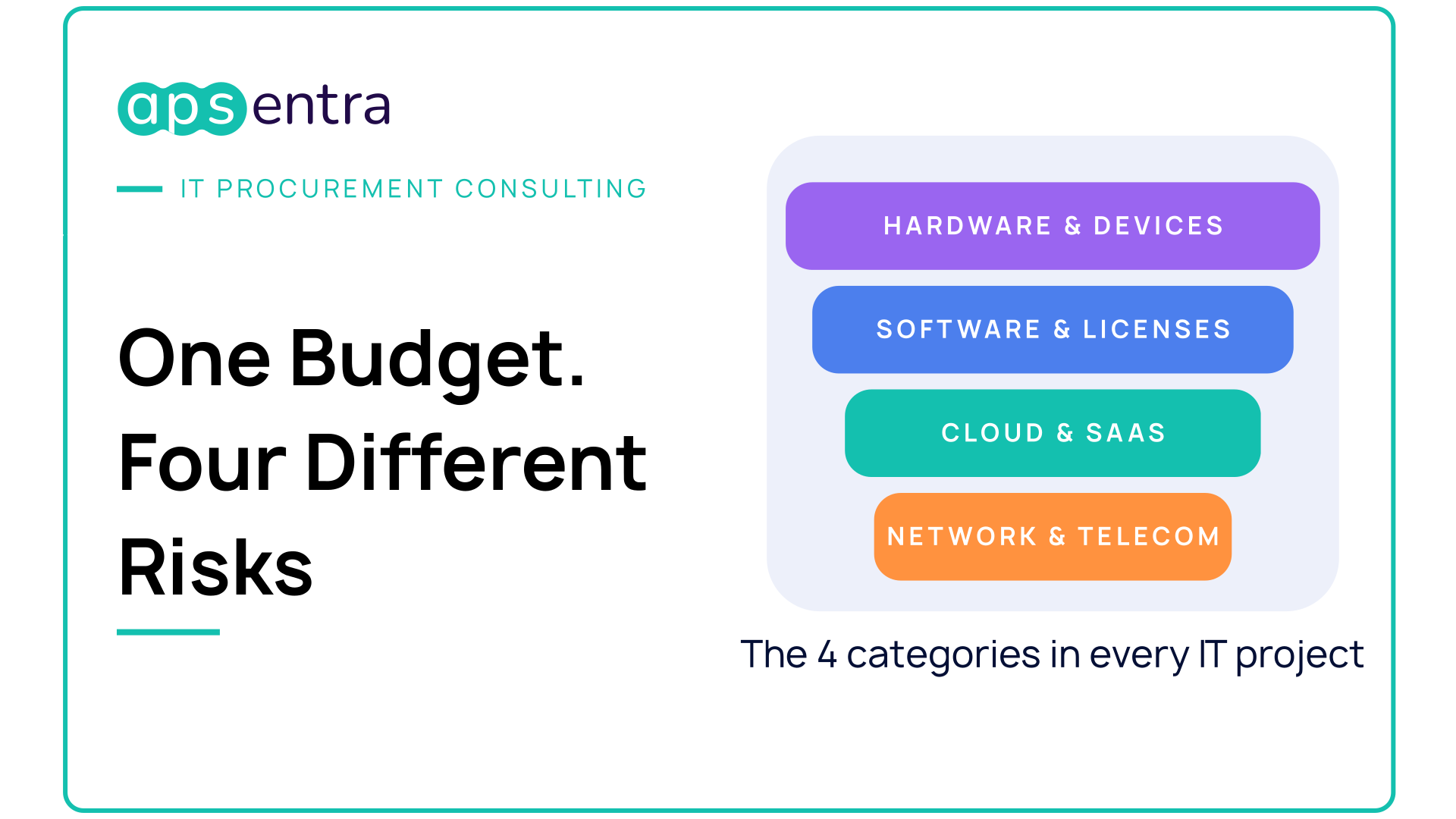
Energy procurement consulting covers the full buying cycle for energy commodities, from understanding what an organization consumes to deciding when, how, and from whom to buy it. The scope usually spans four areas:

Commodity strategy

Non-commodity cost control

Supplier management

Transition planning
A good consultant connects these areas. A contract that looks cheap on the commodity rate can still lose money if it ignores capacity charges, or if it locks the company in just before a site electrifies its fleet.
Why Demand for Energy Procurement Consulting Is Rising
Energy markets have become harder to read. The International Energy Agency’s July 2026 Electricity Mid-Year Update, summarized here, forecasts global electricity demand growth of 3.6% in 2026 and 3.8% in 2027, while flagging market turmoil and volatile prices. On the fuel side, the U.S. Energy Information Administration reported Brent crude averaging $91 per barrel in August 2026.
The commodity price is also only part of the bill. World Kinect’s 2026 buyer’s guide estimates that non-commodity charges, including transmission, distribution, capacity and policy costs, now make up as much as 30 to 60% of total energy spend.
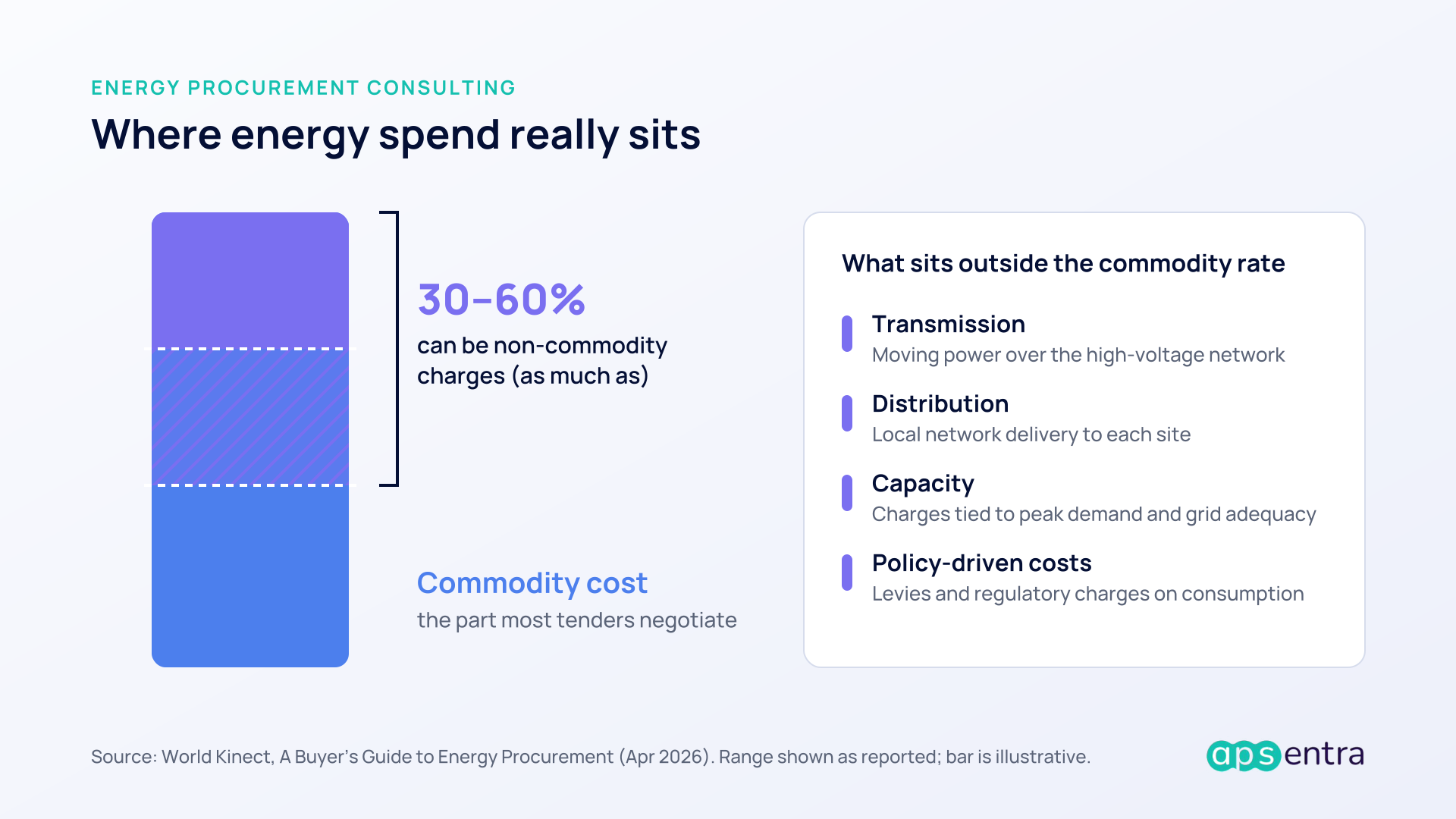
This is where energy procurement consulting earns its fee. Negotiating the commodity rate is visible and easy to measure; auditing tariff classes, capacity tags and network charges across dozens of sites is not, and that is often where recoverable value sits.
Core Energy Procurement Consulting Services
Service menus vary, but most energy procurement services fall into the categories below.
| Service | What it delivers | Why finance cares |
|---|---|---|
| Consumption and bill audit | Site-level baseline, billing error recovery, tariff review | Establishes the real cost base and recovers overcharges |
| Market intelligence | Price outlooks, regulatory changes, timing signals | Supports budget assumptions with evidence |
| Procurement strategy and risk policy | Fixed, indexed or layered buying; hedge limits | Converts risk appetite into written, approvable rules |
| Supplier tender and negotiation | RFPs, supplier shortlists, contract terms | Creates competition and comparable offers |
| Contract management | Renewal calendar, clause review, change control | Prevents rollovers onto expensive default rates |
| Renewable and PPA advisory | Certificate strategy, PPA structuring | Aligns climate targets with long-term cost exposure |
| Invoice validation and reporting | Monthly checks against contract, budget variance reports | Keeps actual spend tied to what was negotiated |
For renewable contracts specifically, our companion guide on renewable energy procurement covers PPA models and their risks in depth.
Energy Procurement Consultant vs. Energy Broker
The terms are often used interchangeably, but the business models differ, and the difference affects the advice you receive.
| Dimension | Energy broker | Energy procurement consultant |
|---|---|---|
| Primary role | Places contracts with suppliers | Designs strategy and manages the buying process |
| Typical compensation | Commission, often built into the unit rate | Fixed fee, retainer or success fee |
| Supplier neutrality | Limited to the broker’s supplier panel | Usually market-wide, if contractually required |
| Scope | Transaction-focused | Strategy, risk, contracts, invoices and reporting |
| Transparency | Fee may not be visible on the bill | Fee agreed and invoiced separately |
| Best fit | Small, single-site buyers | Multi-site portfolios and volatile exposure |
Neither model is wrong. The practical test is simple: ask every advisor how they are paid, whether any supplier compensates them, and whether those amounts will appear in writing.
The Energy Procurement Consulting Process
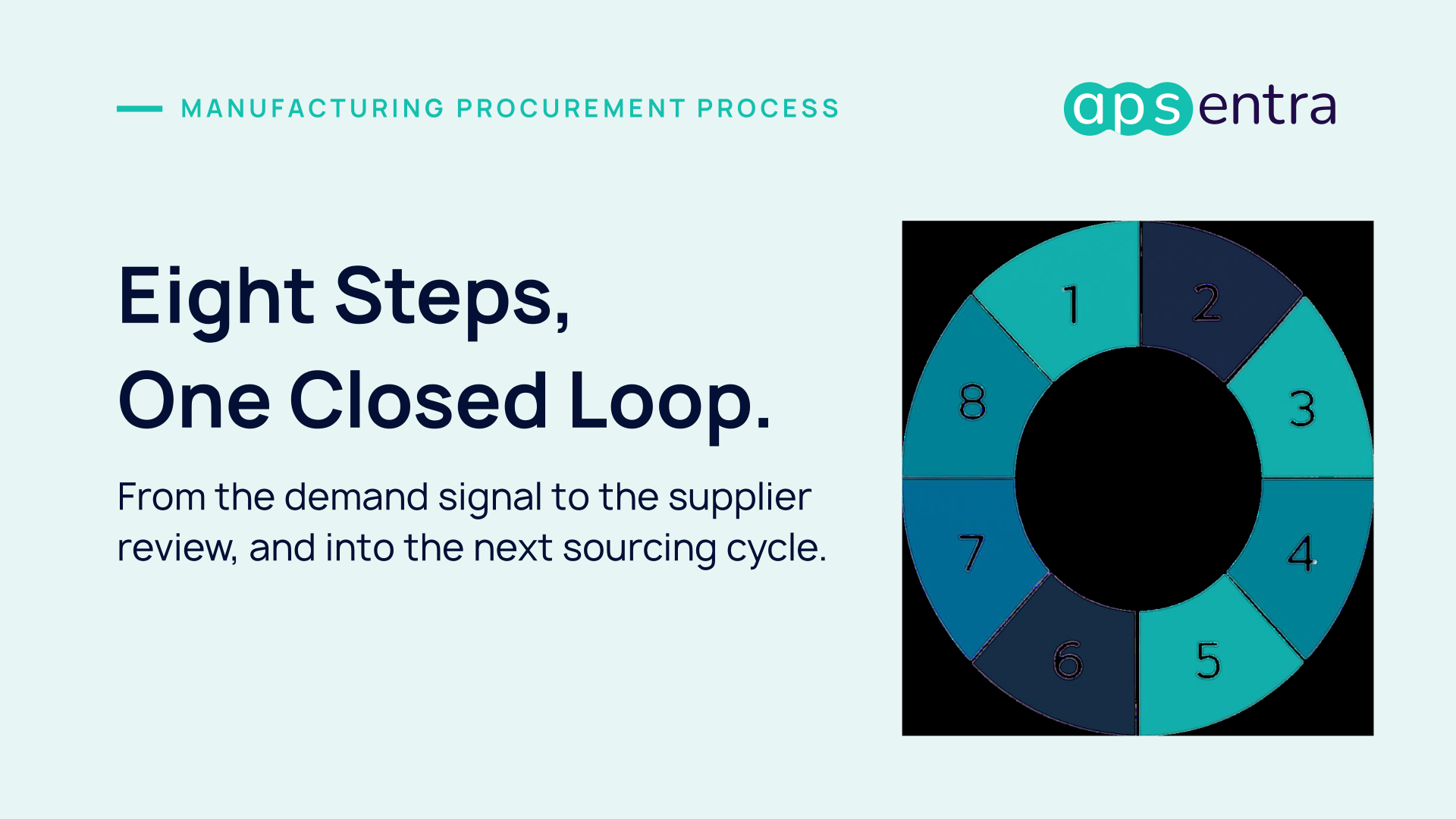
Engagements differ in length and depth, but most follow six phases.
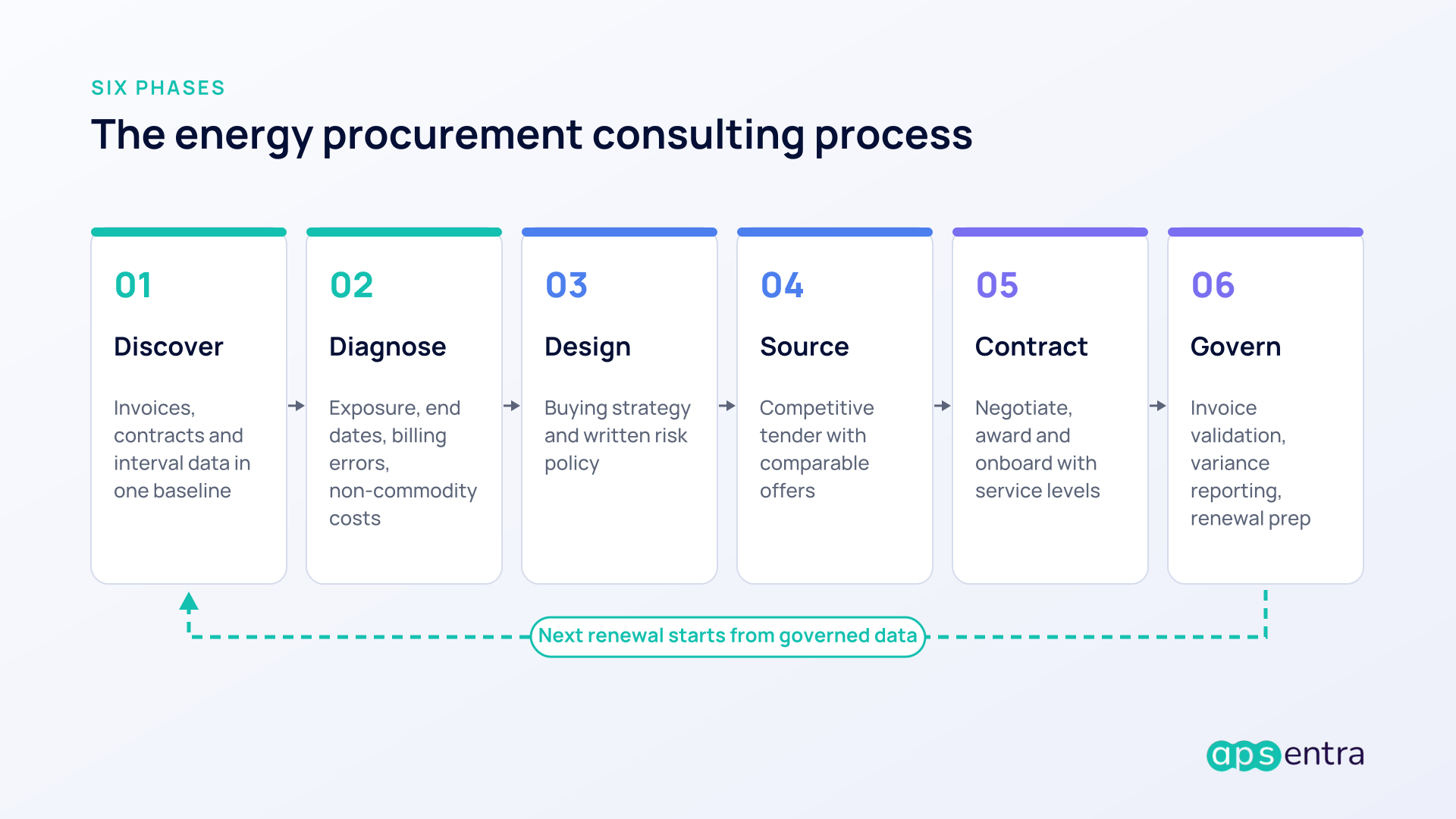

Discover

Diagnose

Design

Source

Contract

Govern
Phases one and two often surface quick wins, such as billing errors or tariff misclassification, that fund the rest of the engagement. Phase six is the one most engagements under-invest in, and it decides whether savings last.
How to Choose an Energy Procurement Consultant
Credentials matter, but the selection questions that best predict results are about incentives, coverage and continuity:
- Fee transparency. How is the consultant paid, and will any supplier commission be disclosed?
- Market coverage. Does the firm operate in every jurisdiction and commodity in your portfolio?
- Risk capability. Can it write and monitor a hedging or layered-buying policy, not only run tenders?
- Data and reporting. Will you receive site-level data you own, in a format your systems can use?
- Conflicts of interest. Does the firm also act for suppliers or developers?
- Handover. What stays with your team when the engagement ends: tools, calendars, approval rules?
For a wider view of how advisory firms differ in model and specialization, see our review of procurement consulting firms.
Why Consulting Outcomes Fade After the Engagement
The most common failure in energy procurement consulting is not a bad recommendation. It is a good recommendation that nobody enforces. Renewal dates slip, a site signs its own contract, invoices are paid without validation, and within two cycles the portfolio drifts back to where it started.
“An energy strategy that lives in a slide deck gets renegotiated by default every time a contract expires. Value holds only when the rules sit inside the workflow.”
— Eugene Ponomarov, Co-Founder, APSentra
The fix is to treat the consultant’s output as an operating model, not a report. That means named owners for each step, approval thresholds matched to contract value, and a single system where contracts, renewals and spend are visible to procurement and finance alike.
CLIENT STORY
Procurement advisory and operating model redesign for a fuel retail network
A large European and Middle Eastern fuel retail operator ran one procurement model for two very different kinds of buying: routine catalog purchases and complex, first-time sourcing.A two-track operating model separated standard and non-standard purchasing.A RACI matrix and tiered approval authority replaced a single flat threshold.Open supplier accreditation and reverse auctions replaced invitation-only bidding.A KPI framework linked bonuses of up to 25% of base salary to procurement performance.
This is the approach behind APSentra’s procurement advisory services: the diagnostic and target operating model connect directly to a platform that enforces them, using a digital twin of the organizational structure so every approval follows the agreed authority matrix.
When to Hire an Energy Procurement Consultant
Energy procurement consulting tends to pay off in a few recognizable situations:
- Major supply contracts expire within the next budget cycle and no strategy is in place.
- The portfolio spans many sites, markets or legal entities with inconsistent contracts.
- Energy costs vary widely from budget and finance cannot explain the variance.
- The company has set a renewable electricity target without a contract plan behind it.
- An acquisition has added sites on unknown or expensive terms.
- Fleet or process electrification will change the load profile. Our guide to EV procurement consulting covers that case in detail.