Procurement Training for 2027: Building a Profession, Not a Back Office
Most procurement training still prepares people for a function that executives say they no longer want. Boards and CFOs expect procurement to shape resilience, working capital, risk, and innovation. Yet the curriculum inside most organizations still centers on sourcing technique, negotiation, and compliance.
This article builds on two convictions. First, professional education must form values, ethics, and a vision of the profession’s future, not only transfer techniques. Second, procurement itself is changing faster than its training, and a function that operates as a back office cannot produce the professional of 2027. The sections that follow answer seven questions Louis Ivezaj poses about how the profession should be developed.
Why Procurement Training Must Start With Procurement’s Role
Training reflects what an organization believes a function is for. If leadership defines procurement as the department that issues purchase orders and negotiates price, procurement training will produce efficient transaction managers. No curriculum can outgrow the role the enterprise assigns.
Louis Ivezaj is developing this argument in his forthcoming book, Procurement Management Operating System (PMOS), currently in progress. He describes the gap as procurement’s identity crisis. Organizations expect procurement to think strategically while governing it operationally. They ask it to reduce enterprise risk, yet involve it only after the strategic decisions are already made.
“Procurement cannot become strategic until the enterprise stops defining it as transactional.”
— Louis Ivezaj, CPO & Supply Chain Officer, ExiQ Consultancy
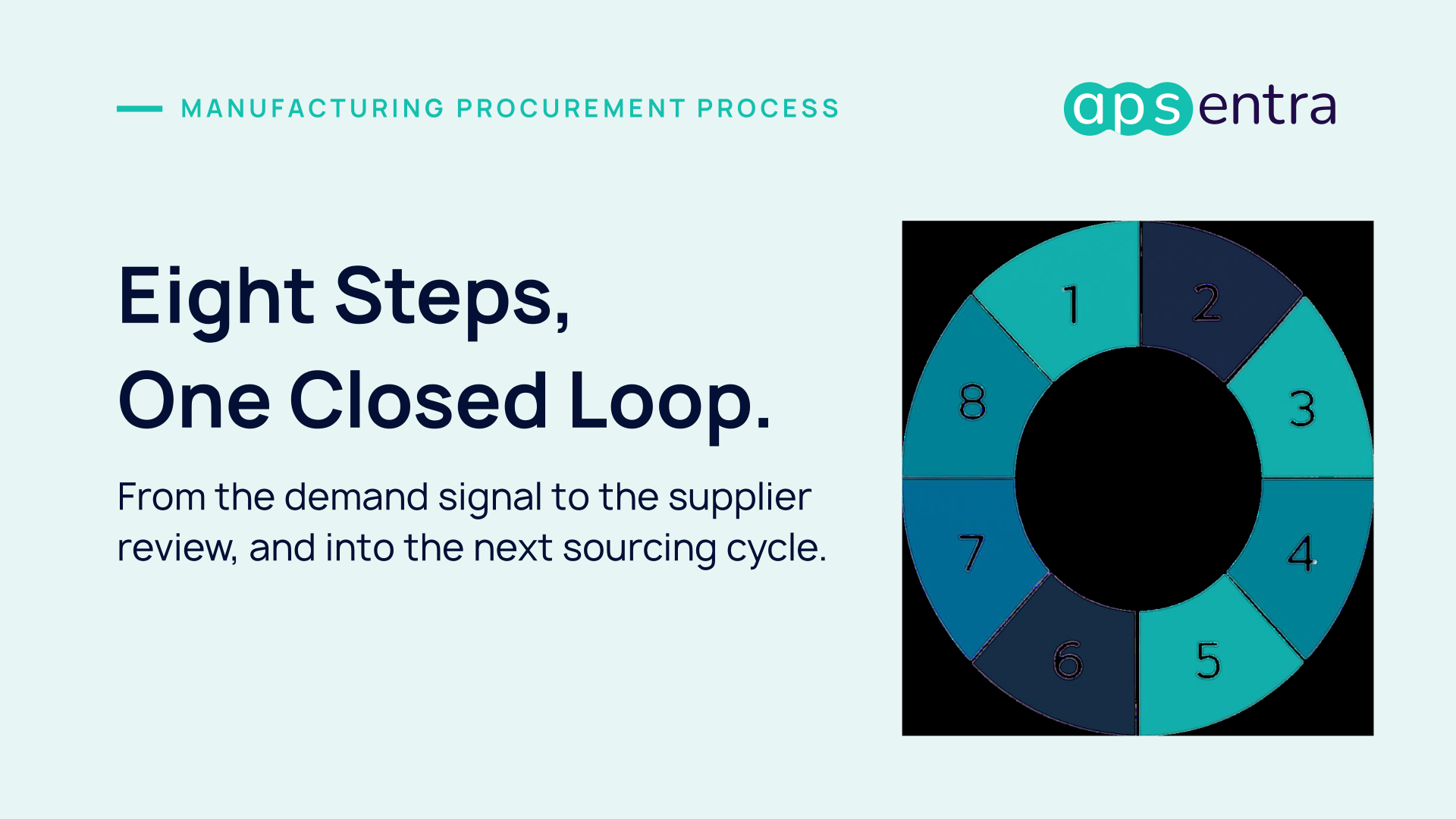
Louis’s framework traces procurement through six stages of maturity: purchasing, strategic sourcing, category management, supplier relationship management, enterprise procurement, and enterprise integration. Each stage asks a different executive question. Purchasing asks whether the company bought what it needed. Enterprise integration asks how procurement strengthens the operating system of the whole enterprise.
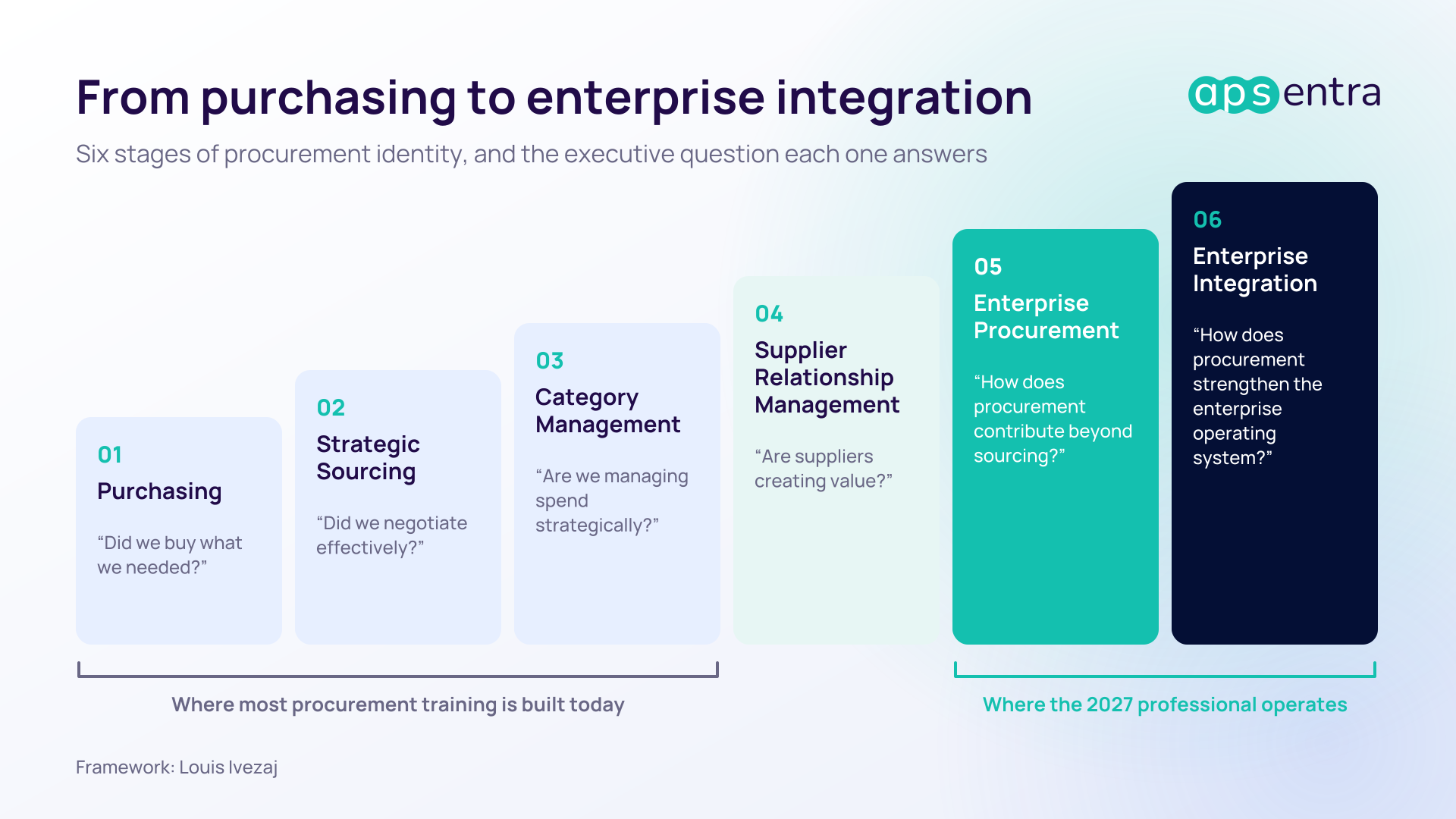
Most procurement training is built for the first three stages. The profession of 2027 operates at the last two, where the core skills are integration, influence, and accountability for enterprise outcomes. That is the practical meaning of a simple statement: procurement cannot remain a back office, and its training cannot remain back-office training.
The pressure is visible in the data. McKinsey’s October 2025 analysis, Transforming procurement functions for an AI-driven world, reports that spend managed per procurement FTE is now 50 percent higher than five years ago. Two-thirds of the 300-plus leaders surveyed report directly to the CEO or CFO.
The role has already moved closer to the center of the enterprise. Training has to catch up.
Are We Only Training Procurement Professionals to Negotiate Savings?
Largely, yes. In the 2025 Deloitte Global Chief Procurement Officer Survey, the most common training planned for the next 12 months is sourcing and category management (64 percent), followed by negotiation (51 percent). Business partnering and relationship management sits lower, at 41 percent. Deloitte notes that many organizations still prioritize traditional procurement skills over digital capability.
Negotiation remains a core competence. The problem is proportion. When savings dominate the curriculum, professionals learn to optimize the price of a decision that someone else already made. They rarely learn how to shape the decision itself: the specification, the supplier strategy, the make-or-buy choice, the working capital terms.
Louis illustrates the consequence with a composite example: a manufacturer with highly capable category managers. Savings improved, supplier performance stayed acceptable, yet inventory and working capital kept growing. Procurement entered after engineering, operations, and finance had already set the terms. The team was well trained for the wrong moment in the decision.
Procurement Training Must Form Values, Ethics, and Professional Judgment
There is a difference between training a workforce and educating a profession. Training transfers methods: how to run an RFQ, how to build a should-cost model, how to structure a negotiation. Professional education also forms the person who applies those methods, including what they consider acceptable, what they refuse to do, and what they believe their work is for.
Procurement needs the second as much as the first. Every procurement decision commits someone else’s money to a third party, often under time pressure and with incomplete information. The quality of that decision depends on technique, but its integrity depends on values.
Ethics as an operating discipline, not a compliance module
In many organizations, procurement ethics appears once a year as a policy acknowledgment. That treats ethics as a box to tick rather than a discipline to practice. A mature curriculum teaches ethics through the situations professionals actually face:
- A business unit pushes for a preferred supplier without a documented selection rationale.
- A supplier offers favorable terms that shift hidden risk to a sub-tier partner.
- An AI recommendation looks efficient but rests on data no one can explain.
- A savings target encourages terms that weaken a strategic supplier the business depends on.
None of these cases has a policy answer that removes the need for judgment. Training that rehearses them builds the reflex the profession needs: transparent reasoning, a documented decision, and the confidence to escalate.
A vision of the profession’s future
Professional education should also give people a view of where their profession is going. A buyer who sees procurement only as a cost center will optimize for the next negotiation. A buyer who understands procurement as the function that connects external markets with enterprise strategy will ask better questions earlier, and will build a career toward that role.
“We do not need procurement teams that are better at defending savings. We need professionals who understand why the enterprise spends, can explain the trade-offs to a CFO, and are trusted to make the call.”
— Natalie Eksi, CEO at APSentra
This is where values and change meet. A profession that understands its own direction can shape it. A function trained only for today’s tasks will be redefined by others, including by the technology now absorbing much of its transactional work.
Procurement Skills That Were Not Essential Five Years Ago
The procurement skills that defined a strong professional in 2020 still matter. What has changed is the set of capabilities placed on top of them. Five stand out.

Enterprise and systems thinking
Financial fluency

Digital and data fluency

Risk and geopolitical literacy

Consulting and change skills
The 2025 Deloitte survey confirms where the gaps sit. CPOs named digital skills (36 percent) and consulting skills (28 percent) as the single biggest competency gaps, ahead of technical procurement skills (22 percent). Only 4 percent of CPOs expressed complete confidence in their team’s ability to execute the procurement strategy.
What AI changes in procurement skills
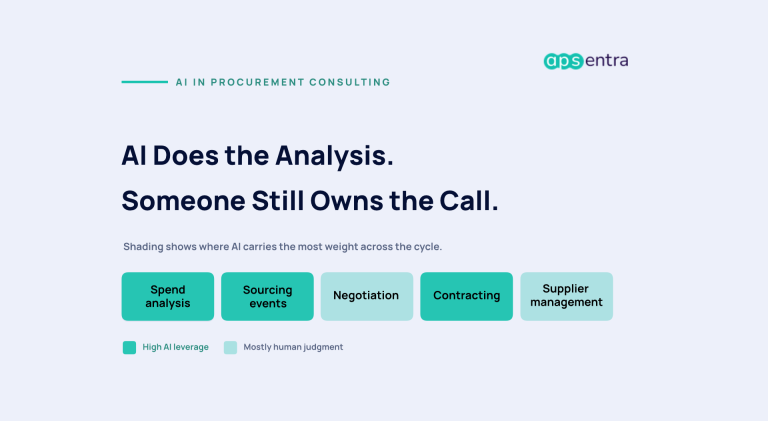
AI now performs a growing share of analytics, research, and transactional work. McKinsey estimates that agentic AI could make procurement functions 25 to 40 percent more efficient. The question for procurement training is what becomes more valuable when that work is automated.
The answer is the work AI cannot own: framing the right question, judging trade-offs under ambiguity, verifying outputs against business reality, and remaining accountable for the decision. An AI agent can draft an RFP, summarize a contract, or flag a supplier risk. It cannot decide which risk the business is willing to carry, or explain that choice to an audit committee.
This shifts procurement training in a specific direction. Professionals need enough technical understanding to supervise AI, and enough judgment and ethical grounding to overrule it. Louis puts the principle simply: AI strengthens judgment within governance. The judgment still has to be taught.
How Procurement Training Should Differ by Role
A single curriculum for everyone in procurement produces generalists at every level. Development should follow the scope of each role’s decisions, from executing a transaction well to shaping the enterprise operating model.
| Role | Decision scope | Priority capabilities | Ethical focus | Evidence of capability |
|---|---|---|---|---|
| Buyer | Executes purchases within policy | Process discipline, supplier communication, data accuracy, tools and AI assistants | Fair treatment of suppliers, transparency, conflict-of-interest awareness | Clean, traceable transactions; fewer exceptions and rework |
| Category manager | Shapes strategy for a spend category | Market analysis, total cost of ownership, supplier development, cross-functional influence | Balancing savings against supplier health and sustainability | Earlier involvement in specifications; category plans adopted by the business |
| Procurement leader | Runs a team and a portfolio of categories | Business partnering, financial fluency, risk governance, coaching | Setting the standard the team follows under pressure | Stakeholder trust; decisions documented and defensible |
| CPO | Positions procurement in the enterprise | Enterprise strategy, board communication, operating model design, talent strategy | Accountability for how the enterprise spends and whom it partners with | Procurement present in strategic, capital, and make-or-buy decisions |
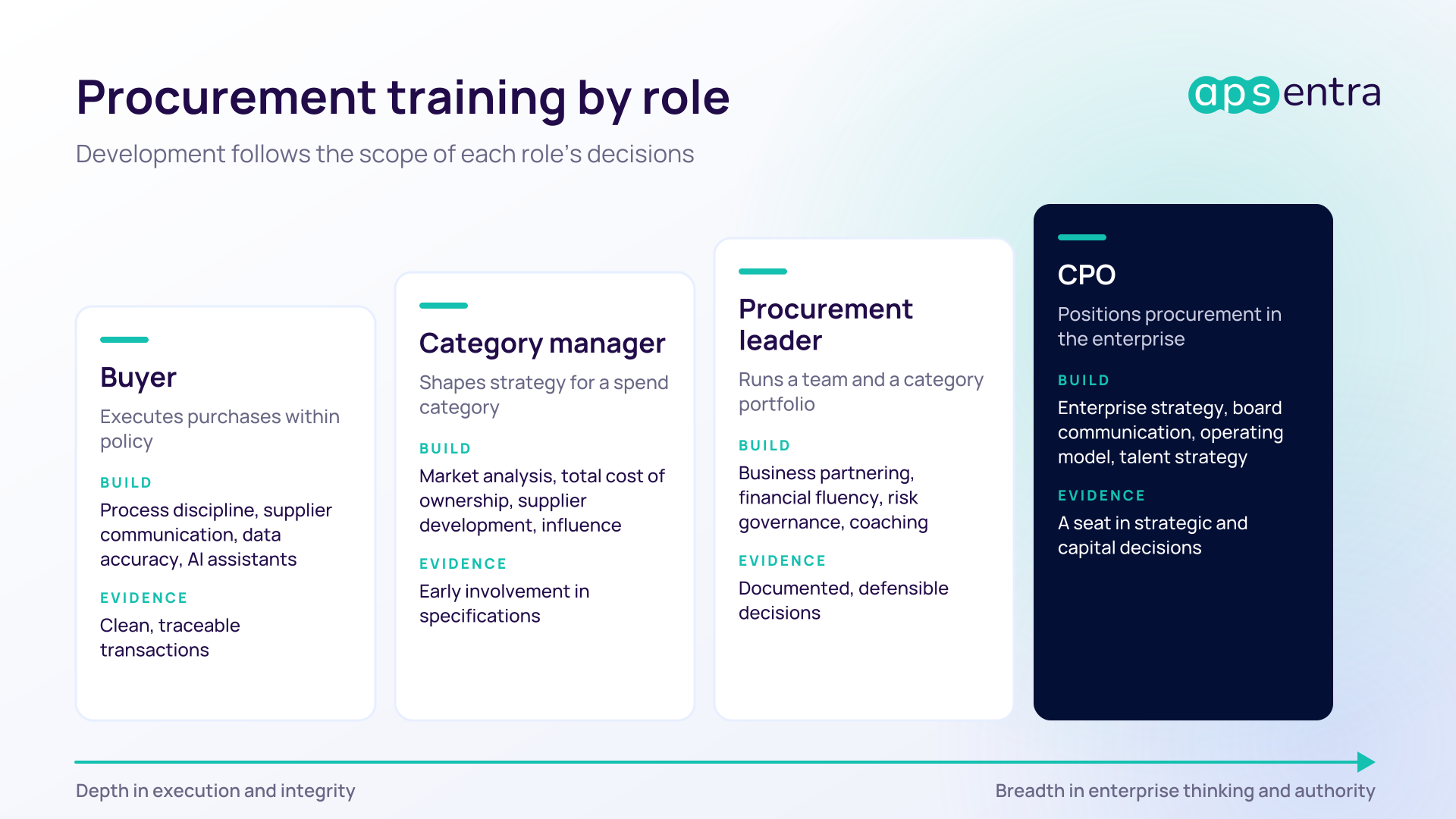
The pattern is consistent. Junior roles need depth in execution and integrity. Senior roles need breadth in enterprise thinking and the authority to bring procurement into decisions before they are final.
The Gaps in Procurement Training Today, and Why They Persist
Four gaps appear repeatedly across organizations.
- Technique without context. Professionals learn sourcing methods but not how the business makes money, so they cannot connect a supplier decision to margin or cash.
- Finance as someone else’s subject. Few procurement curricula teach working capital, cost of capital, or budget mechanics, even though the CFO evaluates procurement in exactly those terms.
- Ethics as policy, not practice. Annual acknowledgments replace case-based judgment, and AI-related accountability is rarely covered at all.
- Certificates over capability. Completion becomes the metric, while the behavior on the next sourcing event stays the same.
The root cause sits outside the training department. Training mirrors how a function is measured. When procurement is judged primarily on negotiated savings and purchase order efficiency, development budgets follow those metrics. Deloitte found that procurement allocates roughly 3 percent of its budget to talent development, a figure that has grown only modestly across four survey editions.
This is Louis’s core argument applied to people: procurement developed strategic capability while still operating within transactional governance. Close the governance gap, and the training gap becomes far easier to close.
Classroom or Gemba: Where Procurement Capability Is Built
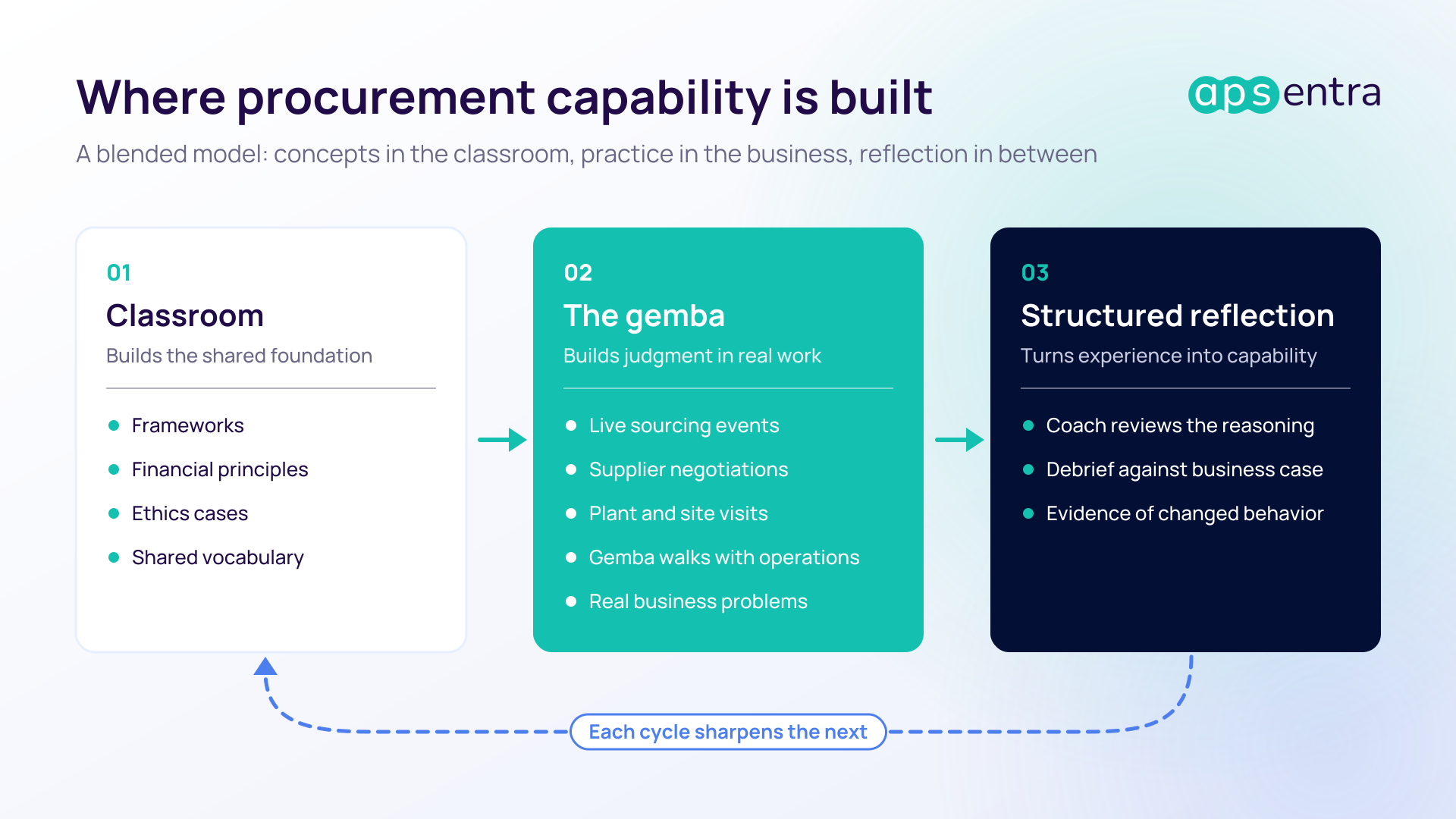
The classroom still has a role. It is the right place for frameworks, financial principles, ethics cases, and the shared vocabulary a team needs. It is the wrong place to build judgment on its own.
Judgment forms in contact with real work. Lean practitioners call the place where value is created the gemba, and the Toyota Production System taught generations of managers to go and see before deciding. Procurement has its own gemba:
- Live sourcing events, run with a coach who reviews the reasoning, not only the result.
- Supplier negotiations, prepared and debriefed against the business case.
- Plant and site visits, where specifications, lead times, and quality constraints stop being abstractions.
- Gemba walks with operations and engineering, where procurement sees how its decisions land on the floor.
- Real business problems, such as a working capital target or a single-source risk, assigned as development projects with a named executive sponsor.
The most effective model is blended: concepts in the classroom, practice in the business, and structured reflection connecting the two. Deloitte reports that the leading procurement organizations already favor hands-on, cross-functional training on technologies such as process orchestration, analytics, and AI agents.
How to Measure Whether Procurement Training Changed Behavior
A certificate proves attendance. Capability shows up in how decisions are made afterward. The practical test is to define, before the program starts, which behaviors should change, and then to observe them in the work itself.
Useful indicators include:
- Timing of involvement. Does procurement now enter decisions at the specification or business-case stage, rather than at the negotiation stage?
- Quality of reasoning. Are supplier selections documented with clear criteria and trade-offs that a CFO or auditor can follow?
- Stakeholder signal. Do business units seek procurement’s input earlier and more often?
- Outcome mix. Do results include working capital, risk reduction, and supplier performance, not only negotiated savings?
- Exceptions and escalations. Do off-policy purchases decline, and do escalations arrive earlier and with better information?
Most of these signals already exist in procurement data, provided decisions run through structured workflows rather than email and spreadsheets. When requests, approvals, tenders, and supplier selections follow a traceable route, leaders can see whether behavior has changed. This is one reason APSentra builds a digital twin of the organization’s structure and procurement workflow: the record of how decisions are actually made becomes evidence of capability, and a feedback loop for the next round of development.
Three Diagnostic Questions for Procurement Leaders
Before redesigning a curriculum, test what the current one actually produces. Three diagnostic questions are worth asking inside your own organization:

Question 1:
Question 2:
Question 3:
If any answer reveals a gap, start there. It shows where your procurement training is still building yesterday’s function rather than tomorrow’s.
“Every generation of leaders inherits the responsibility to leave the enterprise stronger than it was found.”
— Louis Ivezaj, CPO & Supply Chain Officer, ExiQ Consultancy