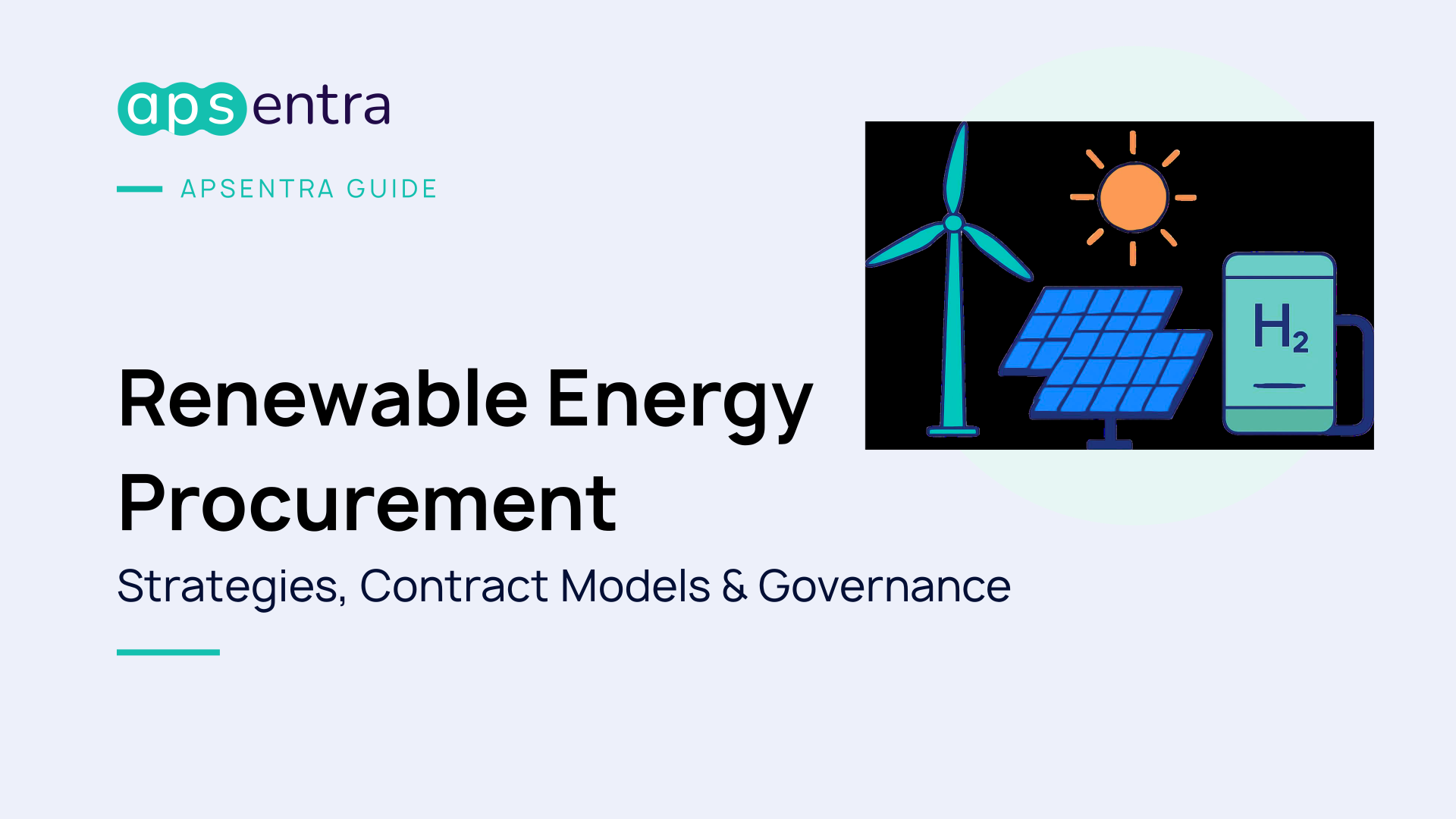
Renewable Energy Procurement: Strategies, Contract Models & Governance
For most companies, the hard part is no longer finding supply. It is deciding how much price risk, contract length and accounting complexity the business is willing to carry, and making sure that decision survives the next budget cycle. That is why renewable energy procurement now sits as much with the CFO as with the sustainability team.
This guide covers the contract models on the market, how to build a renewable energy procurement strategy, the risks finance teams tend to underestimate, and how to govern the process so commitments stay visible after signature.
What Is Renewable Energy Procurement?
Every renewable energy deal bundles up to three separate things, and most confusion starts when teams treat them as one purchase:

The physical power

The attribute

The price exposure
A certificate purchase buys only the attribute. A virtual PPA buys the attribute and a financial hedge but no physical power. A physical PPA can deliver all three. Separating these layers early makes the rest of the procurement conversation far clearer, because each layer has a different owner inside the business.
Why Renewable Energy Procurement Became a Finance Decision
The market itself has shifted. According to the BloombergNEF 1H 2026 Corporate Energy Market Outlook, companies announced 55.9 GW of clean power deals in 2025, a 10% decline from the 2024 record and the first annual drop in nearly a decade. Meta, Amazon, Google and Microsoft alone accounted for 49% of global activity.
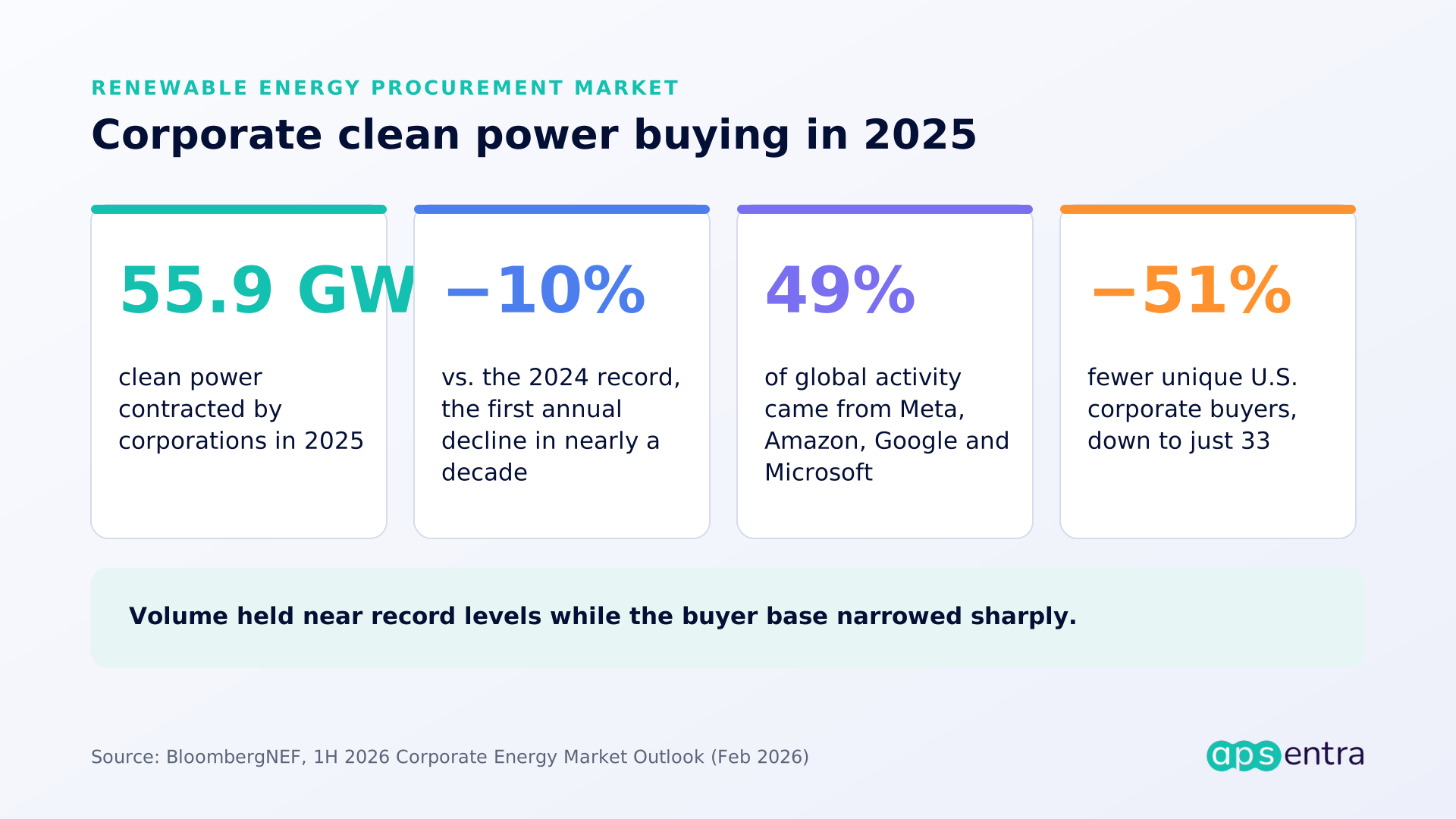
The headline number hides a split. BloombergNEF reports that the US hosted a record 29.5 GW of deals, yet the number of unique US corporate buyers fell 51% to just 33. In Europe, the Middle East and Africa, volumes fell 13% to 17 GW, partly because more hours of negative power prices erode the value of standalone solar and wind contracts.
For a mid-size or enterprise buyer that is not a hyperscaler, the lesson is practical. Renewable energy procurement now demands the same discipline as any other long-dated financial commitment: a defined risk appetite, a sourcing process that compares offers on equal terms, and approval rules that match the size of the exposure. The Greenhouse Gas Protocol’s proposed Scope 2 update, which could require hourly tracking and tighter geographic boundaries, adds a reporting dimension the finance team will have to sign off on.
Renewable Energy Procurement Options Compared
No single instrument fits every company. The table below compares the main contract models on the dimensions finance and procurement teams usually weigh first.
| Option | How it works | Commitment | Price certainty | Best fit |
|---|---|---|---|---|
| Energy attribute certificates (RECs, GOs) | Buy certificates separately from the power you consume | Short, often annual | None | Fast start, bridging a target, small or scattered load |
| Utility green tariff | Utility supplies renewable power under a dedicated tariff | Medium | Partial, depends on tariff design | Regulated markets, limited internal capacity |
| On-site generation | Install solar or other assets at your own sites | Long, asset life | High for self-supplied volume | Suitable roofs or land, stable site load |
| Physical PPA | Buy power and certificates from a specific project, delivered to your grid zone | Long-term | High | Large load in the same market as the project |
| Virtual PPA | Financial contract for difference plus certificates; power still bought locally | Long-term | High, via financial settlement | Multi-market portfolios, no physical delivery option |
| Hybrid or firmed PPA | Solar, wind and storage combined to shape delivery | Long-term | Highest for shaped volume | Hourly matching goals, exposure to negative prices |
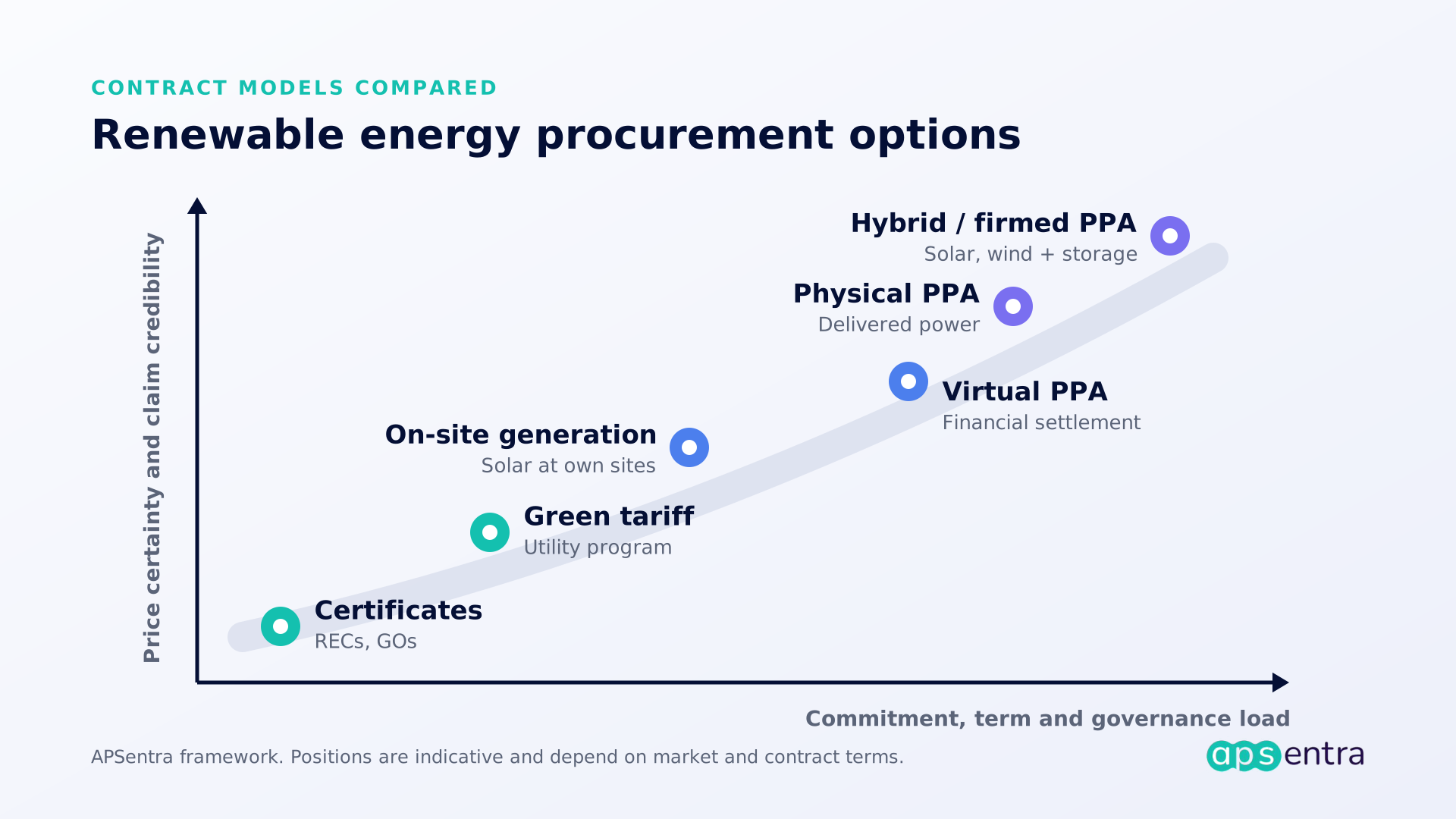

Physical vs. Virtual PPAs
Energy Attribute Certificates
Hybrid and Firmed Contracts
How to Build a Renewable Energy Procurement Strategy
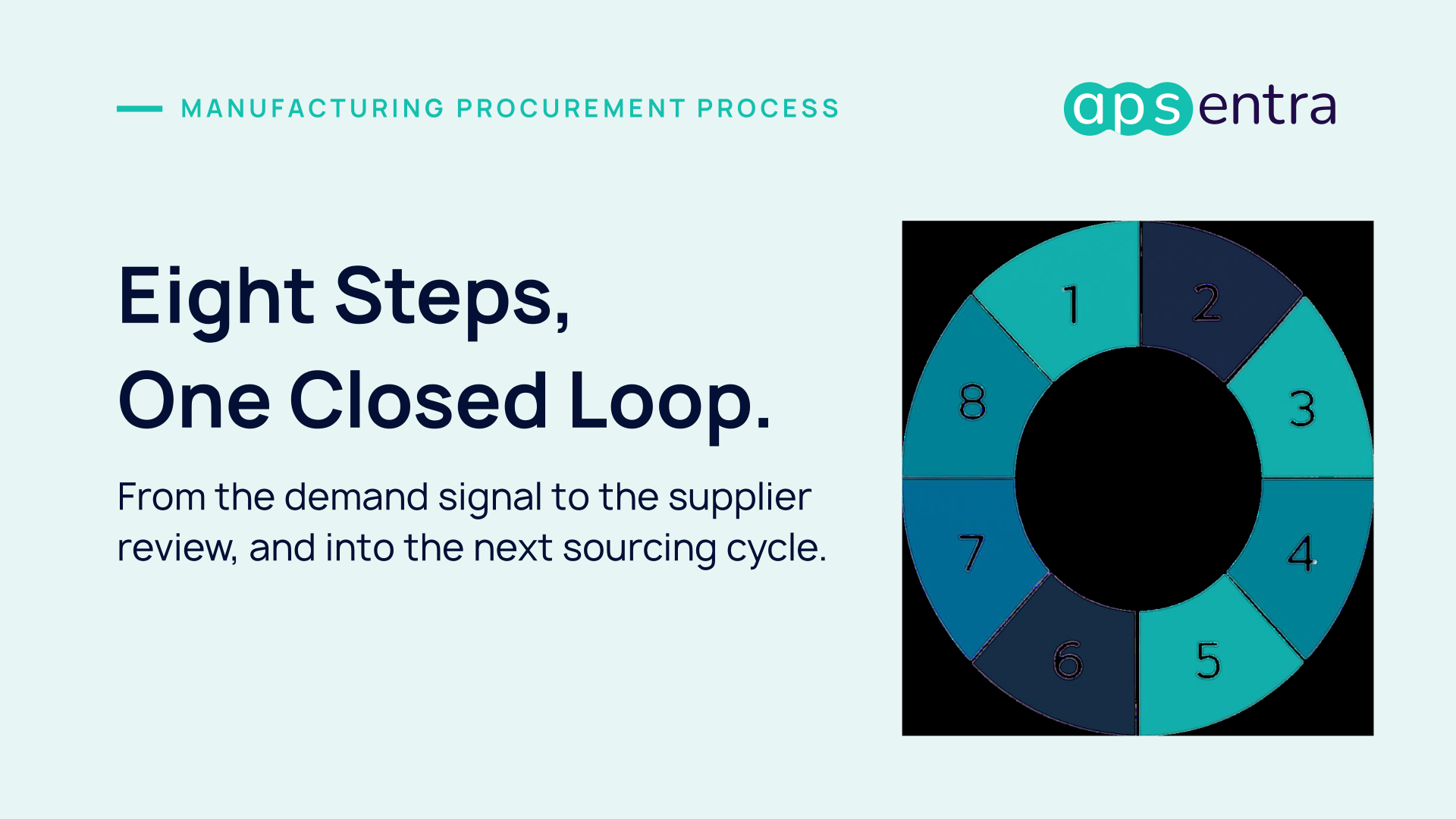
A sound renewable energy procurement strategy treats the portfolio as a sequence of governed decisions rather than one landmark deal. Six steps cover most organizations.
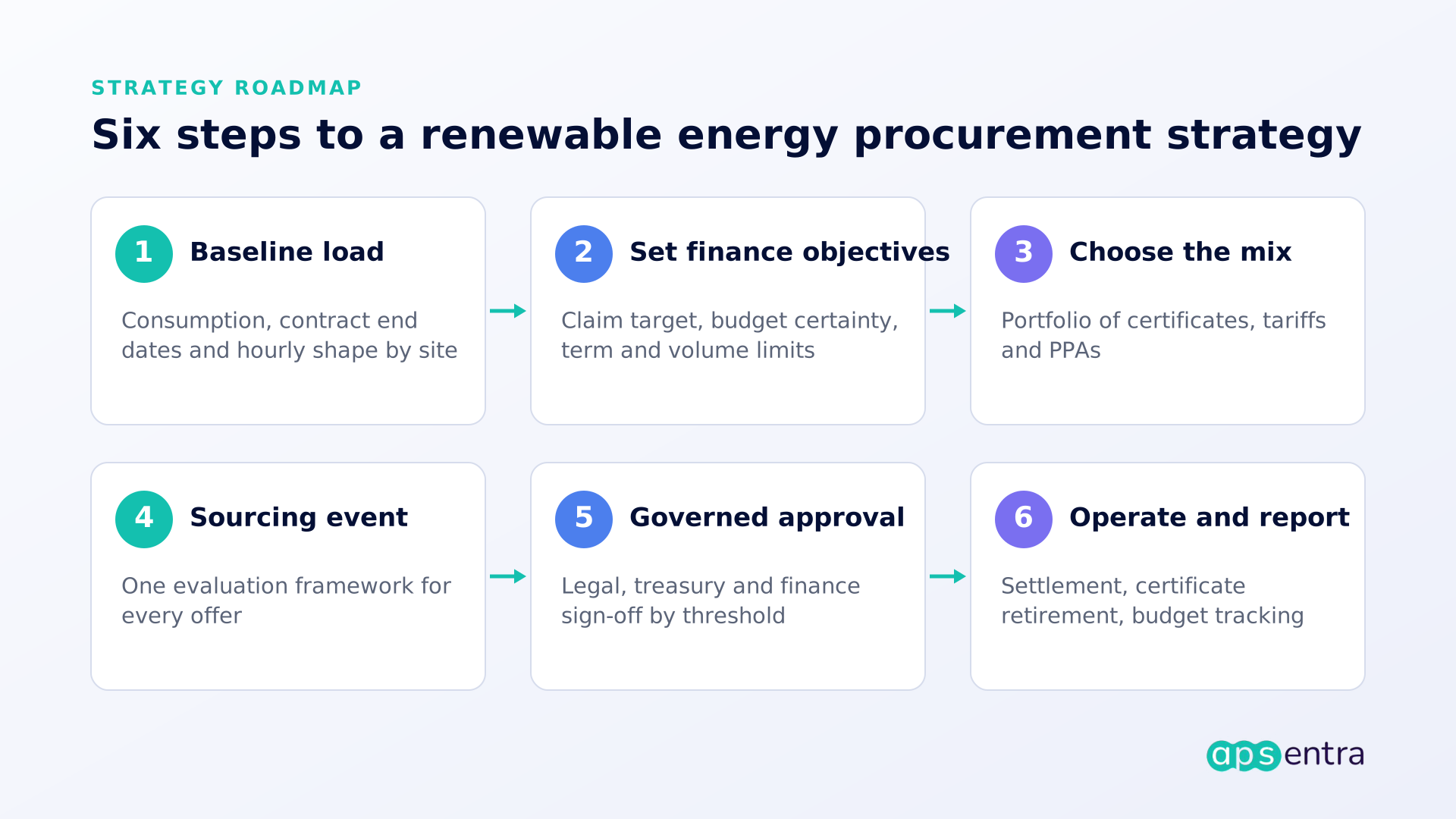

Baseline load and emissions

Define the objective in financial terms

Select the contract mix

Run a structured sourcing process

Negotiate and approve under governance

Operate, settle, and report
Step four is where many first-time buyers lose value. Without a consistent evaluation framework, offers with different settlement points, tenors and shapes are almost impossible to compare, and the decision defaults to the lowest headline strike price.
Key Risks in Renewable Energy Procurement
Long-term contracts transfer risk as well as power. The main exposures, and the controls that address them, are summarized below.
| Risk | What it looks like | How to mitigate |
|---|---|---|
| Market price risk | Contract price ends up above market for years | Layer contracts over time; cap volume per deal |
| Shape and volume risk | Generation profile does not match consumption | Hybrid or firmed products; load-shape analysis before signing |
| Basis risk | Price at the project node differs from your settlement point | Model basis explicitly; prefer hub settlement where possible |
| Negative price exposure | Payments owed during hours of negative power prices | Negotiate negative-price clauses; add storage |
| Counterparty and build risk | Project delayed or developer weakens financially | Credit review, milestones, delay damages |
| Accounting and claim risk | Derivative treatment or stricter Scope 2 rules change what you can report | Early review with auditors; conservative claims policy |
Most of these risks can be priced and managed. The failure mode is not the risk itself but its invisibility: a contract signed by one department, settled by another and reported by a third, with no single view of the total exposure.
Who Should Own Renewable Energy Procurement?
Ownership is usually shared, which is exactly why it needs explicit governance. A simple responsibility map prevents the most common gaps.
| Activity | Procurement | Finance & Treasury | Sustainability | Legal |
|---|---|---|---|---|
| Load baseline and targets | Consulted | Consulted | Accountable | Informed |
| Risk appetite and limits | Consulted | Accountable | Consulted | Informed |
| Sourcing event and evaluation | Accountable | Consulted | Consulted | Consulted |
| Contract negotiation | Responsible | Consulted | Informed | Accountable |
| Settlement and reporting | Informed | Accountable | Responsible | Informed |
The pattern holds across other long-cycle categories. When a state-owned gas infrastructure operator automated its full procurement cycle, from annual planning to supplier order execution, the gain came from tying every request to the approved plan and a defined approver, not from any single sourcing event.
“A PPA is a fifteen-year budget decision disguised as a sustainability purchase. Treat it with the governance you would apply to any commitment of that size.”
— Natalie Eksi, CEO at APSentra
Where Procurement Technology Fits
Specialist advisors and market platforms handle price forecasting and PPA structuring. A procurement platform plays a different role: it makes the process around those decisions traceable and repeatable.
In practice, that means running sourcing events with consistent scoring, keeping developer and supplier qualification data in one place, routing approvals according to the actual organizational structure, and storing contracts with their obligations and renewal dates visible. APSentra builds a digital twin of the organizational structure and procurement workflow, so approval authority for a long-term energy commitment follows the same rules as any other high-value spend.
Visibility across sites matters as much as the contract itself. Consolidated spend analytics show where electricity spend sits, which contracts expire next and which sites could join the next procurement wave.
Working With an Energy Advisor
Many organizations bring in outside support for their first PPA. Advisors typically help with market selection, developer shortlists, price benchmarking and term sheet negotiation. For a broader view of what external support covers beyond renewables, see our guide to energy procurement consulting.
The same logic applies to other energy-transition purchases. Our analysis of EV procurement consulting shows how fleet electrification decisions face similar questions of term, grid capacity, and financing structure.