Procurement Talent Development: Where Training Meets Practice
That definition sounds settled. In practice, most organizations still leave it to chance. In our latest Behind Procurement episode, “Building the Procurement Professional of 2027,” I explored where the gap sits with two guests who see it from opposite ends.
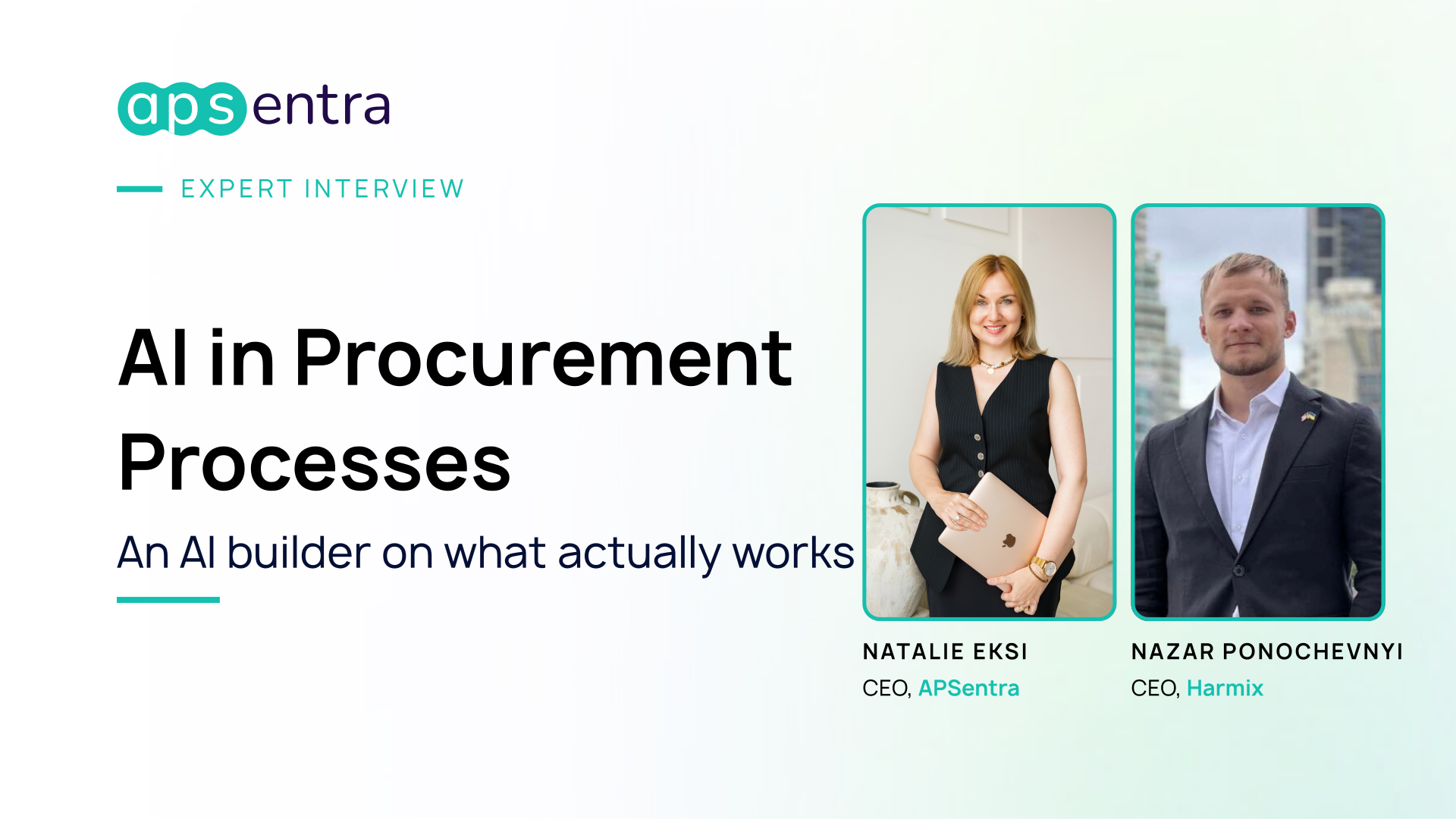
Louis Ivezaj, CPO & Supply Chain Officer at ExiQ Consultancy, works with CEOs and CFOs on what they now expect from procurement. Sajjadul Mawla, PMP, CEO of Entech Consulting, advises on procurement transformation and teaches supply chain and project management as a Professor at George Brown Polytechnic. One sees the boardroom. The other sees the classroom.
What Our Poll Revealed About Procurement Capability Building
Before the episode, we asked our LinkedIn audience a simple question: how does your organization build procurement capability today? The answers point to a profession that still learns mostly by doing.
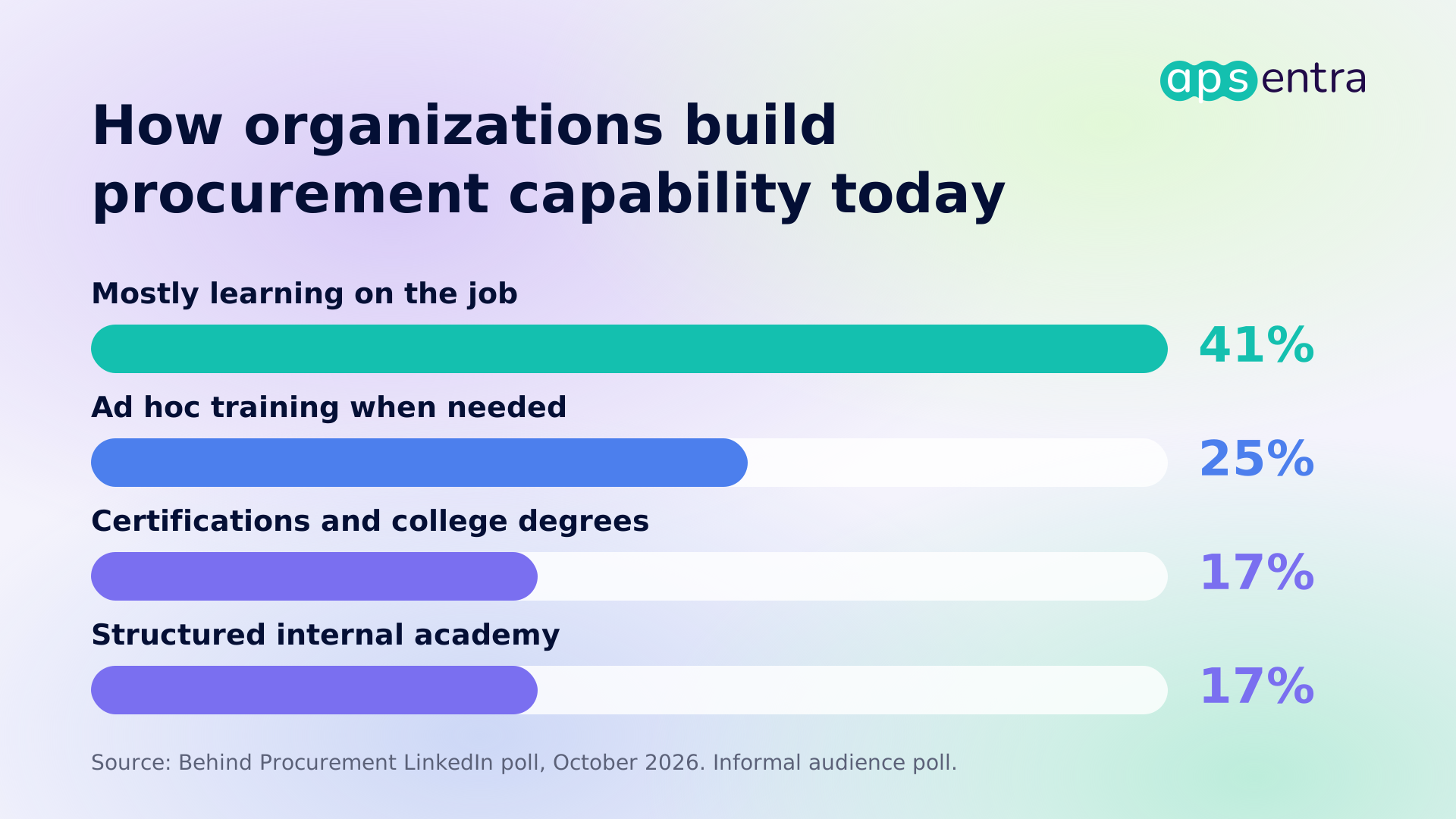
Two in five respondents rely mainly on on-the-job training in procurement. Only one in six has a structured internal academy. In practice, that means capability depends on who happens to sit next to a new hire.
Louis read the result as an execution problem, not an education problem. Classroom concepts are tools, he argued, and the gap opens when professionals have to apply them across a whole enterprise rather than inside a single sourcing event.
Why Classroom and On-the-Job Training Need Each Other
Sajjadul was not surprised by the poll. Organizations like learning by doing because it is cheap and immediate. The problem is what happens when nothing structured sits underneath it.
“On-the-job training cannot add maximum value to the organization when it is unstructured and has no base of real procurement education.”
— Sajjadul Mawla, CEO, Entech Consulting, and Professor, George Brown Polytechnic
He argues that education and practice compound. Formal training gives professionals a framework, and that framework lets them adapt to real situations faster and make fewer costly mistakes. He also called for closer collaboration between industry and academia, so that students reach real procurement work earlier and employers stop treating graduates as blank slates.
I added one point from my own conversations with AI practitioners. AI can analyze information far faster than any analyst, but a professional still has to be the last person to decide whether that analysis is right. Self-education stops being optional once the tools move faster than the people using them.
Procurement Talent Development Starts at the Decision Table
The pressure to rethink procurement talent development comes from the top. In McKinsey’s October 2025 analysis, Transforming procurement functions for an AI-driven world, procurement leaders at the firm’s CPO Executive Forum named organizational stress and talent, new capabilities for the purchasing function, and faster digital enablement as their top priorities.
Louis translated that into what he hears from CEOs and CFOs. They want business and financial acumen, AI and data literacy, scenario thinking, cross-functional decision-making, and fluency in value creation. Above all, they want procurement to understand how a sourcing decision travels through the rest of the enterprise.
His example was a piece price reduction. The negotiated saving looks clean in a report, but it raises harder questions:
- Does the deal increase inventory and tie up working capital?
- How does it affect EBITDA, and in which reporting period?
- Was the new price actually adopted when the savings report says it was?
“That’s not any fault of the professionals out there,” Louis said. “There’s just a gap between expectations and what we’re being trained to do.” Negotiation training remains essential. It is simply one element of a much larger picture.
Sajjadul described the structural side of the same gap. In project procurement, engineering, operations, and finance often decide together, and procurement arrives after the decision is made. In OPEX categories such as raw materials and packaging, procurement is frequently told what to buy rather than asked how to buy it.
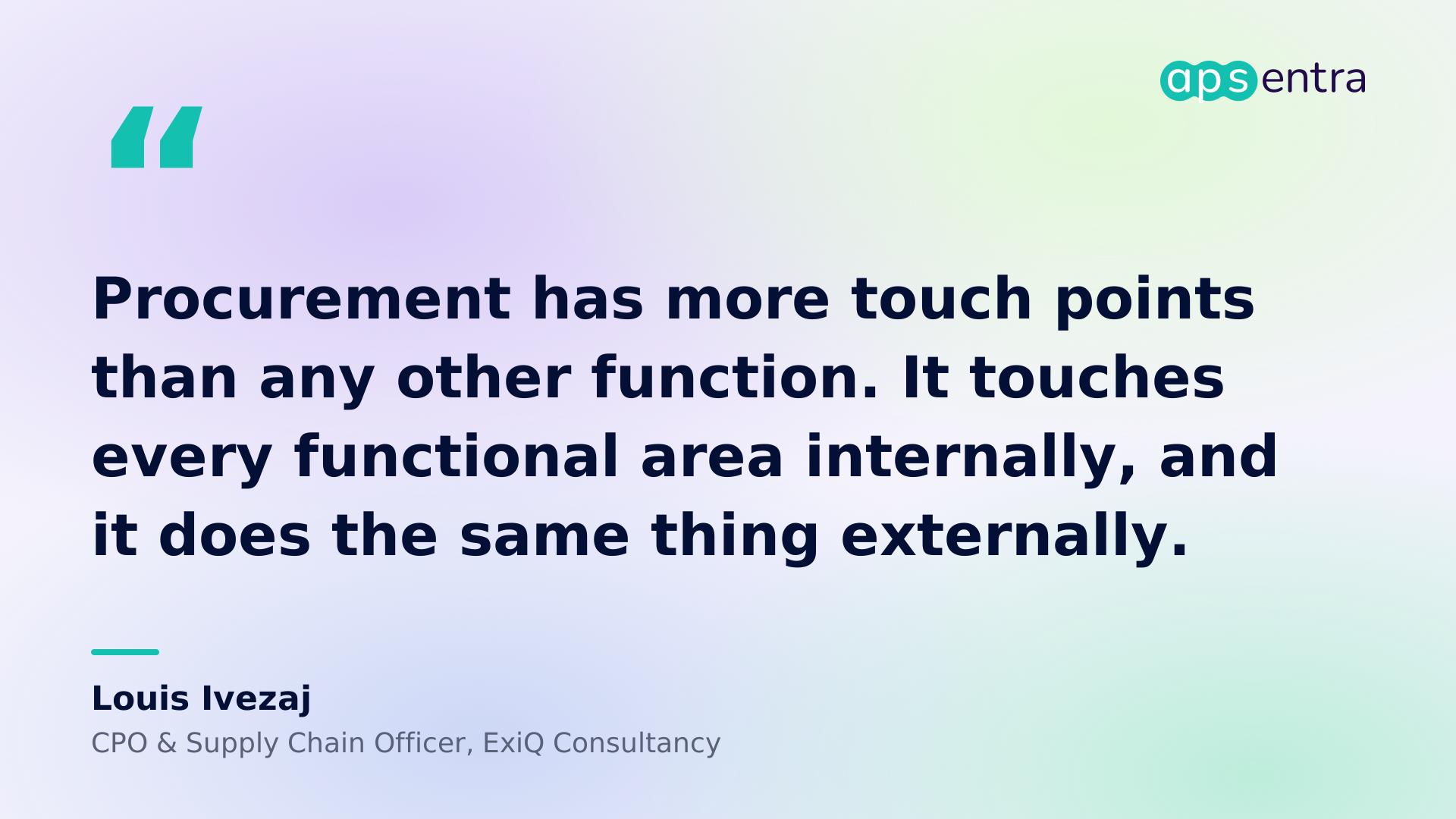
“Procurement is one of the only functions in a company that has more touch points than any other function. It touches every functional area internally, and it does the same thing externally.”
— Louis Ivezaj, CPO & Supply Chain Officer, ExiQ Consultancy
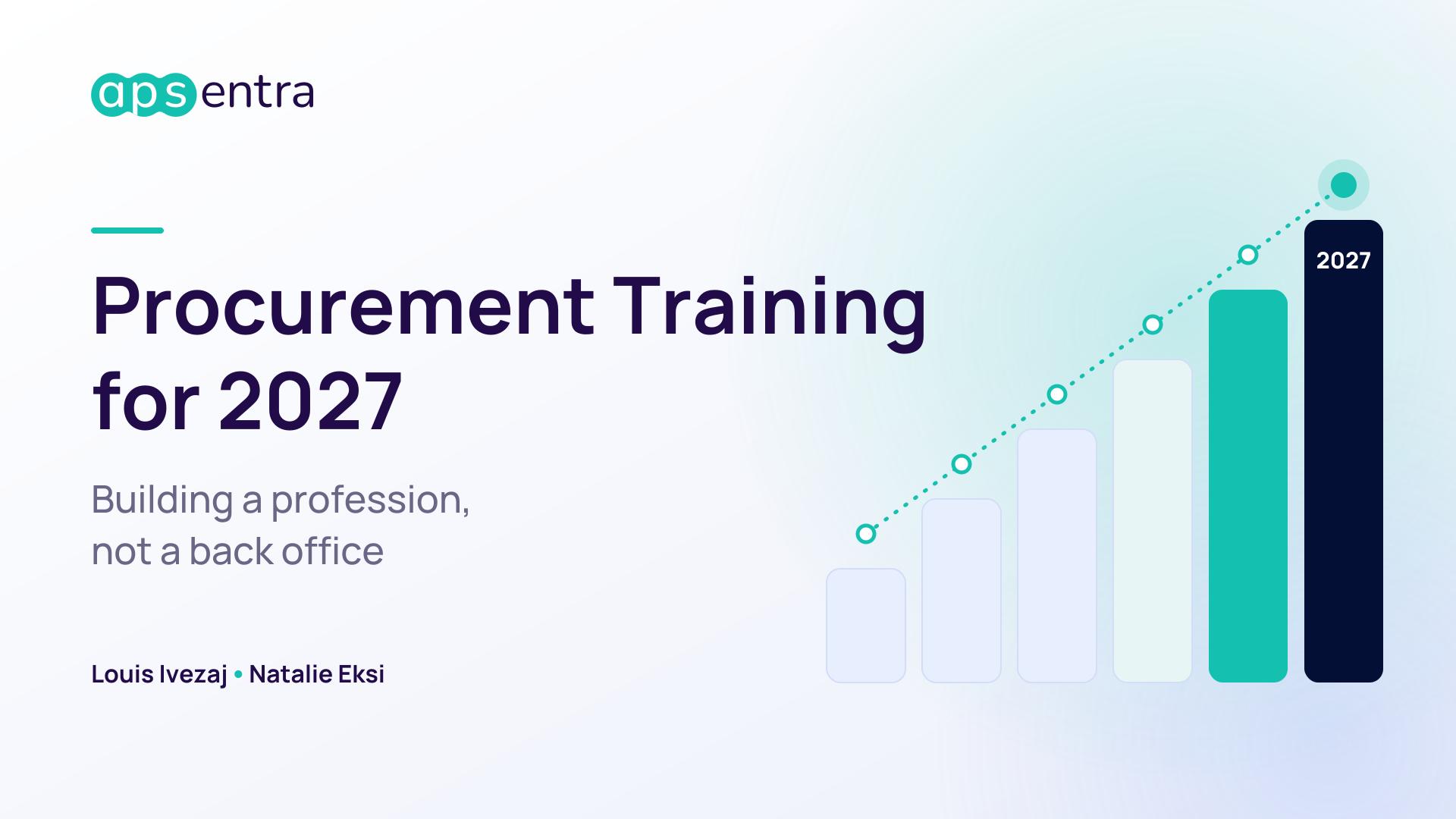
That reach is the case for a seat at the table. A function that sees every internal stakeholder and the external market carries intelligence that decision-makers lose when procurement joins late. For the five skills Louis and I mapped for this shift, see our deeper guide to procurement training for 2027.
Delegation of Authority as a Development Tool
Louis made a point that rarely appears in training plans: capability should follow the function a person performs. A single curriculum for everyone produces generalists at every level.
- Buyers work in a transactional role, so their development centers on compliance and coordination.
- Category managers need market intelligence, portfolio thinking, should-cost analysis, and value analysis and value engineering (VA/VE).
- Procurement leaders need cross-functional governance, KPI design, culture, and the ability to diagnose what their team lacks.
- CPOs need capital allocation thinking, organizational design, and the fluency to discuss enterprise value with the board.
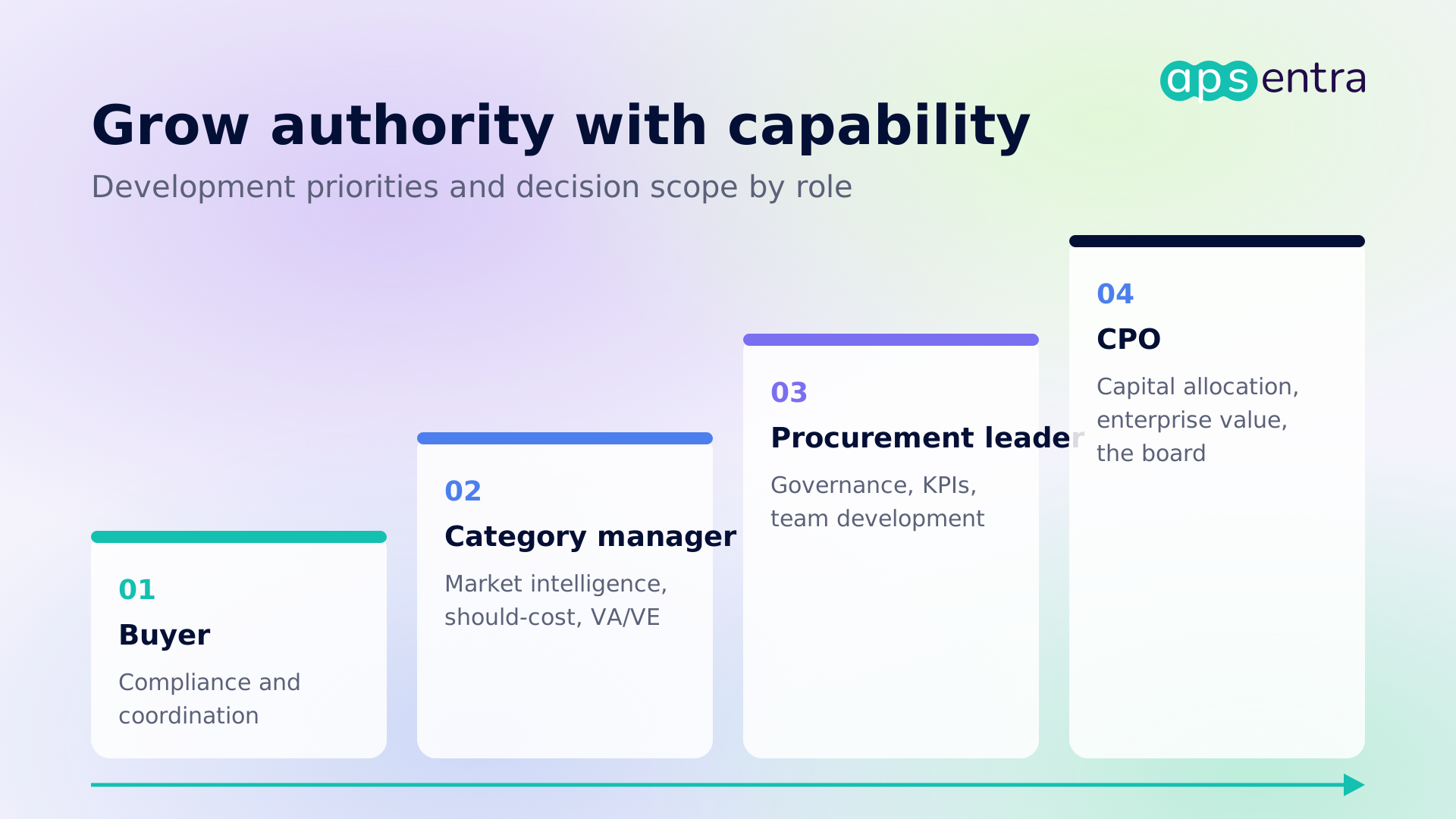
McKinsey observes the same pattern in leading functions, which separate strategic and transactional roles and define competency requirements for each. Louis then went one step further. Development should also be built into how authority is delegated.
His view is that many companies do not yet trust their procurement teams with final sourcing decisions. The fix is not to hand over everything at once. It is to give each level a defined range of decisions, limit the risk at that level, and let people build confidence through smaller decisions before they move up.
This is where governance and procurement talent development meet. When approval routes, spending thresholds, and decision rights are configured by role, delegation stops being informal. APSentra builds a digital twin of the organizational structure and procurement workflow for exactly this reason: every decision follows a traceable route, so leaders can extend authority as capability grows.
Judgment Over Tools: The Skills AI Makes More Valuable
We closed with five skills that were not priorities five years ago: enterprise and systems thinking, financial fluency, digital and data fluency, risk and geopolitical literacy, and consulting and change skills. Sajjadul agreed with all five but named one as decisive.
For him, risk and resilience thinking matters most. Recent years brought a pandemic, extreme weather that destroyed infrastructure, and the 2021 Suez Canal blockage that few supply plans anticipated. Data and AI can describe exposure, but they do not choose which risk the business accepts.
“Machines and tools can help you analyze your data. But sometimes data is not giving a decision. You have to interpret it yourself.”
— Sajjadul Mawla, CEO, Entech Consulting, and Professor, George Brown Polytechnic
He also challenged a habit in how professionals are trained. Teaching people to “win the game” against suppliers does not work in strategic partnerships, where both sides share resources and need an outcome that holds for both. Judgment, in his framing, includes knowing when a negotiation victory weakens the business.
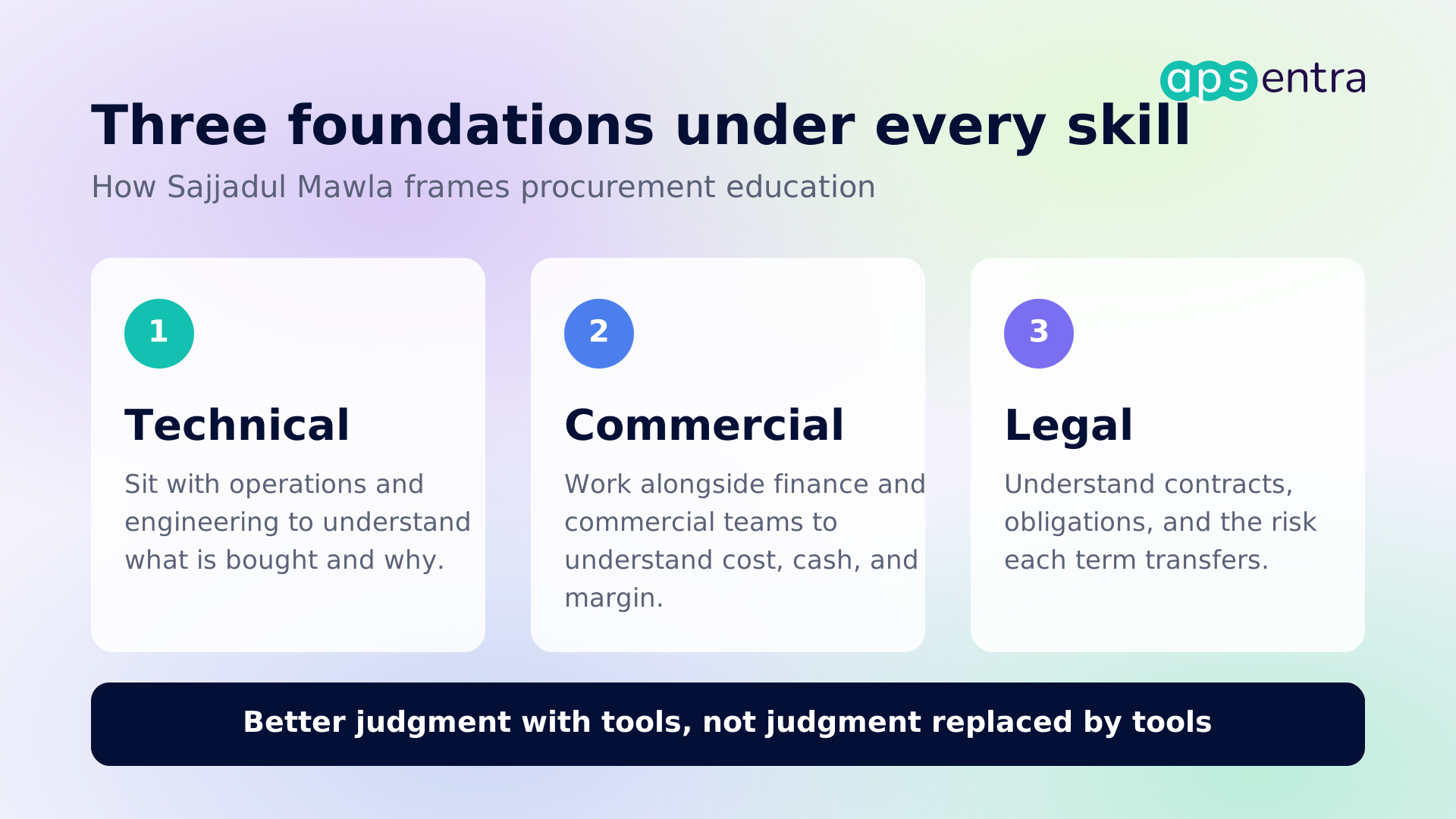
In his classes, Sajjadul anchors every skill in three foundations:

Technical understanding

Commercial understanding

Legal understanding
Louis added a sequencing rule for AI adoption: process first, then AI. “If you have information going through AI that’s wrong, garbage in, garbage out. It’s just going to be faster.” I summarized the discussion this way: the more AI tools we have, the more attention we need to pay to how we train the human brain. For a practitioner’s view of where AI genuinely helps, read AI in procurement processes.
How to Tell Capability From a Certificate
The final question was the hardest: how do you know training changed behavior rather than produced another certificate? Louis drew a firm line between knowledge transfer and capability.
“Certification by itself is a baseline. If you can’t apply the knowledge to make better decisions, the knowledge is wasted.”
— Louis Ivezaj, CPO & Supply Chain Officer, ExiQ Consultancy
His test is practical. Look at how people apply knowledge in a real business environment, inside a delegation framework that matches their level. Then watch whether their decisions create measurable enterprise value over time, and widen their authority when they do.
That test only works when decisions leave a record. If approvals, supplier selections, and exceptions run through email and spreadsheets, nobody can see whether behavior changed. When they run through structured workflows, the evidence of capability accumulates as a by-product of normal work.
A Procurement Reading List From Practitioners
We shared a reading path of ten procurement books during the episode, grouped into six stages from foundations to future capability. Both guests agreed that every title adds value; what differs is the order in which you read them.
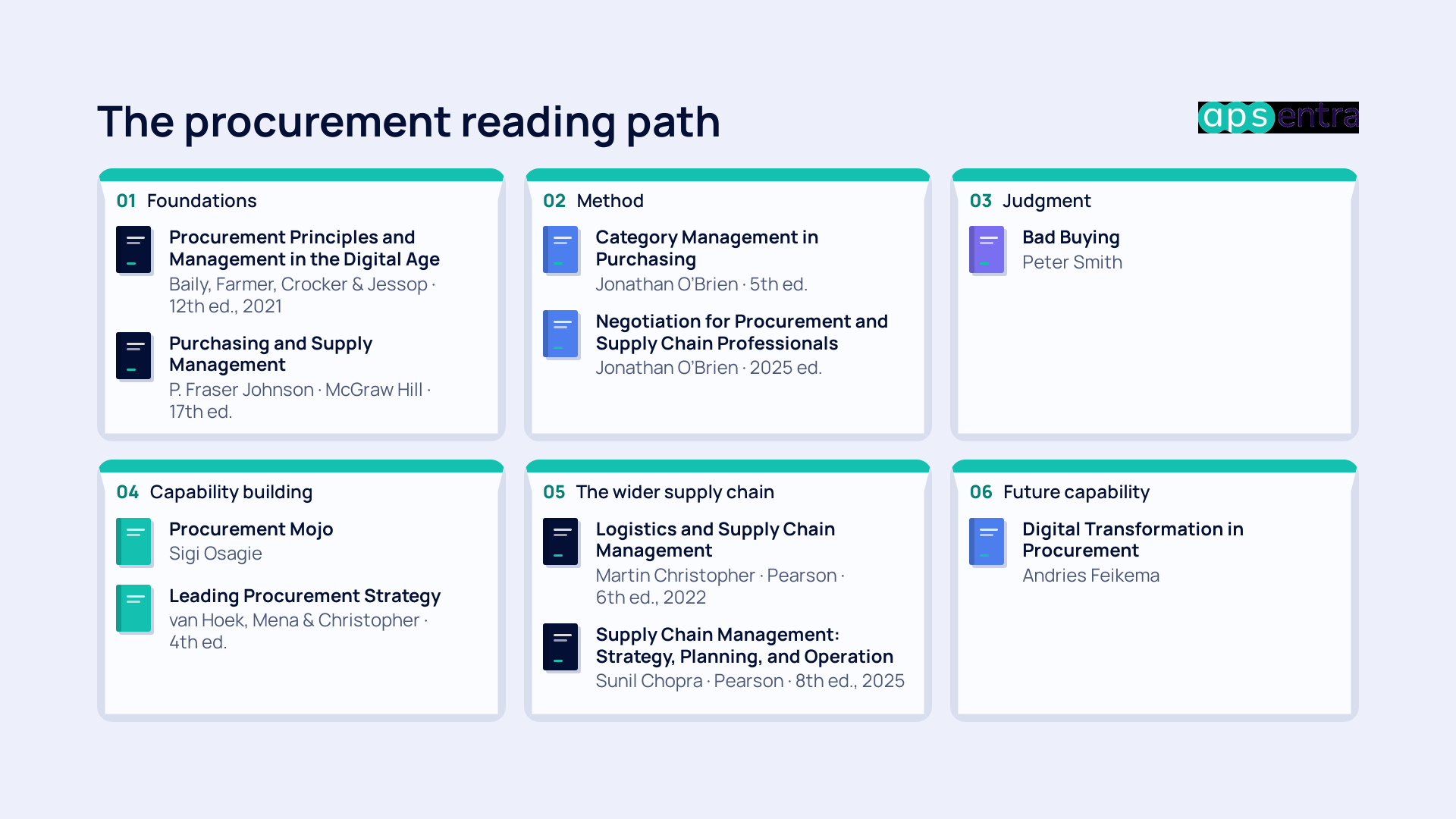
| Stage | Book | Author(s), edition |
|---|---|---|
| Foundations | Procurement Principles and Management in the Digital Age | Baily, Farmer, Crocker and Jessop, 12th ed., 2021 |
| Foundations | Purchasing and Supply Management | P. Fraser Johnson, McGraw Hill, 17th ed. |
| Method | Category Management in Purchasing | Jonathan O’Brien, 5th ed. |
| Method | Negotiation for Procurement and Supply Chain Professionals | Jonathan O’Brien, 2025 ed. |
| Judgment | Bad Buying | Peter Smith |
| Capability building | Procurement Mojo | Sigi Osagie |
| Capability building | Leading Procurement Strategy | van Hoek, Mena and Christopher, 4th ed. |
| The wider supply chain | Logistics and Supply Chain Management | Martin Christopher, Pearson, 6th ed., 2022 |
| The wider supply chain | Supply Chain Management: Strategy, Planning, and Operation | Sunil Chopra, Pearson, 8th ed., 2025 |
| Future capability | Digital Transformation in Procurement | Andries Feikema |
Sajjadul starts every group he teaches with Martin Christopher’s Logistics and Supply Chain Management for value chains, supply chain drivers, and resilience, then pairs it with Chopra before moving into specializations. He uses Purchasing and Supply Management for supplier onboarding and scorecards. Louis took the opposite route: that same book was his first, and he worked outward from procurement concepts into logistics.
Louis is also completing PMOS: Procurement Management Operating System, a forthcoming book I am contributing to. Its premise runs through this whole conversation: procurement cannot maximize enterprise value while it operates as an isolated function.
Watch the Full Episode
The full conversation covers more ground than this summary, including how each guest sequences professional reading and why the CPO role is moving toward capital allocation.