Fuel Procurement Management: Strategies to Control Costs, Suppliers & Risk
For fleets, logistics operators, agribusinesses, construction firms and fuel retailers, fuel is often the most volatile large cost on the income statement. It is also one of the hardest to control, because the price moves daily, deliveries are physical and measurable only at the point of receipt, and purchasing is often spread across depots and regions.
This guide covers the full scope of fuel procurement management: strategy and pricing models, the procurement process, supplier and contract management, cost optimization, risk management and the role of automation.
What Is Fuel Procurement Management?
Fuel procurement management goes beyond negotiating a price per liter or gallon. It manages three exposures at once:

Price exposure

Supply continuity

Physical control
Most organizations manage the first exposure reasonably well and the third one poorly. Fuel is easy to lose between the order, the delivery ticket and the invoice, and small variances multiplied across thousands of deliveries become a material cost.
Why Fuel Procurement Management Matters in 2026
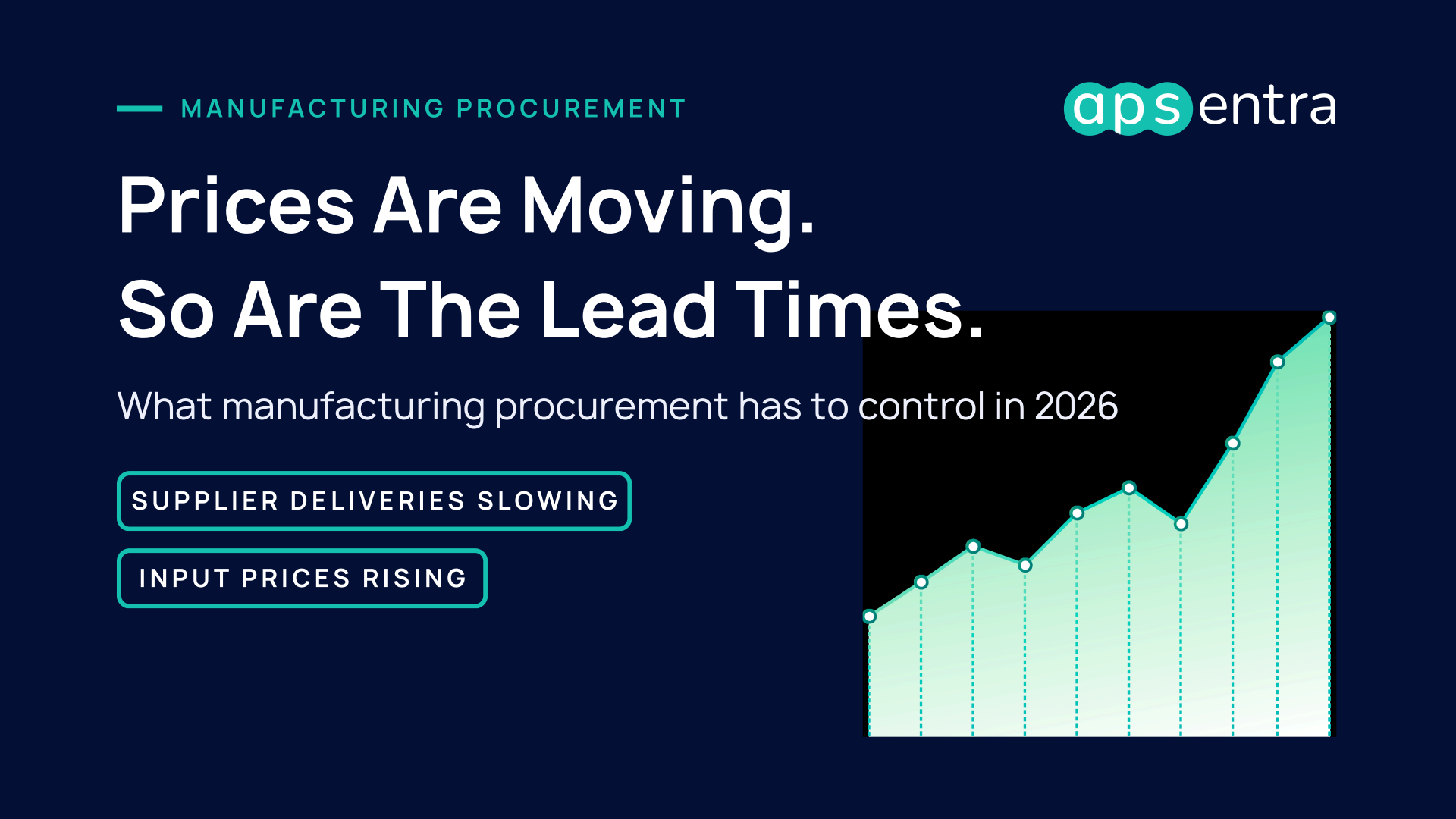
2026 has been a stress test. In its September 2026 Short-Term Energy Outlook release, the U.S. Energy Information Administration reported Brent crude averaging $91 per barrel in August and forecast U.S. retail diesel at $5.55 per gallon in the fourth quarter. It also expects U.S. distillate inventories to fall below 100 million barrels in October, for the first time since 2003.
Compare that with the planning assumptions many budgets were built on. In December 2025, EIA’s forecast reported by Transport Topics put fourth-quarter 2026 diesel at $3.53 per gallon. The latest forecast for the same quarter is about 57% higher.
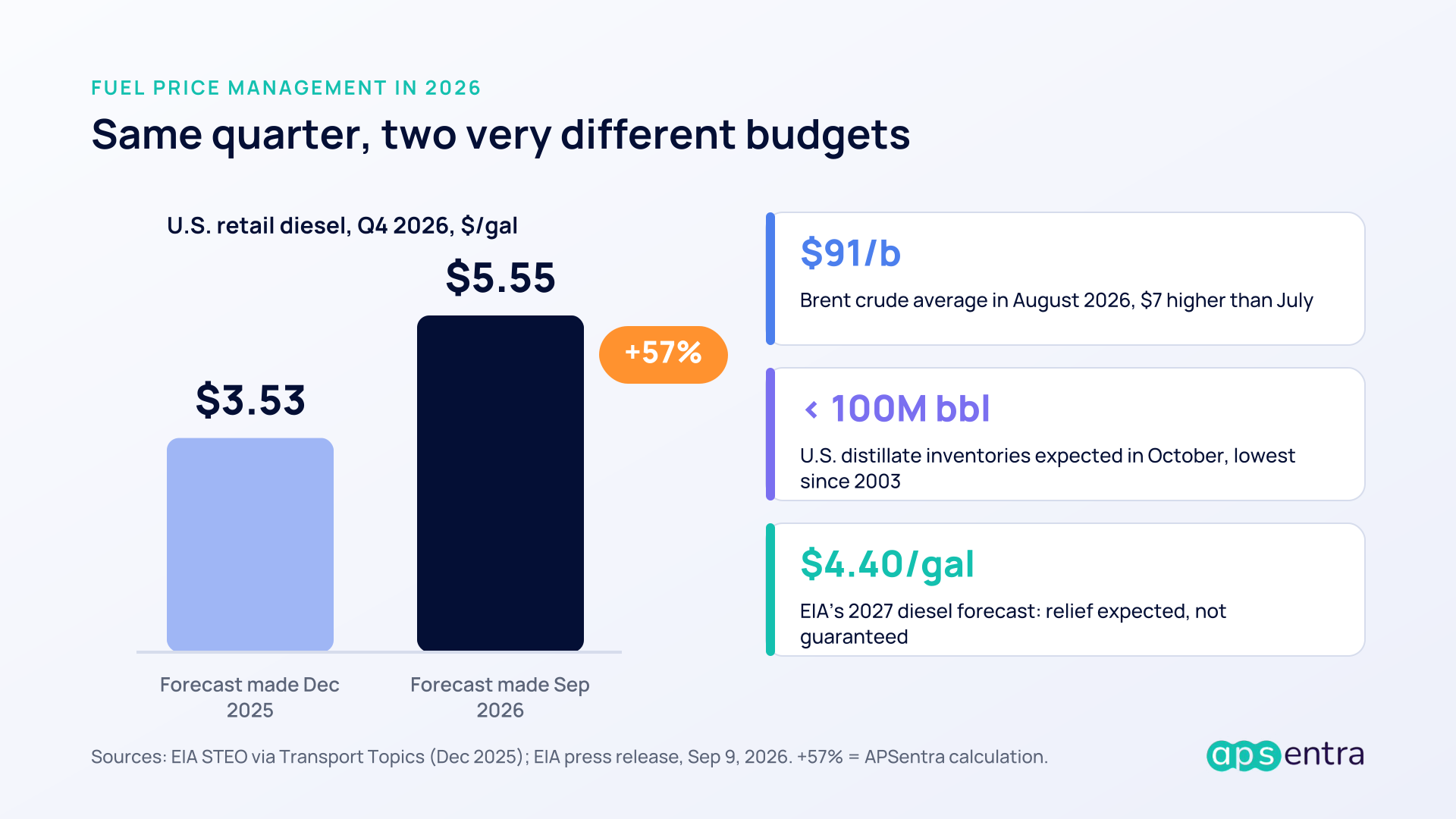
The lesson is not that forecasts are useless. It is that fuel procurement management cannot depend on getting the forecast right. It has to depend on rules that decide in advance how much volume is protected, who can commit more, and how quickly the organization reacts when the market moves.
The Fuel Procurement Process
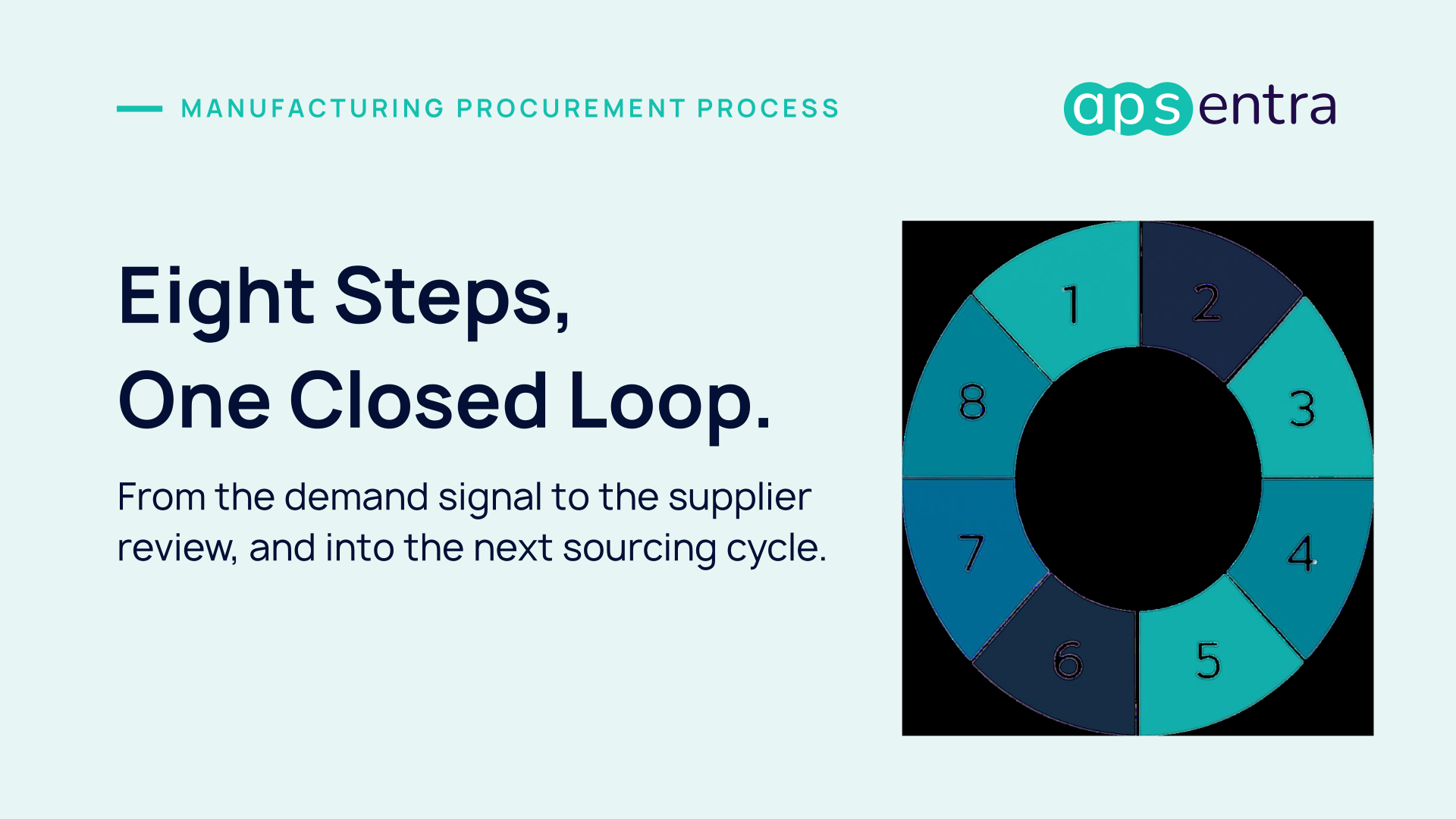
A structured fuel procurement process is the backbone of fuel procurement management: every step gets a clear owner and a record. Seven stages cover most organizations.
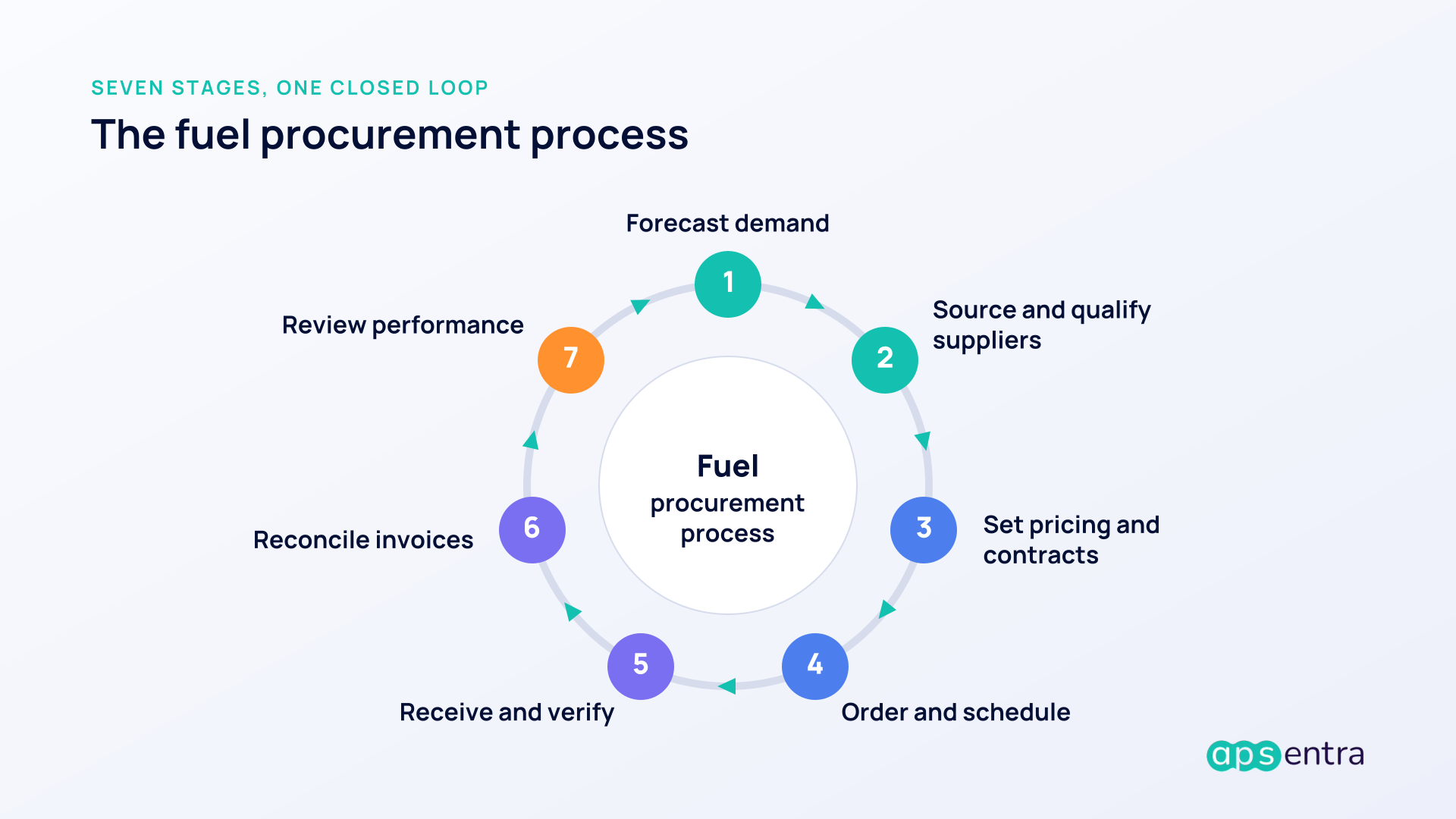

Forecast demand

Source and qualify suppliers
Set pricing and contracts
Order and schedule deliveries
Receive and verify
Reconcile invoices
Review performance and spend
Fuel Procurement Strategy: Choosing a Pricing Model
The core of any fuel procurement strategy is deciding how each part of the forecast volume will be priced. The main options trade budget certainty against market upside.
| Pricing model | How the price is set | Budget certainty | Market upside | Best fit |
|---|---|---|---|---|
| Spot or rack | Posted price on the day of purchase | Low | Full | Small or irregular volumes |
| Index-linked | Published index plus a fixed differential | Low to medium | Full | Most contract volume |
| Fixed price | Price agreed for a set volume and period | High | None | Budget-critical volume |
| Capped or collar | Index price within an agreed ceiling (and floor) | Medium to high | Partial | Protection with some upside |
| Financially hedged | Index purchase plus swaps or futures via treasury | High | Limited | Large, predictable consumption |
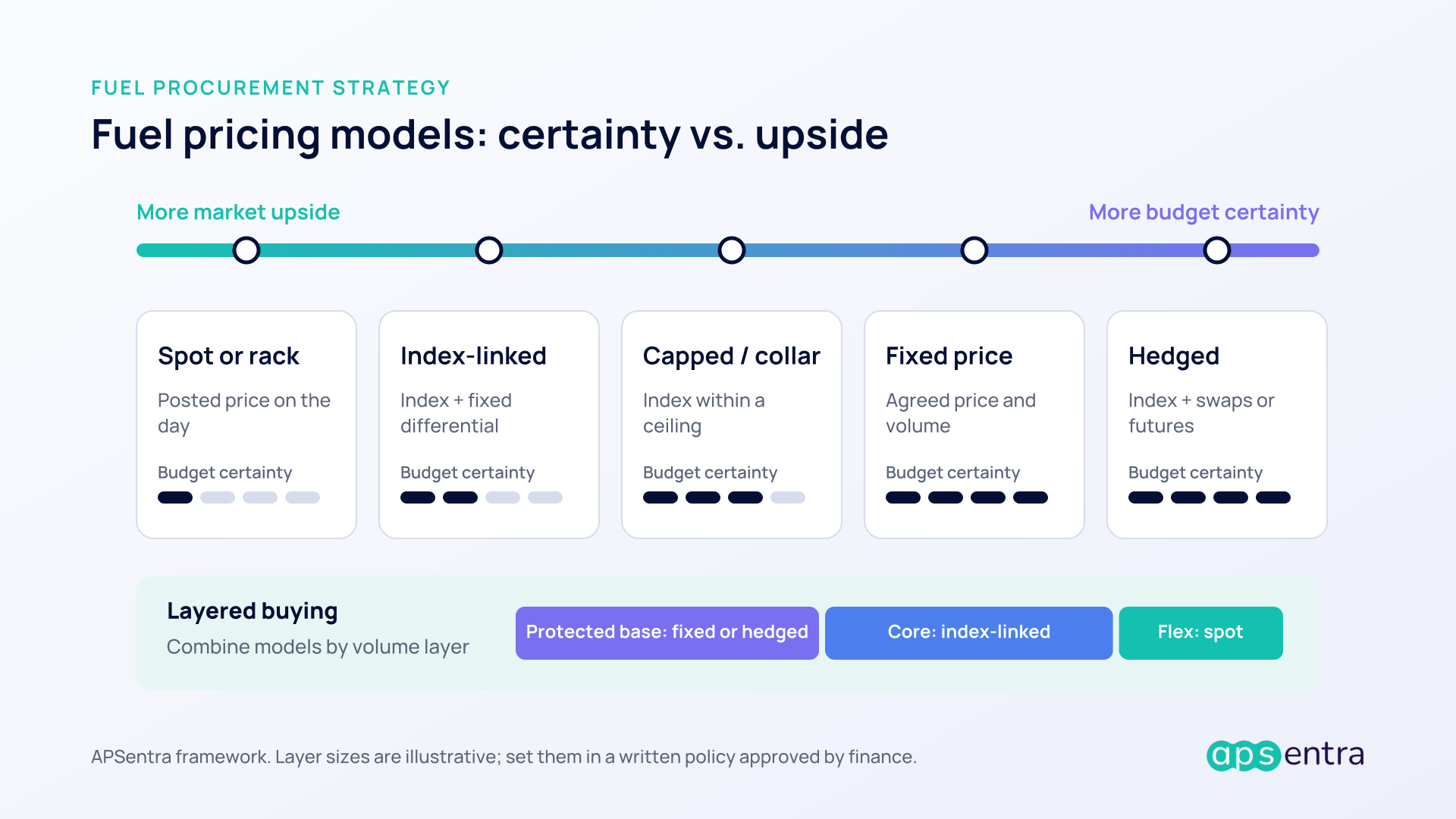
Mature buyers rarely choose one model. They layer volume: a protected base covered by fixed prices or hedges, a core priced on an index with a negotiated differential, and a flexible top slice bought on the spot market. The size of each layer is a finance decision that belongs in a written policy, approved once and reviewed on a fixed schedule.
Hedging with financial instruments deserves particular care. It usually sits with treasury, requires clear limits and reporting, and only works if procurement’s volume forecast is reliable enough to hedge against.
Fuel Sourcing and Supplier Management
Building a Resilient Supplier Base
Fuel sourcing starts with deciding how many suppliers each region needs. Single-sourcing may secure a better differential, but it concentrates risk; dual-sourcing across terminals or distributors protects continuity when one supplier is on allocation. Qualification should cover licensing, storage and delivery capacity, product quality certification, financial strength and compliance history.
Measuring Supplier Performance
Fuel supplier management works only when performance is measured on the same basis for every supplier. Useful KPIs include:
- On-time and in-full delivery rate by site
- Volume variance between order, delivery ticket and invoice
- Quality non-conformance incidents
- Invoiced price versus the contract formula and the reference index
- Response time for emergency or allocation-period orders
- Invoice accuracy and dispute resolution time
Scorecards built on these measures turn renewal negotiations from opinion into evidence and show which suppliers deserve a larger share of volume.
Fuel Contract Management
Weak contracts are where fuel savings quietly disappear. Effective fuel contract management starts with clauses that make the price and the volume verifiable:
- Price formula. The reference index, averaging period, differential and any caps or floors, written so anyone can recalculate the invoice.
- Volume terms. Committed volumes, tolerance bands and penalties for under- or over-lifting.
- Allocation rules. How supply is shared during shortages and what priority your sites receive.
- Quality and measurement. Product specifications, testing rights and temperature correction methods.
- Delivery. Windows, lead times and responsibilities for failed deliveries.
- Commercial terms. Payment terms, credit limits, review or reopener clauses, audit rights and force majeure.
Contracts also need an owner after signature. Renewal dates, volume commitments and price reviews should sit in a calendar that procurement and finance can both see, so no contract rolls over by default.
Fuel Price Management and Cost Optimization
Fuel procurement cost optimization combines commercial and operational levers. The largest gains usually come from the combination, not from any single negotiation:
- Consolidate demand. Aggregate volume across depots and entities to negotiate one differential instead of many.
- Validate every invoice against the index. Recalculate the contract formula for each delivery and flag deviations automatically.
- Layer purchases. Spread fixed-price or hedged volume over time instead of locking the full requirement at one moment.
- Optimize delivery mode. Compare bulk deliveries with fuel card purchases by site and route.
- Control consumption. Use telematics or tank monitoring data to detect abnormal usage and leakage.
- Plan the transition. Model where alternative fuels or electrification lower long-term exposure; our guide to EV procurement consulting covers the fleet case.
“Fuel is one of the few categories where the price changes before the invoice arrives. Control comes from checking every delivery against the contract formula, not from predicting the market.”
— Mauricio Dezen, Head of Implementation, APSentra
Fuel Procurement Risk Management
A fuel procurement risk management framework lists each exposure, its owner and the control that addresses it.
| Risk | What it looks like | Key controls |
|---|---|---|
| Price volatility | Actual cost moves far from budget | Layered buying policy, hedge limits, monthly variance review |
| Supply disruption | Supplier on allocation, terminal outage | Dual-sourcing, allocation clauses, safety stock |
| Quality issues | Off-spec or contaminated product | Specifications in contract, testing at receipt |
| Volume leakage and fraud | Delivered or consumed volume differs from invoiced volume | Order, ticket and invoice matching; consumption monitoring |
| Counterparty risk | Supplier credit deterioration | Credit checks, limits, diversified supplier base |
| Regulatory and tax | Changes in excise, blending mandates or reporting | Contract pass-through terms, regulatory monitoring |
| Currency risk | Fuel priced in USD, budget in local currency | Treasury FX policy aligned with fuel hedging |
The controls in this table only work if they are applied consistently at every site. In distributed organizations, that consistency is the hardest part of fuel procurement risk management.
Digital Fuel Procurement and Automation
Digital fuel procurement replaces spreadsheets, emails and phone orders with a governed workflow, which is what allows fuel procurement management to scale across depots and regions. The aim of fuel procurement automation is not to remove people from decisions, but to make routine steps consistent and every exception visible.
The steps that benefit most from automation are:
- Requisitions generated from consumption or tank-level data, routed for approval by volume and value
- Price validation of every invoice against the contract formula and index
- Matching of purchase order, delivery ticket and invoice before payment
- Supplier scorecards updated from delivery and quality data
- Dashboards comparing committed, forecast and consumed volume by site
Governance is what makes automation safe. APSentra builds a digital twin of the organizational structure and procurement workflow, so approval authority, budgets, and supplier rules follow the real hierarchy of depots, regions, and legal entities. Sourcing events, auctions, contract monitoring, and consolidated spend analytics sit in the same environment, which gives finance one view of fuel commitments and actual spend.
CLIENT STORY
Procurement advisory and operating model redesign for a fuel retail network
A fuel retail operator with a distributed station network managed capital purchases and operational spend through one undifferentiated procurement model. A two-track model separated standard, catalog-based purchasing from complex sourcing. Tiered approval authority replaced a single flat threshold, speeding low-value purchases while tightening control of high-value spend. Open supplier accreditation and online reverse auctions widened competition for standardized categories. A systems integration roadmap laid the foundation for procurement automation.
Energy infrastructure operators face the same need for traceability at scale. See how a state-owned gas infrastructure operator automated its full procurement cycle, from annual planning to supplier order execution. For a broader comparison of platforms, our review of the best procurement software platforms outlines how different tools handle governance at scale.
Organizations whose fuel spend sits inside a wider energy portfolio can also read our guide to energy procurement consulting.