APSentra Brings Procurement Practice into the Classroom at George Brown Polytechnic
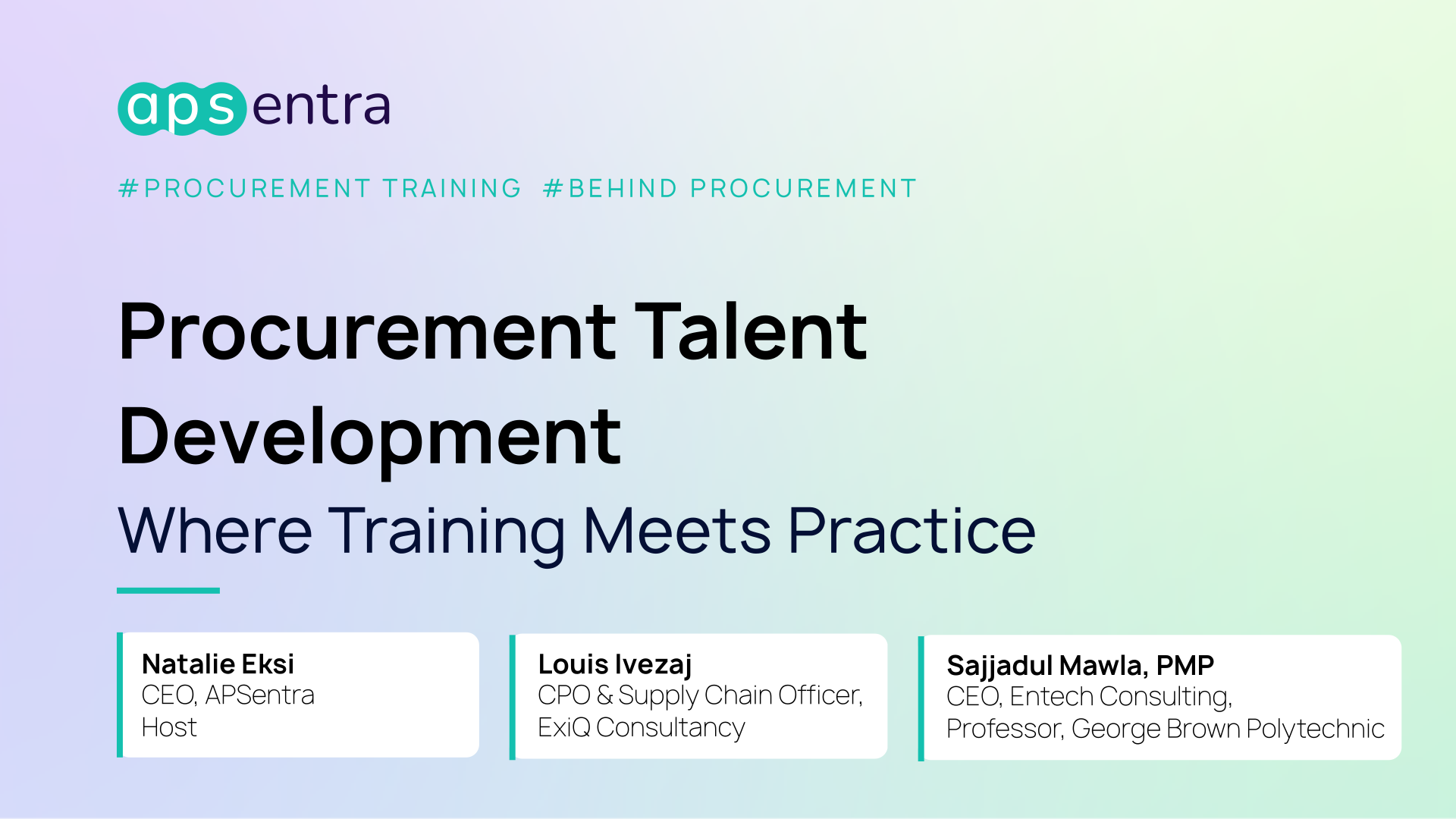
Professor Sajjadul Mawla, who initiated the collaboration, brings substantial consulting and project delivery experience to his teaching. His focus is direct: students must understand how supply chain decisions translate into tangible operational and financial outcomes, not just how those decisions appear in a textbook.
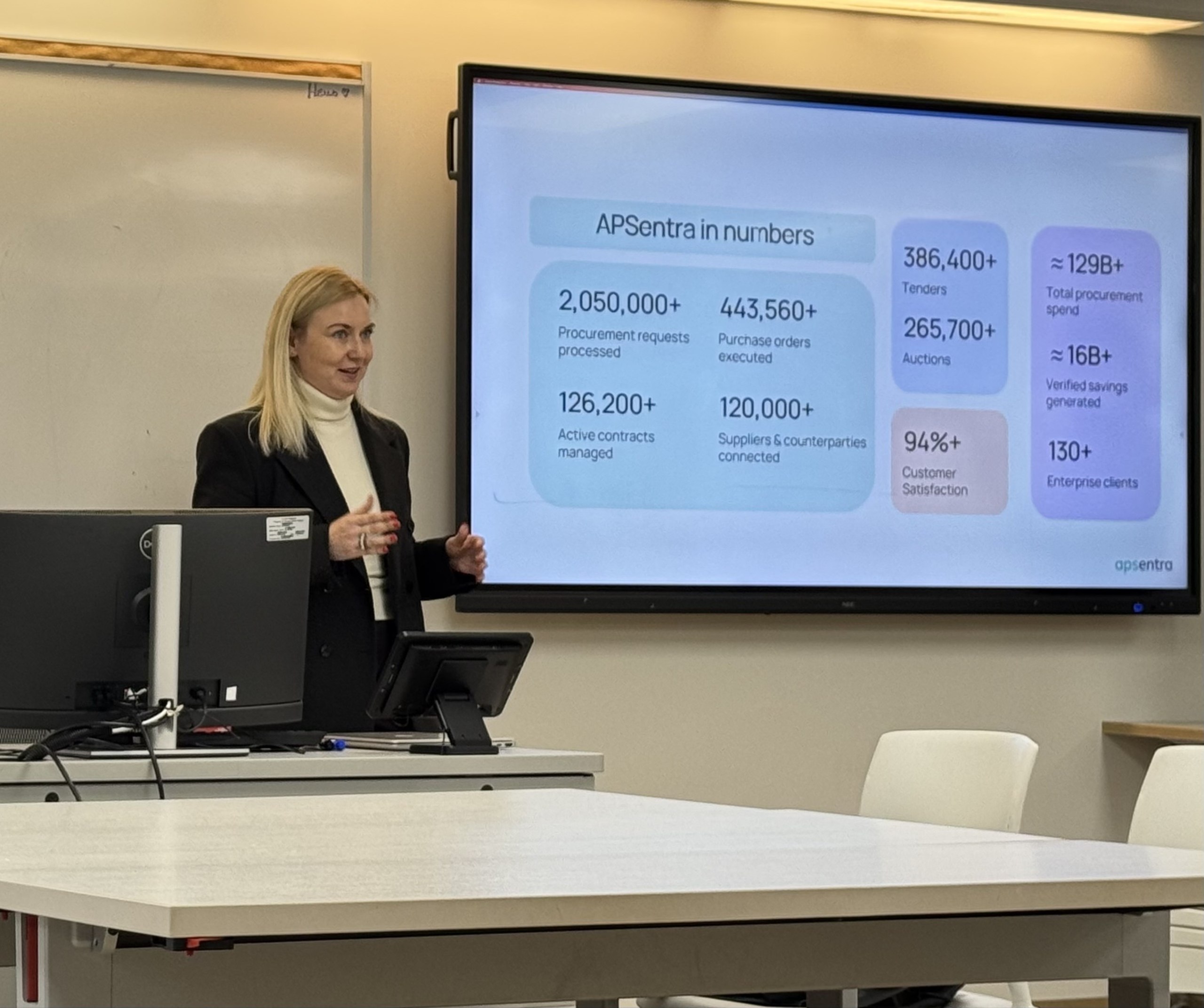
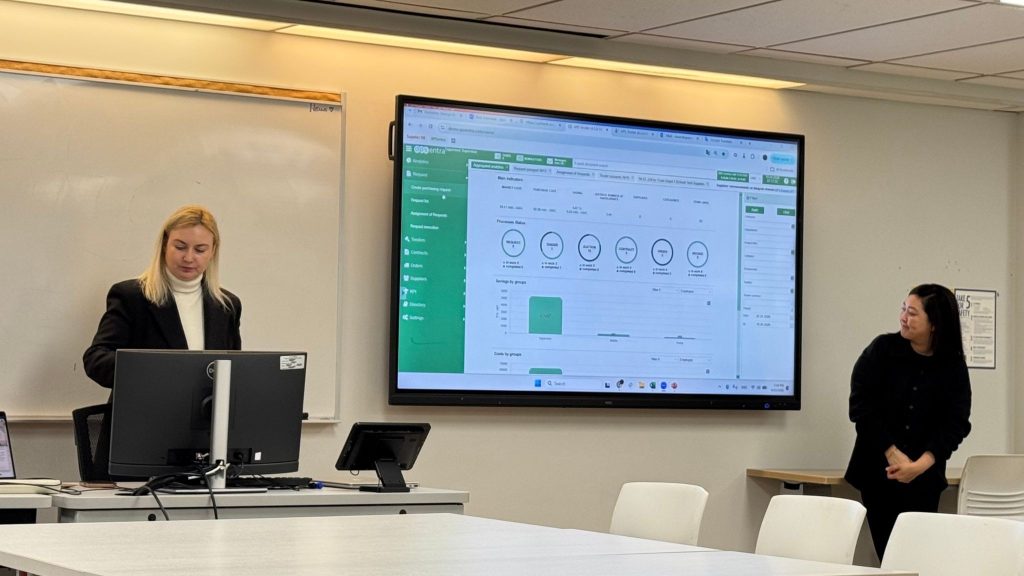
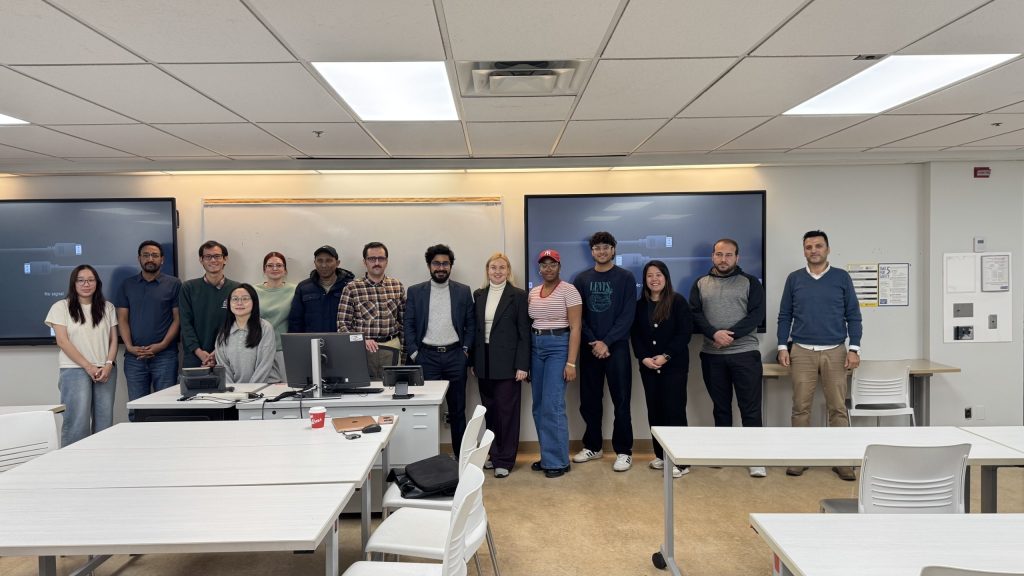
The session was led by Natalie Eksi, CEO at APSentra, with a live demonstration of the APSentra platform delivered by Max Nikitiuk.
Together, they brought students face-to-face with the operational realities of modern procurement, and not as a theoretical exercise, but through direct exposure to working systems and the decisions that govern them.
Why Supply Chain Education Needs Industry Collaboration Now
Supply chain management has evolved from a logistics coordination function into a strategic financial control system. In many organisations, procurement now governs the largest controllable portion of the cost base, connecting purchasing decisions directly to budget performance, working capital, and supplier risk.
Traditional academic models were not designed to reflect this shift. Programs built around static frameworks and sequential processes do not fully prepare graduates for environments where procurement systems, financial visibility, and real-time decision-making are inseparable.
George Brown Polytechnic recognised this gap early. The institution’s Supply Chain Management programs are built around applied, career-oriented learning, emphasising how functions interact under real operating conditions, not in isolation. Industry collaboration is structurally embedded in the curriculum, ensuring that learning remains connected to the realities graduates will face.
What the Session Covered
The session addressed three core themes that define modern procurement practice.
Procurement as a financial control system
Structured procurement doesn’t just manage purchasing. It governs spending, reduces cost volatility, and connects operational decisions to financial outcomes in real time. Students explored how procurement sits at the intersection of operational execution and financial reporting, and why that position carries strategic weight.
The cost of fragmentation
When procurement tools, teams, and data are siloed, visibility disappears precisely where it matters most. The session examined what happens in practice when organisations lack a unified view of their procurement activity and how that absence creates exposure.
Digitalisation in practice
Rather than discussing technology in the abstract, the session included a live walkthrough of how a source-to-pay platform unifies request management, tendering, supplier governance, and financial reporting into one governed environment. Students saw the platform operating as it does in production – not as a prototype or a slide deck.
What Students Learn from Real-World Procurement Collaboration
Understanding the Full Source-to-Pay Cycle
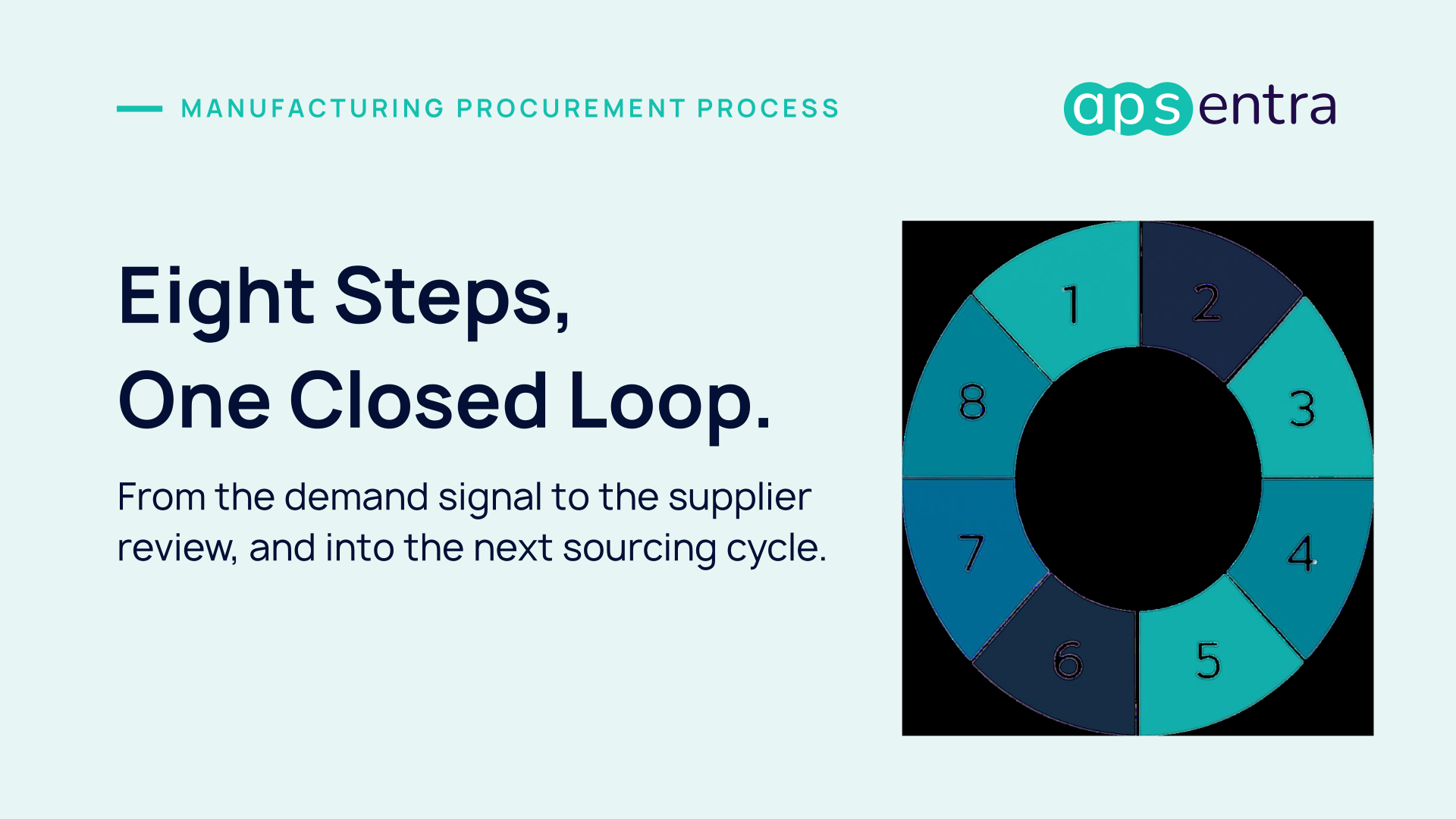
Many supply chain programs teach procurement as a series of isolated steps. The APSentra session showed students how these steps connect into a single governed flow from request submission through supplier selection, contract management, and invoice reconciliation, and why each connection point matters for financial control. Seeing that continuity is qualitatively different from reading about it.
Recognising Where Fragmentation Creates Risk
One of the most impactful elements of the session was the discussion of what happens when tools, teams, and data are disconnected. Students encountered concrete examples of how fragmented procurement leads to tail spend accumulation, off-contract buying, invoice leakage, and delayed financial visibility, all of which compound in high-pressure conditions. Understanding the shape of these failures is the first step toward preventing them.
Seeing Digitalisation as a Strategic Capability
The live platform demonstration showed students how modern source-to-pay technology transforms procurement from a reactive workflow into a forward-looking intelligence function. Predictive spend analytics, real-time supplier risk monitoring, and automated compliance are not future capabilities. They are already standard in leading organisations. For students entering the field, this matters: it sets the right baseline for what good looks like.
“The next generation entering the supply chain will not inherit stable environments. They will operate where timing, coordination, and access to information directly influence results, and education must reflect that reality.”
Natalie Eksi, CEO at APSentra | Global Supply Chain & Procurement Expert
Why Industry Collaboration in Supply Chain Education Matters
For APSentra, participation in academic programs is not symbolic. It is part of a broader effort to raise the baseline of procurement practice by ensuring that the professionals entering the field understand procurement’s role in financial governance from the outset, rather than discovering it years into their careers.
For George Brown Polytechnic, the collaboration ensures that the curriculum remains aligned with what the market actually demands. The gap between institutional frameworks and operational realities is narrowed not by redesigning syllabi but by directly bringing practitioners into the learning environment.
For students, the value is immediate and tangible: exposure to how decisions are made under real conditions, with real systems, by professionals who manage that complexity every day.
APSentra is a source-to-pay procurement platform designed for organisations that need structured, transparent, and auditable procurement operations.