The Manufacturing Procurement Process: Eight Steps From Demand to Supplier Review
This guide walks through the manufacturing procurement process step by step, shows who owns each step, explains how the process changes for production materials, MRO, and capital equipment, and covers what 2026 price pressure means for how each step should run.
What the Manufacturing Procurement Process Is
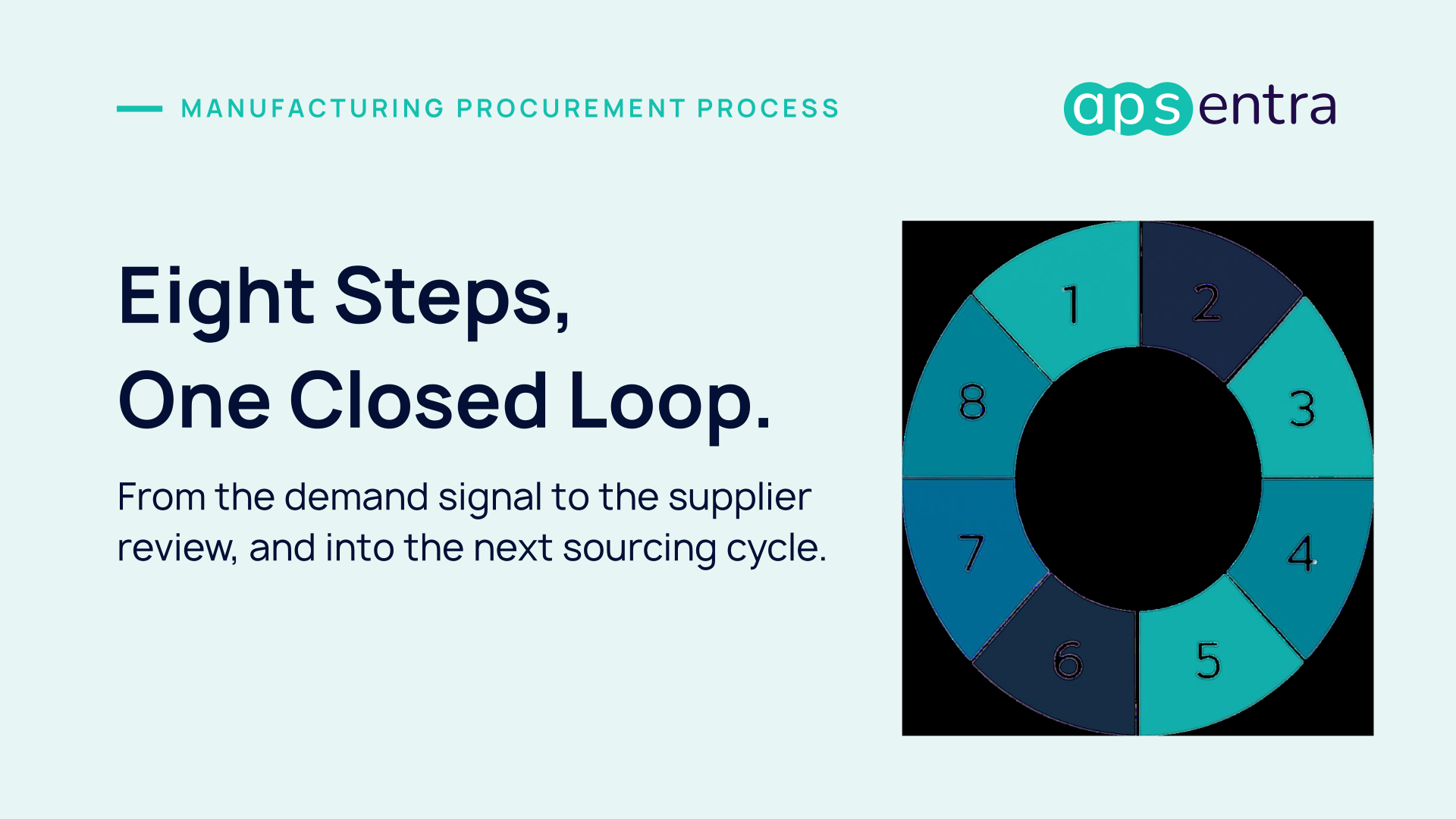
The manufacturing procurement process is the sequence of steps a manufacturer follows to buy materials, parts, supplies, and equipment: identifying demand, sourcing and qualifying suppliers, contracting, releasing orders, receiving and inspecting goods, paying, and reviewing supplier performance. It runs as a loop because each review shapes the next sourcing decision.
Three features separate it from a generic procurement process. Demand for production materials usually comes from material requirements planning rather than a requisition. Suppliers of production parts must be qualified by quality and engineering, not only approved commercially. And most production buying runs on long-term agreements with scheduled releases, so the purchase order is often the least important document in the chain.
The Eight Steps and Who Owns Them
The process crosses four functions. Most delays happen at the handoffs between them, not inside any one step.
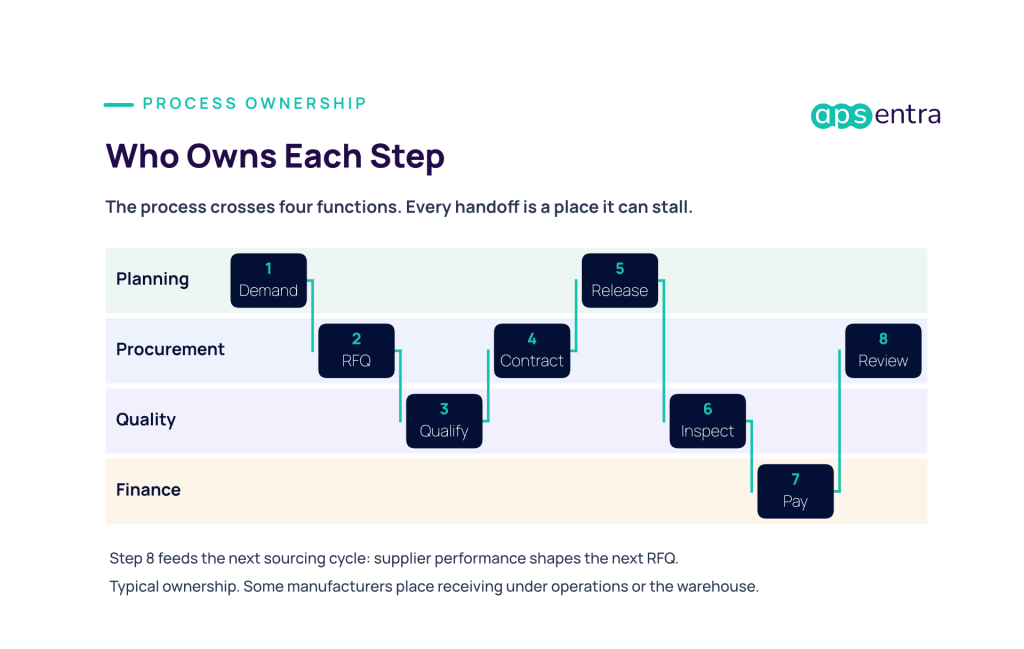
- Demand signal (Planning). Material requirements planning turns the production schedule and bill of materials into net requirements by part and date.
- Sourcing and RFQ (Procurement). For new or re-sourced parts, procurement issues a request for quotation with drawings, volumes, and delivery terms, and compares responses on total cost rather than unit price.
- Supplier qualification (Quality). Quality and engineering confirm the supplier can make the part to specification before any production order is placed.
- Contract and terms (Procurement). Price, index clauses, lead times, quality requirements, and liability are set in an agreement that covers many future orders.
- Order release (Planning). Scheduled releases against the agreement tell the supplier what to ship and when, often generated automatically from the plan.
- Receipt and inspection (Quality). Goods are received against the release, checked, and either accepted into inventory or held.
- Match and pay (Finance). The invoice is matched to the order and the receipt, and payment follows the agreed terms.
- Supplier review (Procurement). Delivery, quality, cost, and responsiveness are scored, and the results feed the next sourcing decision.
Qualification: The Step That Makes Manufacturing Different
In most industries, a new supplier can start delivering once the contract is signed. In manufacturing, a supplier of production parts has to prove it can make the part correctly before the first production order.
The mechanics vary by sector. Automotive suppliers typically go through the Production Part Approval Process (PPAP), which documents that the supplier’s production process can consistently meet the design. Aerospace manufacturers commonly use first article inspection under the AS9102 standard, where the first production part is measured against every drawing requirement. Other sectors run their own sample approvals and process audits.
For procurement, qualification changes the process in three ways.
- It sets the real lead time for switching suppliers. A better quote is worth little if qualifying the new supplier takes longer than the savings window.
- It belongs early in sourcing. Screening suppliers for qualification capability during the RFQ avoids awarding business to a supplier that cannot pass.
- It needs a system of record. Approval status, certificates, and expiry dates should block orders to unqualified suppliers automatically, not rely on someone remembering.
How quality gates such as APQP and PPAP fit into automotive sourcing is covered in auto procurement consulting, and the engineering side of direct-materials sourcing in OEM procurement consulting. Running the RFQ itself well is covered in strategic sourcing consulting.
Contracts and Releases: How Production Buying Actually Runs
For production materials, the contract does most of the work. A blanket agreement or scheduling agreement fixes price, terms, and expected volumes for a period, and the planning system then issues releases against it as requirements firm up.
This split matters because it moves the commercial decision away from the individual order. Buyers negotiate once, carefully, and the day-to-day flow runs on releases that planners or the system generate. When it works, the release is routine. When the agreement is vague, every release becomes a small negotiation.
Commitment horizons are long. The ISM Manufacturing PMI Report for August 2026 put the average commitment lead time for production materials at 84 days, against 48 days for MRO supplies and 171 days for capital expenditures, and reported supplier deliveries slowing for a ninth consecutive month. Agreements for production materials therefore need to cover what happens when a supplier cannot meet a release date, not only what the price is.
Three terms deserve more attention than they usually get:
- Frozen and flexible windows. How far ahead a release becomes binding, and how much it can change inside that window.
- Price adjustment rules. An index clause for commodity-linked parts, with a defined index, timing, and cap, instead of ad hoc price requests.
- Delivery and quality consequences. What happens after a late or rejected shipment, stated before it happens.
Receipt, Inspection, and Payment
Steps six and seven are where the plan meets the loading dock and the ledger.
On receipt, goods are checked against the release: right part, right quantity, right paperwork. Many manufacturers ask suppliers to send an advance shipping notice so receiving knows what is coming. Incoming inspection then depends on the part and the supplier’s history, from full inspection for a new supplier to skip-lot or certificate-based acceptance for a proven one.
Payment normally follows a three-way match: the invoice must agree with the order and the receipt before it is paid. Exceptions, such as a price that differs from the agreement or a quantity that differs from what arrived, go to a person to resolve. Manufacturers with stable, high-volume suppliers sometimes go further and pay directly from the receipt without an invoice, a method known as evaluated receipt settlement.
The goal in both steps is the same: let clean transactions flow through untouched, and make exceptions visible quickly, while the supplier and the shipment are still easy to trace.
Supplier Review Closes the Loop
The last step is the one most often skipped, and it is what turns a sequence of purchases into a process that improves.
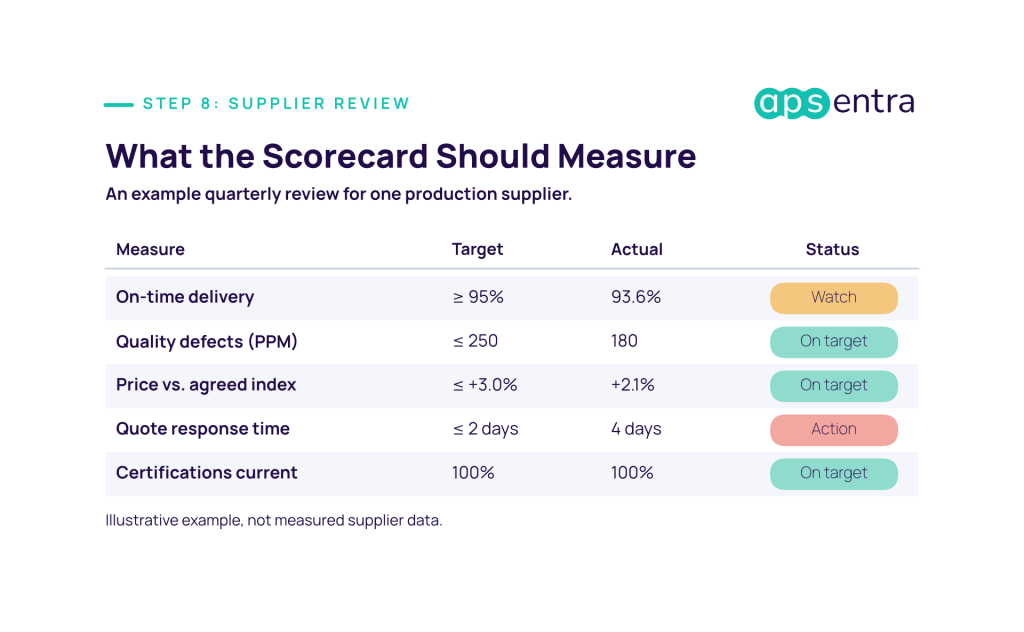
A useful scorecard is short, objective, and tied to the agreement. The five measures above cover the areas that most affect production: whether parts arrive on time, whether they are right, whether the price follows the agreed rules, whether the supplier responds when asked, and whether its certifications are current.
The review only matters if it changes something. A supplier on “watch” should get a documented improvement plan and a date. A supplier needing “action” should be considered for dual sourcing in the next RFQ, which is how step eight feeds back into step two.
Keeping supplier data, certifications, and performance in one place, rather than in separate quality and procurement files, is covered in our review of vendor management software.
One Process, Three Tracks
The eight steps apply to every purchase, but they look very different depending on what is being bought.
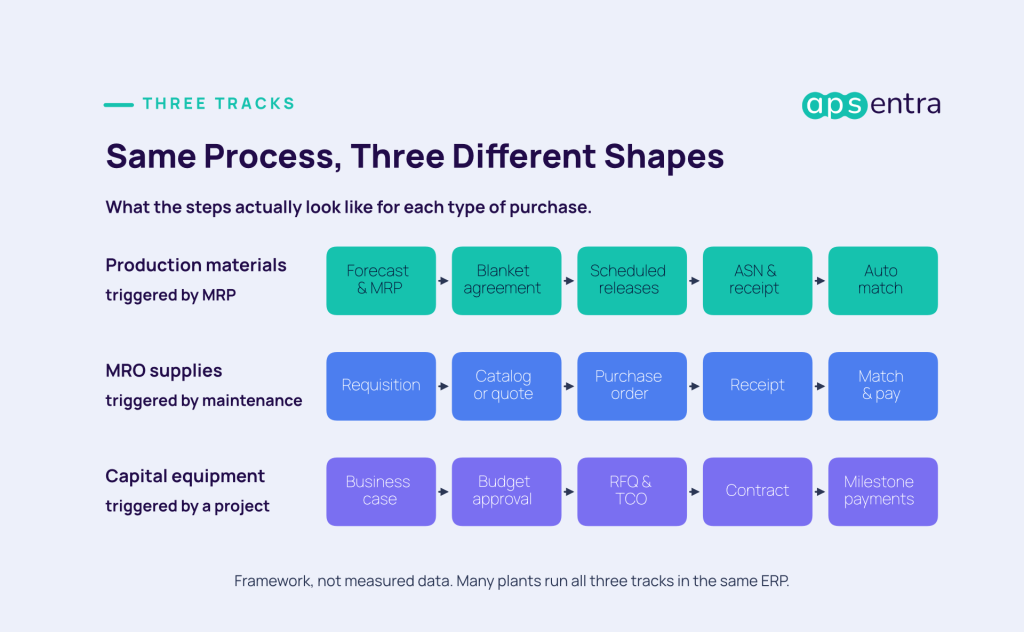
- Production materials are triggered by MRP, bought under blanket agreements, delivered through scheduled releases, and ideally matched automatically. The effort goes into the agreement and supplier qualification.
- MRO supplies are triggered by maintenance needs, bought from catalogs or quick quotes, and paid through a standard purchase order and match. The effort goes into catalog coverage and fast approval.
- Capital equipment is triggered by a project, starts with a business case and budget approval, and is bought on total cost of ownership with milestone payments. The effort goes into evaluation and contract terms.
A common mistake is forcing all three through the same workflow, which slows MRO down and gives capital purchases too little scrutiny. Where the MRO track benefits most from analytics is set out in AI in MRO procurement.
What 2026 Prices Mean for the Process
Rising prices do not change the steps, but they change where the steps come under strain.
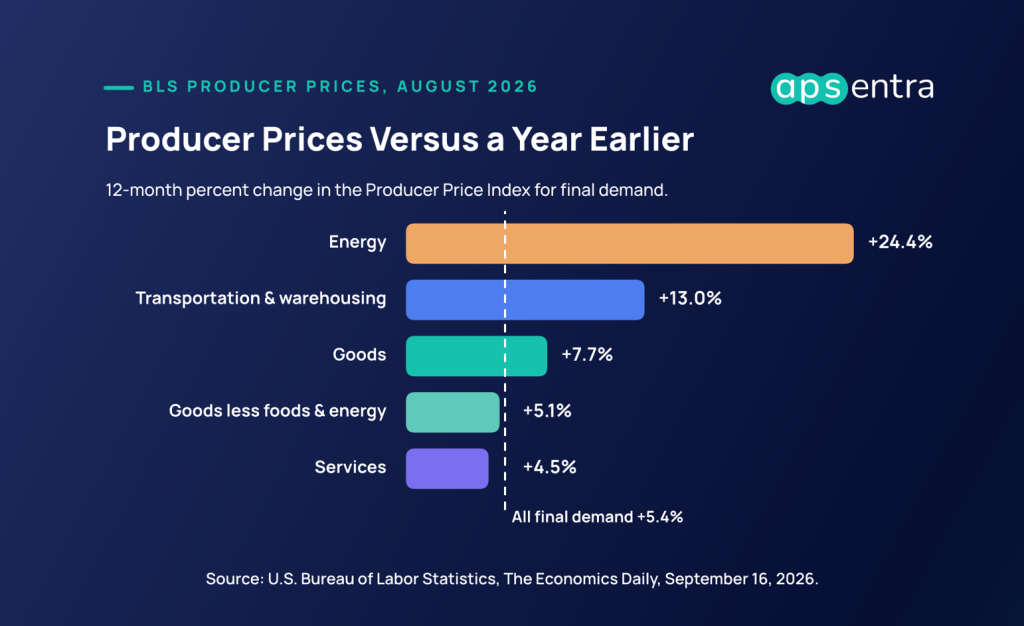
According to the Bureau of Labor Statistics, the Producer Price Index for final demand rose 5.4 percent in the 12 months to August 2026. Energy rose 24.4 percent, transportation and warehousing services rose 13.0 percent, and goods excluding foods and energy rose 5.1 percent. These indexes measure prices that U.S. producers receive, so they are a guide to the price environment manufacturers buy into rather than a direct measure of any single manufacturer’s input costs.
Freight is where many plants feel it first. In NAM’s Q3 2026 Manufacturers’ Outlook Survey, 77.3 percent of manufacturers cited freight rates as a challenge and 74.1 percent cited fuel costs.
For the process, that means three adjustments:

Contracts need price rules, not just prices

Freight should be visible on its own

Reviews should track price against the agreed rule
The gap between negotiated and realized savings is examined in procurement cost reduction strategies.
Automating the Process Without Automating the Mess
Automation makes a good process faster and a bad one faster too. Before automating, it is worth confirming three things: that each step has a clear owner, that the handoffs between functions are defined, and that the rules, such as approval thresholds, qualified supplier lists, and price terms, are written down.
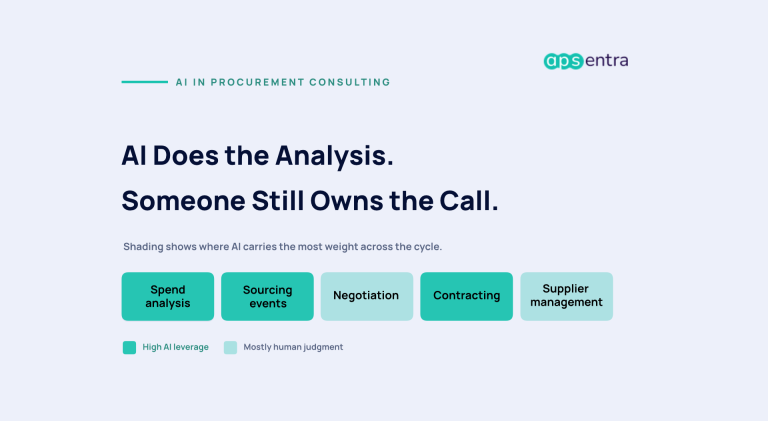
Once they are, the parts that automate best are the repetitive ones: generating releases from the plan, blocking orders to unqualified suppliers, matching invoices to orders and receipts, and assembling scorecard data. Negotiation, qualification decisions, and supplier development stay with people.
Many plants still run parts of this process in spreadsheets and email; the trade-offs of moving off them are covered in procurement software vs. Excel, and a comparison of platforms is in best procurement software platforms. For examples of full-cycle automation, see how a gas infrastructure operator automated procurement from annual planning to supplier order execution, and how a pharmaceutical distributor brought request, tendering, ordering, and payment into one system.